ELCIC

Why Religion and Politics should Mix

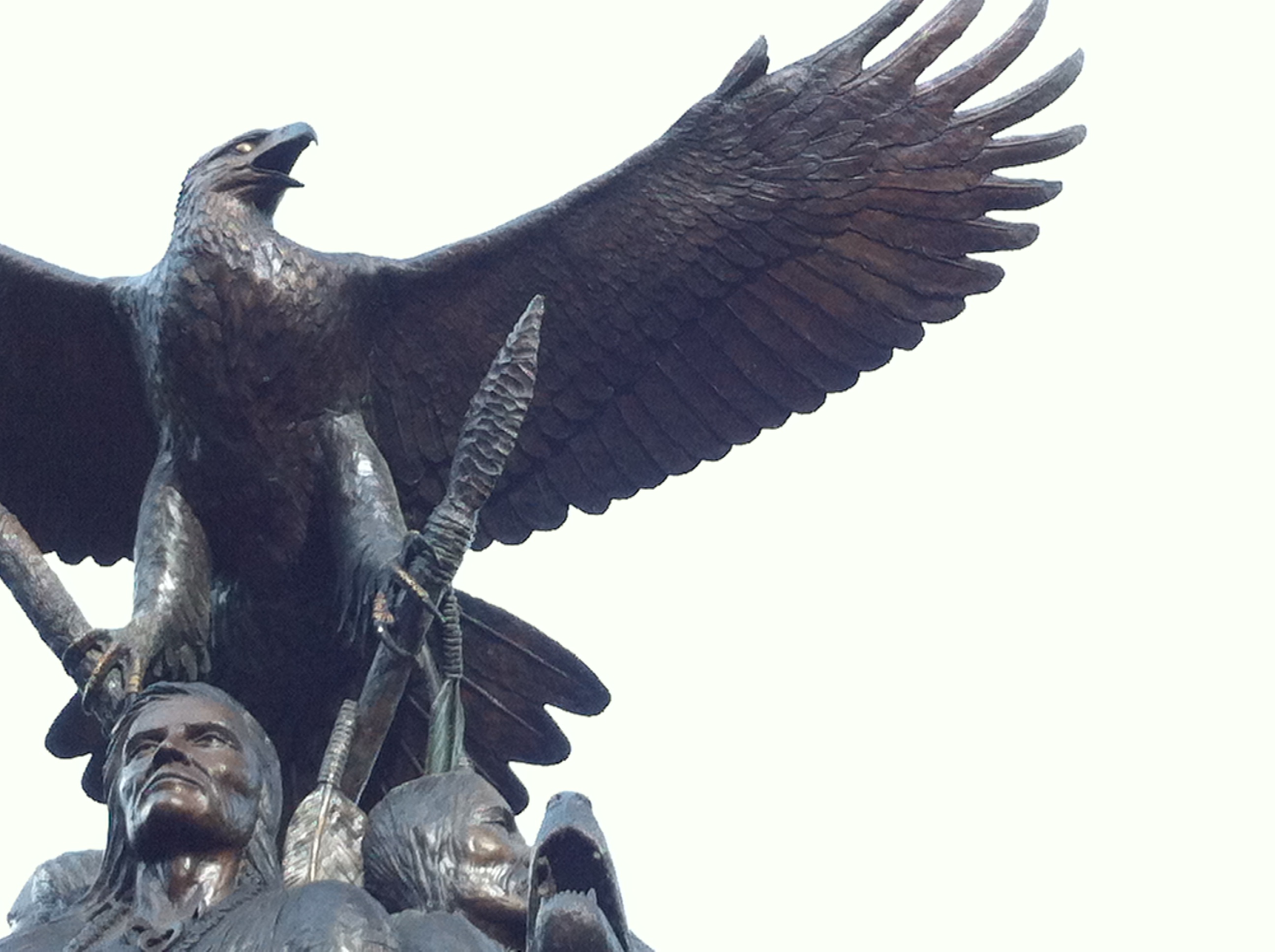
Eagle Ottawa national monument

A friend of mine was recently riding his bicycle when he was pulled over by the police. He was on the sidewalk, which is illegal. But. He was also going through the Atwater underpass, where there is no bike lane, and LOTS of scary traffic. In some spots there are just inches to spare between you and the cars. A driver swerves slightly, and they’ll knock you down. Not to mention the potholes. You may remember that a cyclist died not long ago going through an underpass like Atwater. After that, the mayor of Montreal, among other people, has told cyclists that they should take the sidewalk on those small stretches in underpasses where NOT to do so would be dangerous.

Apparently the Montreal police haven’t been listening to the mayor. When my friend came through the underpass on the sidewalk, the police were waiting. They pulled him over and hit him with a fifty-dollar ticket. As it turned out, however, that was only the first of his problems.

Give us your ID, the police said to him. Now. My friend is a nice guy. In his fifties. Grey hair. Clean-shaven, riding his bicycle home from his job downtown. Maybe even wearing his dress shirt, and a tie. But he knows the law, and so he said to the police: “I’ll give you my name and address so you can send me the ticket. But the law states I don’t have to give you my ID. No Canadian has to surrender their ID on demand to the police unless they’re being placed under arrest.”

He was right.

However, right isn’t always what’s important, apparently. Within seconds the Montreal City Police had my friend handcuffed, his hands behind his back. They marched him into the back of a police van. They started yelling into his face. Telling him he would be thrown in jail for obstructing justice. Telling him he was going to get a police record and never be able to cross the border into the United States again.

They searched his pockets, pulled out a USB stick that he had, and then, right in front of his eyes, broke it in half. All because he wanted his legal rights.

They say religion and politics don’t mix. Whoever said that didn’t know the Bible. My friend is not religious. But I’m saying that faith has something to say to what you and I should think of a situation like that. In fact, religion and politics mix ALL THE TIME.

Then all the elders of Israel gathered together, it says in the Bible, and they came to Samuel at Ramah, and said to him: appoint for us a king.

Samuel tried to tell them.

            You don’t WANT a king, the old prophet said to them. Rulers are a BAD idea. Rulers will do what they do best. They’ll tax you. They’ll form a police who will oppress you. They’ll make you slaves. They’ll take your children and put them in their armies and then your children won’t come home. A government will take your money, your food, your security and eventually, sometimes, your life. And they’ll do all this, just because they’re rulers, and you’re not. Are you sure you want a king?

And the people of ancient Israel said: Yes.

You know what they say: be careful what you wish for. Because now what are WE, and most people in the so-called developed countries asking for? Security. And we’re being asked if we’re willing to pay what that dream might cost.

True faith has never been particularly comfortable with governments. Now – for me to say that is controversial. It’s not an opinion everyone shares. But there’s a reason why the Bible says: “God is a jealous god.” and “You shall have no other gods.” It’s idolatry to mix up our faith with nationalism. The Kings were NOT good for Israel. Similarly, there’s a reason why Jesus died the way he did. Jesus did NOT die helping plague victims. Jesus was killed by a state, and in the name of law and order. Jesus was executed, as a troublemaker (remember my friend) by a legal government. A government, by the way, that was promising peace, prosperity and security.

Hmm.

Just before Jesus died something else happened that was interesting. The Gospels say that Pilate led Jesus out onto the pavement in front of the mob: “Would you have me crucify your King?” Pilate asked. And the crowds, although they didn’t know it, echoed the ancient Israelites. Jesus stood right there, in front of them. And they shouted back: “We have no king but Caesar!”

In other words, one more time people picked a man over their Creator.

The point here isn’t any specific government. The point is about giving up what the Creator first gave us – ourselves. This whole issue is about sovereignty. According to the Bible, we human beings are created in the image of God. We were given sovereignty over ourselves, in order to freely serve our neighbors, including animals and the natural world. And yet, rather than think like saints, rather than act as agents of love just a little lower than the angels, rather than risk uncertainty, most of us quickly give ourselves up voluntarily to corporations or parties or whatever else tends to enslave us. We trade ourselves for convenience.

But the prophet says to us: We do not have to be like the other nations.

This last week the Truth and Reconciliation Commission publicly released its report in Ottawa. Whatever else you might think about this or that provision, the BASIC thing that’s being asked for, the bottom line, is simply one thing: justice.

Governments – of ALL stripes – have been very bad at giving that. Apparently the Conservative minister of Indian affairs refused to stand with others when it came time to applaud the call for changes in legislation. If the prophet Samuel had been in Ottawa, he’d have said to us, ‘well, what do you expect?’ Power doesn’t help the weak. Power tends to serve power. Which is precisely why if we are children of faith, we need to act in a DIFFERENT way from rulers and governments. We need to be COUNTER-cultural. We need to take a stand for others, and with others. We need to identify and then help overcome what every state, of every political persuasion, will do to thwart justice.

Be careful what you wish for says Samuel. It’s good advice. Think about your democratic vote as a theological choice. Do we really want security at any price, including losing our own freedom? Do we really want a slightly better income at the cost of poisoning the environment? Do we really want to save a few dollars at the cost of historic injustices to the First Nations that can and should be overcome?

My friend sat in the police van for about 45 minutes. Other cyclists would come by, get their tickets, and look at him sitting there, handcuffed. “They looked scared,” my friend said. Like they were thinking: ‘what did HE do?’

But harassment didn’t win out over justice. Eventually, my friend said, a policeman came back to see him. It probably didn’t hurt that my friend had no record, and had never been in trouble with the law. The officer took off his handcuffs. When my friend asked what he was supposed to do next, the officer told him to get lost. The irony is that in the end, he didn’t even get the ticket.

Our Creator asks us to look beyond ourselves to a better world. A world that doesn’t depend on peace and security from Ottawa – or anywhere else. For we know that if the earthly tent we live in is destroyed says Paul, we have a building from God, a house not made with hands. So we do not lose heart.

There have been, and will be wrongs. That’s the world’s system. But our faith tells us that we are to stand, as Jesus did, with those who need justice. Religion and politics SHOULD mix. It’s time for us to get over wishing for a king. We can wish for justice and for peace, instead. And then do what we can to help make it happen.
The Pregnancy We All Have to Go Through

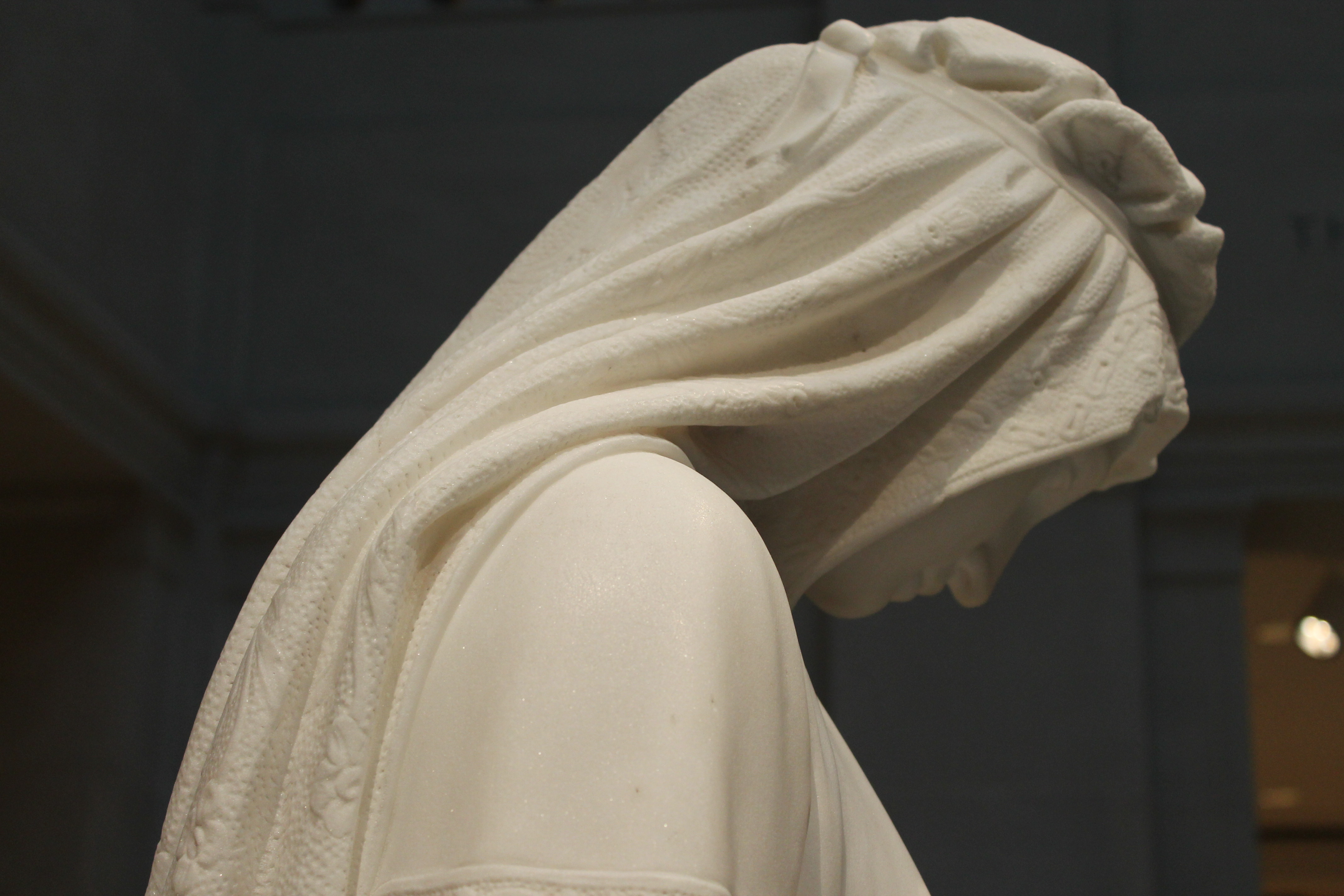
veiled in Chicago three

Do not be afraid Mary, said the angel Gabriel, for you have found favour with God. And behold, you will conceive in your womb…

Now: I’m a man. And if I’ve learned nothing else, in my earlier years, from having spent quite a bit of time around pregnant women, I’ve learned that for a man to talk about what it’s like to have a baby is a dangerous thing! How can ANY man really know? I’ve been fortunate enough to rub pregnant bellies. I’ve watched bellies grow, put my ear to a belly and listened to heartbeats, put my hand out and felt a belly kick while a tiny little arm or head or bum inside is moving around. I’ve done all that.

But I’ve never ever owned that belly that’s full with child. I’ve never ever had all that blood and amniotic fluid sloshing around inside me, never felt the water retention, the sore feet, the growing breasts, the relaxing ligaments, the stretching and pulling and fatigue and hormones. I’ve probably been almost as close as most men can get to a pregnancy. But I’ve CERTAINLY never been pregnant.

The fourth Sunday of Advent is the Sunday of pregnancy, and I am a man. What’s more, it’s the Sunday of the Virgin Mary, what the Church Fathers called the Theotokos, and I am a Protestant.

But despite that, I believe there’s something for all of us in this story of a conception and pregnancy. It’s no mistake that the last Sunday before Christmas is the most pregnant Sunday of all, not just literally, but also figuratively. Somehow, this particular day in the church’s calendar, just a few days before the most brash and crazy and hyped and frenetic and overadvertised and overstressed and yet somehow, we hope, one of the most holy – of all festivals, you and I are supposed to sit for a minute, like pregnant women who have to put their feet up. Today we’re supposed to consider what it means to be growing, like Mary, the Christ child within us.

In one sense, the story of Mary, placed as it is right now just before Christmas, is a call for some common sense about all births, but this Birth in particular. You can’t have a baby without a pregnancy, the Bible is saying. Right? Right. Of course! And we shouldn’t expect to have a real, meaningful Christmas without something growing and developing in us, either. In our world of instant everything, there is no disposable Nativity. I can hang out my Christmas lights at the last minute, but not my spirituality and my faith. If we think we can pull out love and joy, peace and goodwill like pulling the Christmas ornaments out of a box in the basement at the last moment, we’re sadly mistaken.

Babies don’t come from nowhere (now there’s a line!). They take nine months – sometimes awkward, sometimes difficult, sometimes joyous, sometimes frightening, sometimes even painful months, to develop. The same is true of a real, meaningful celebration of love and peace and justice.

This last week has been more horrific than most. The gunman in Australia who held hostages, resulting in deaths, in a Lindt café in Australia. The poor children murdered in Pakistan. North Korea hackers cause the shutdown of a Hollywood film, jurors deliberate in the Luc Magnota case right here in Canada.

Can you and I celebrate peace in the next few days? That depends: have we made a commitment in a hundred small ways to living peacefully and in justice from day to day with our neighbors and our family and children or whomever, throughout the year? Have we felt the growing pains of peace?

The same is true of love. Can we celebrate love born in the manger? That may depend on whether we’ve been willing to go through the hard slogging of loving each and every day, fulfilling the joyous commandment to love even those who do not love us.

It’s always seemed to me, as a man, that pregnancy is partly the baby starting to make its presence felt with the parents even before it’s out of the womb. At the very moment of the annunciation, Gabriel is already saying to Mary what kinds of things to expect: you will name him Jesus. And he will be great, and will be called the Son of the Most High, and of his kingdom there will be no end.

I find several things illuminating about this passage. It’s also more than a little strange that the angel Gabriel shows up in Mary’s private apartments. During that time, and in that society, for a young woman of Mary’s age to be caught with a visitor in her private space would be extremely scandalous. And dangerous.

And so: I’ve always wondered if, especially for a woman, there isn’t just a touch of irony in what Gabriel tells the young woman: Greetings, favoured one. The Lord is with you.

To be a thirteen year old, scandalized young child, pregnant and under suspicion? Some favour, and we who are Christians should keep this in mind when we think that we want to be God’s favoured ones. God’s favour is a difficult road. By the way, notice that it’s a woman who hears first the “good” news of the incarnation, and a woman who bears the pain.

This is God’s favour for Mary: she was about to become pregnant out of wedlock, risking losing her future husband and with him her chances for survival. She was about to live, for her whole life, the stigma that Jesus was an illegitimate child. She would never live down the accusations, and then when Jesus got old enough to go on his own and teach, he would almost deny her by saying that whoever listened to him was his mother and sister and brother. And then, finally, she would see her own Son, the one for whose sake she had already suffered so much, nailed between his wrist bones to the wood by the Romans for a crime he did not commit, there to die a most horrible death.

And Gabriel says that this is good news.

Mary seems much more realistic. She was much perplexed by his words, it says, and pondered what sort of greeting this might be.

In these last few days before Christmas, we would do well to ponder the message that we are also hearing this morning in these lessons. Because I believe that the Gospel writer wants us to consider Gabriel to be talking to us as well.

God would like us to be messengers in our world. But think of Mary – pregnant and unsure of what would happen to her. We are to be a new type of messenger – not just communicating with words, but also by growing a new way of life, a more Christ-like way of life, within our very bodies and homes.

Some people cannot have children of their own, but what this Gospel talks about is the kind of life we can all bring to term, whoever and wherever we are.

Being a man, I don’t really know ‘from the inside, as it were’ what pregnancy is all about. But even from the outside, I can tell you one thing for sure – clearly, even when ultimately it’s joyful, it’s never easy!

May you and I, wherever we find ourselves this blessed season, learn from Mary to be realistic about what God wants to do with our lives, and still have the courage to say: “May it be done with us according to your will”.

One Bad Peach

Ontario peaches first basket

On Friday I stopped by my local grocery store to get something for a recipe I was making. As you probably already know, the Ontario peaches came out this week. There they were, on sale, so I stopped at the display. I lifted one basket out and looked at the fruit. The peaches weren’t ripe yet, so I replaced that basket and was just lifting another out when a man, who was looking at the same peaches beside me, did something strange.

Up to that moment I hadn’t really noticed him. From the corner of my eye he seemed normal enough – perhaps unshaven and a bit rough, although that could be my memory playing tricks. A man in his mid to late 50s, maybe, a bit older than me. Shorts and a black tee-shirt. Nothing worth remarking. But what he did was noticeable, and it was this: he’d been checking the peaches in another basket and apparently, must have found one he didn’t like. While I was lifting out my basket, he reached over, put the bad peach right on top of MY basket, and then took another.

Very slowly and deliberately, I removed the offending peach from my basket and put it right back where it belonged – in front of him. “There are bruises on it,” he said, when I turned fully around and glared at him. “Fine,” I answered, “that’s your problem. Not my basket.” He looked absolutely undisturbed. “Not your basket,” he repeated, and turned, and chuckled, and walked off.

It’s not everyday we come across such examples of what I would call entitlement. But it’s not exactly rare, either. Entitlement means believing you have a right to something, or to an a action, in a way no one else does. In this case, this man’s desire to get rid of a peach meant he could care less where he put it, even on top of my basket. The guy who throws garbage out the window of his car is falsely entitled, or the former Alberta premier who skims money from the public purse. The police in Ferguson Missouri who feel they don’t even need to explain why an unarmed 18 year old black youth was shot several times when his hands were up in the air are really horrific examples of entitlement, and of an attitude toward oneself and others that has gone badly, badly wrong. Entitlement comes out of, and leads to, injustice.

Our world, however, tells us that in one sense at least we have to be entitled. ‘The only way to get ahead is to believe in yourself’, say the best-selling books. “No one else is going to give you anything – you have to take it.’ Never apologize. Never look back. The squeaky wheel gets the grease. We all know that at least.

The woman we heard about today in Matthew’s story of Jesus, was just doing that. She was the squeaky wheel. She was taking what she had to take, damn the consequences. It must have taken guts. Because there were all kinds of reasons why this person shouldn’t have been approaching Jesus. Number one: she was a woman, and he a man. Number two: she was not Jewish, and Jesus was an observant Jew. Number three: she was a Canaanite, the first-century version of being black, or native, or whatever downtrodden minority you want to mention. You know how annoying beggars downtown can be, or those guys who do squeegee on your car windows? That was her. It’s no wonder the disciples are quoted as saying to Jesus: Send her away, for she keeps shouting after us. They were probably embarrassed to have her around. A dirty little Canaanite.

So in point of fact, she WASN’T like the man beside me dumping his bad fruit on my basket. And she really wasn’t acting entitled. You can tell that from what happens next in the story. She comes to Jesus, kneels, and says Lord help me. He responds in a way that, to be honest, sounds a bit entitled himself: It is not fair to take the children’s food – meaning, my healing is intended for Jews – and throw it to the dogs. Meaning, you.

She should have been upset. Enraged, even. At least as frosted as I was about the peach. Instead, she answers Jesus like this: Yes Lord, but even the dogs eat the crumbs that fall from their masters’ table.

This is not false entitlement. This is real bravery. She is standing up for what she needs – actually what her daughter needs – and she doesn’t mind the trouble, or ridicule, she will endure to get it.

And the good news is, Jesus calls this faith. Great is your FAITH he says to her. In other words, if this incident is to be believed, having faith is reaching out and grabbing on to our Lord for help even and perhaps especially when we don’t feel we deserve anything. But it does not come out of a sense of defeatism or a lack of self-worth. That Canaanite woman absolutely knew she was worth something, labels or not. Faith is what she did. It is reaching out for help, for what we need, or for what someone else needs, for JUSTICE, for mercy, and for healing, even if no one thinks we, or they, deserve it.

Too often in the church we think there are only two options: either the entitled jerk, or the too-nice, smiley and polite victim. And since we don’t want to be jerks we play the nice guy, the victim, even if we don’t really feel that way. The Canaanite woman was NOT being a victim. Not even playing at it. She was standing up for herself. She was being courageous. AND she was testing the boundaries of what was allowed. But she was doing it honestly, and with an eye to others – to Jesus, but first of all to her daughter.

The other bit of news we’ve been hearing about all week is the suicide of Robin Williams. Those of us who haven’t gone through it can’t pretend to understand severe depression. But what people who have experienced it say, is that it is like living in a prison.

Somehow, in spite of living in that prison, Robin Williams brought a great deal of joy to a great many people. There is a special tragedy in the fact that in the end, he was not able to escape the prison himself, and to have the confidence to reach out for help again. That should never be a cause for judgment, but for mourning. The actor felt, in the end, like he could not reach out to anyone. We can, but it is not easy. It requires a balancing of ego and need, of self-understanding and love. Great is your faith, says Jesus to the Canaanite woman. Rare, but not impossible.

When I arrived at the cashier on Friday, with my peaches in hand, guess who happened to be the person right in front of me in the line? Of course. God must have been having some fun with me Friday.

Okay, I thought. He’s just a weirdo. The world is full of them. Have patience and remember the times you’re a weirdo too. So I stood and waited my turn. There was a young woman at the till, maybe 20, 25 years old, and this fellow was saying something complicated to her about marking his groceries for delivery. I hadn’t been listening. All I heard was the very end of their conversation.

“You’re lucky I didn’t ask you for your telephone number,” he said to her. “Pardon?” she said. “Your telephone number,” he repeated, not looking at her. Then that chuckle again, and he walked off, not looking back.

I could see the young woman stiffen. Her facial expression didn’t change, but there was a bit of colour that came into her cheeks. I looked the other way, and waited. Embarrassed to be a man, and a man my age. There was nobody behind me, so I had lots of time. Finally, a minute later, I heard her say ‘Bonjour,’ to me as if nothing had happened.

The Canaanite woman was not entitled, or rude. Her self-confidence was not selfishness or thoughtlessness, or a delusion that made others around her miserable. She had found that balance, that blessed balance between need, and doubt, and courage, and self-awareness, that Jesus calls faith. There are a hundred times a day when we are tested. May we learn, in this case, not so much from Jesus, as from the under-class woman who showed what dignity and faith, what courage and love look like when they all comes together in the presence of our Lord. And learning that, may we too model justice, and find mercy and healing.


Let These Dry Bones Rise (a new hymn for 05 Lent)

(to the tune of “Arise Your Light has Come” Festal Song)

Arise four winds, and sweep
down on us from the skies.
Breathe deep among us, breath of God
and let these dry bones rise.

Create in us O God
your Spirit and your Word,
Once broken, we shall stand again,
And know you are the Lord.

Though mortal, we shall live,
our hymns you coax from earth,
Dried up and lost, you claim us still
From graves we’ll shout new birth.

Arise four winds and sweep
down on us from the skies
Breathe deep among us, breath of God,
and let these dry bones rise.

Text: Matthew Anderson
Music: William H. Walter 1825-1893

IMG_4582