Matthew Anderson

Fighting Hercules

IMG_1187

There’s a fascinating myth, from a time long before the New Testament, about the most famous of the Greek heroes, a half-man, half-god known as Heracles. Heracles is the hero we usually know by his Roman name, Hercules. There must be a hundred tales about Hercules and his exploits and combats and loves. But Isaiah 40 makes me think of one where Hercules meets a Libyan named Antaeus. Antaeus is a giant, and a terrible monster. Every passer-by he challenges to a wrestling match. And every wrestling match he wins. And then Antaeus kills those passers-by and uses their skulls to build a temple to his father, Poseiden. No one travels anymore. The giant has terrified and desolated the whole area.

Hercules meets Antaeus when he is forced to go past him on one of his quests. Antaeus, as usual, challenges the traveler to a wrestling match. Hercules, never one to shy away from combat, of course says yes. Antaeus is a giant. But Hercules is….well, he’s Hercules.

Unfortunately, despite that, the wrestling match doesn’t go well for Hercules. Strong as the hero is, every time he throws Antaeus to the ground, the giant only heals and becomes stronger. In fact, every time Hercules throws him down he comes back twice as fast and twice as tough. Something is terribly wrong.

As the Greeks tell the story, it’s only at the last minute, only just as he’s about to die of exhaustion and from the beating he’s getting, that Hercules realizes the giant’s secret. Antaeus takes his strength from the earth. Hercules realizes that so long as he’s in contact with the earth, Antaeus cannot be beaten. So then Hercules shows that he is a hero not just in brawn, but also in brains. He lifts the giant up from the ground and holds him away from the soil and hugs him in a terrible bear hug. Try as he might, the giant Antaeus cannot reach the ground. And so Hercules finally crushes him, and frees the country, and saves his life.

In this story, it’s actually the giant I identify with, not the hero. We hear, more and more, that we’re the first generation so completely disconnected from the real world. Where is the earth, for us? We’ve covered our planet in so much concrete, and spend so much time indoors, and so often we go straight from work to car to shop to house, that we don’t feel that vital connection to the environment that we need. I know some Finns who actually had their neighbors call the police when they saw them put their baby in a stroller and leave them outside. Outside is considered dangerous in our country! The younger we are, the worse it is, with our heads in screens or on smart phones or working in cubicles or texting. Too often we don’t feel that connection from which, like Antaeus, we gain our strength.

Have you not known? Asks Isaiah. Have you not heard? Has it not been told you from the beginning? It is the Lord who sits above the circle of the earth, who stretches out the heavens like a curtain, and spreads them like a tent to live in, who brings princes to naught and makes the rulers of the earth as if they were nothing.

And apparently, ONLY the Lord. A lot of our problems in this world arise from the fact that we human beings have ignored the fact that we’re NOT gods. We’re not above the natural world – we’re PART of it. We’re not above time, we’re IN time. And we’re learning more and more every year that we’re certainly not above our bodies. We’re not above the muscles, bones, organs and skin that make us up. We are – every single one of us – finite and physical. And so we need things: we need rest. We need renewal. And we need connection.

Isaiah 40 is one of the strongest reminders in scripture of who we are, and of exactly what connection we need. Have you not known? asks Isaiah. Have you not heard? The Lord is the everlasting God, who does not faint or grow weary.

Believe it or not the point here is not just about a deity. By drawing such a strong image of God, Isaiah is showing us what we human beings are NOT. Even the most powerful among us can be brought low by a cold, an infection, old age, or a tragedy. Our riches ultimately mean nothing. Our accomplishments will fade. As Isaiah writes Scarcely are they planted, scarcely sown, scarcely has their stem taken root in the earth, when God blows upon them, and they wither, and the tempest carries them off like stubble.

I don’t know if you’ve seen images of the massive snowfall in New Brunswick this week. There’s been something like – what is it? Four FEET of snow that’s fallen. They’ve been shoveling all week. There’s a video going around that some guy took on his cell phone of a train coming down the track near Moncton. It’s hilarious. You can’t even SEE the train at times, through all the snow that it’s pushing out of its way.

That’s the truth about the world, and about us. We’re in a world that is part of us, and from which we cannot and should not escape. Winter has a way of reminding us – we human beings are not so high and mighty as we sometimes think. We’ve spent so many years thinking we’re NOT part of the created order that we’ve fouled our own homes. The environmental crisis shows it. Imagine if Isaiah had known about asthma, childhood obesity, rising rates of cancers and the epidemic of measles and other diseases caused by the fact that, stupidly, we know about vaccinations but don’t use them: Even youths will faint and be weary, and the young will fall exhausted.

In perhaps the most ironic twist of all, we’ve also separated any faith we have from our creatureliness. We’ve acted, even in the church, as if God and creation were separate. Paul writes, in Romans: The creation itself waits with eager longing for the revealing of the children of God. According to the apostle, the world, like us, is part of this grand interconnectedness of all things, this sin and rebellion and redemption cycle. Creator-creation-creation-creature. We and our Creator and the earth that we are part of, all belong together. And only together can we connect with the strength of that earth, of being “created good”.

When we go to a funeral we hear these words: “we are dust, and to dust we shall return”. That giant, Antaeus, knew that it was the dust that made him strong. We too take our strength from being part of the creation where God has placed us. The more we realize that, the more we will allow ourselves actually to BE creatures. We’ll allow ourselves to admit that we have needs. We will allow ourselves to admit that in fact, suffering and pain, too, are a natural part of life. And the strange thing is, if we can really be weak, then oddly enough, we will be stronger for it.

God gives power to the faint. Those are the words of Isaiah. The powerless can and will be strengthened. He goes on to say: Those who wait for the Lord shall renew their strength. They shall mount up with wings, like eagles. They shall run, and not be weary. They shall walk, and not faint.

This is what our faith tells us. Hercules is a fine hero, and Antaeus a villain. But I understand my faith, not through the hero, but through the vanquished giant. Like him, we NEED the earth. Like him, when we remember where we come from, when we stay in touch and don’t let ourselves be isolated, from the earth AND from the One who created it, we will be the stronger for it.

Have you not known? Have you not heard? asks Isaiah. Wait on the Lord and renew your strength. God is faithful. May we learn to rely on that faithfulness, and from that faithful Creator, in our world, take our strength.

Thunder Bay

Image

We come in from the south-east at five thousand feet,

the turboprops slow without warning, spinning idle, breathy,

and we just hang there,

My face, staring out, floats in space by my seat,

superimposed on endless lake, and blue-green forest, and rock.

Some lucky Norse warrior’s final view

(they call the hotel here the Valhalla.)

The little trolley bumps and rattles. There are cheerful, practiced apologies,

hands making a final collection of cookie wrappers, newspapers, plastic cups,

the fetching of two empty beer cans the young woman in torn jeans leaves on her tray.

She has passed out. Her cell phone blinking.

We drop toward landing.

I see spots that become boats on the azure water, white trails coming and going I know not where.

One of the cloud shadows, I see, is ours.

In my bag: notepad, Wanderlust, agenda, bills, chocolatines

all untouched.

Dead Leaves not Burning Bushes

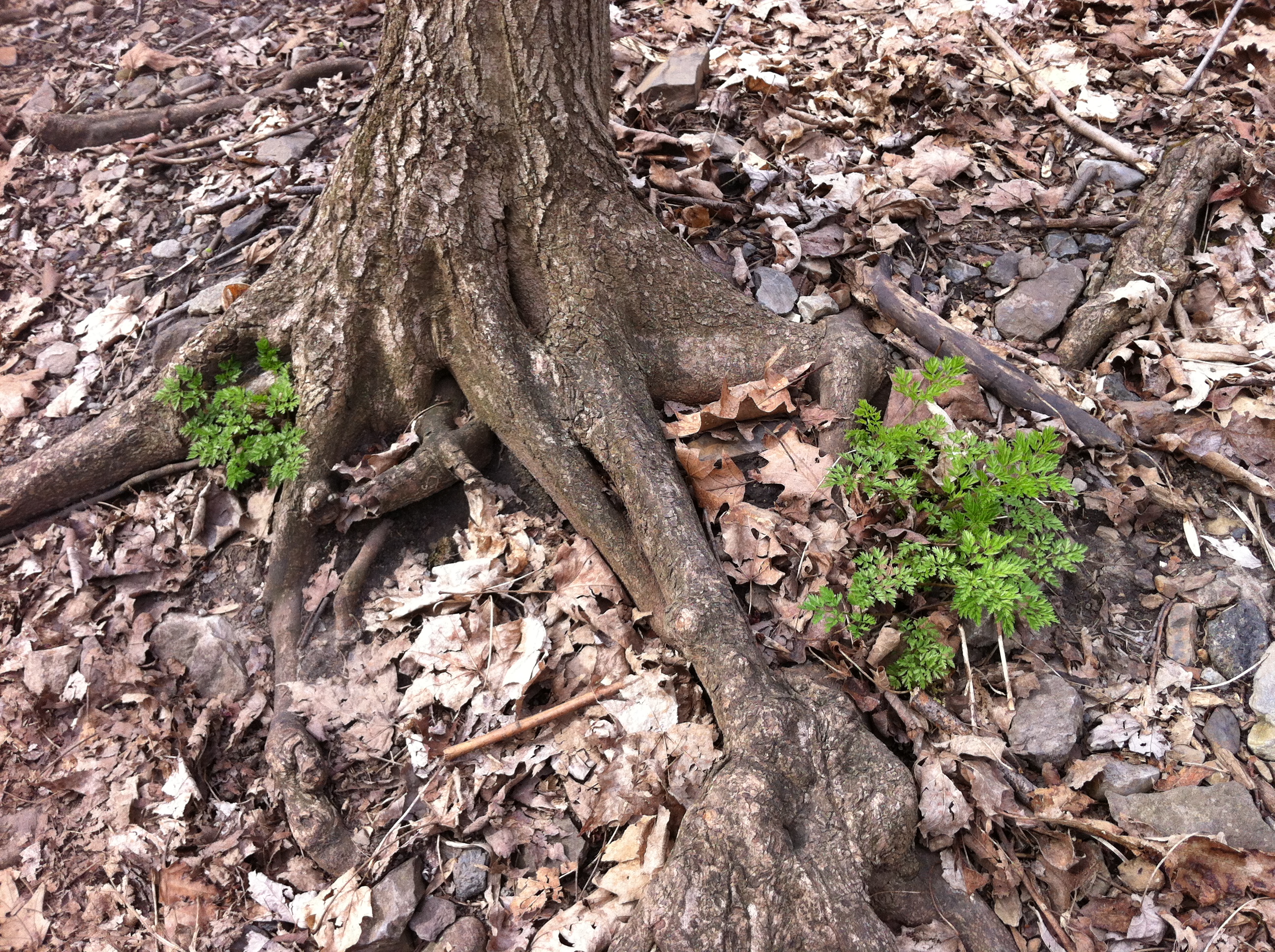
signs of life stump
Here and there a spotting of sprouts dots the mottled browns.

Spring has made a first pass through Mount Royal Park,

spraying green fiddlehead splotches across winter’s forest-floor.


A stream tumble-rushes down the bricked gutter I slowly climb.


I collect my breath; a pool collects the runoff,

and there at the junction we stop to examine each other.

My camera an act of worship.


But if there is an epiphany hiding behind some underwater twig,

or secret sacred words lodged deep in the mud and deadfall

to bubble up toward my reflection,

I miss them.

water

What’s Unrealistic

resurrection-icon

This Easter memory starts in a Montreal hospital, where I’m walking down the hall after a visit with a parishioner. A young man steps right in front of me, blocking my exit. I almost run into him. “Are you a priest?” he asks me in French. Non… Oui, uhhh…J’suis un pasteur luthérienne.” He looks at me a moment, and then grabs my hand and starts pulling me with him down a side hallway. “We need a priest,” he says in English. “You’ll do.”

“What? What’s going on?” I’m confused, but just as I’m getting my mind together, we come to a room with a small crowd standing outside the door. There are three or four well-dressed, middle-aged women, and two middle-aged men in suits. Most of them look like they’re crying or have been crying, or are about to cry. The young man who has brought me announces that he’s found a priest, at which they all look up in visible relief. S’il vous plait, Père, ici. C’est urgent….”I step into the room. There is an older man, Italian, I think, in a sweater, holding the hand of an elderly woman on the bed. Her eyes are closed and at first I think she’s already dead. Then I realize she’s having great difficulty breathing.

There are two younger men standing very near her bed too, and a young woman. They see me and the look in their eyes is not one I’ll soon forget. “Last rites,” I hear one of them say. “The priest is here. The priest is here.” They clear a place and with their eyes and their hands push me to the centre spot by the bed, right beside the woman, whom I can see is dying. They look at me with pleading in their eyes. “Priez. S’il vous plait mon Père…priez pour son âme.” I take her hand and look down at her.

Do not be afraid, says the angel to the two Marys who had come to anoint the body. Do not be afraid. In this world, things are not as you imagine them. There has been something that has happened. Something dangerously hopeful. Something unbelievably important. Do not be afraid. Something new has been done, out of love, for us mortals, not to stop the inevitable death and fear and pain and regret and loss. But maybe, just maybe, to pass through them to the other side.

Today is Easter – our celebration of the resurrection. That’s a great thing, right? “We are an Easter People” proudly proclaims the most recent headline in our church paper. I saw copies of it here at the church. Again, a great thing. Except that the problem that no one admits is that if you ask any Lutheran what it actually means to be an Easter people, we’re hardly able to tell you.

What IS Easter? It’s spring. Yes. But let’s not stop there. Spring is good – in fact, thank God it’s finally spring! – but that’s hardly enough. Easter is not just new life poking out of the ground after a long awful winter that didn’t seem to ever want to quit. And it’s not just holidays and time with family and pussy-willow branches hung with eggs and good food and chocolate bunnies.

Easter is more than that. But then what IS it?

Not long after that incident in the hospital, I was talking with one of my friends who is a non-Christian about it. He looked at me: “I can understand you wanting to give comfort in a situation like that,” he said to me, not unkindly, “but how can you participate in such a lie? You DO know how unrealistic this whole life after death thing is, don’t you?”

If I’d had my senses I would have answered him better. With the benefit of Easter hindsight, I might have said something like this:

The resurrection? Yes, it’s unrealistic. Of course. Like St. Paul said: resurrection is a stumbling block to Jews and foolishness to everyone else. No one comes back from the dead. No one rises – except in zombie movies and Greek myths and Gospel lessons. But life is our hope. And you want to talk about unrealistic? Let’s talk about unrealistic…..

What’s really unrealistic, even more than this story of the empty grave, is the topsy-turvy tarted-up first world in which you and I live. Many of you were poor immigrants to this country. You know. You know that this life that we now live is not sustainable, not ethical, too fast, too rich, too irresponsible for a small planet. Yet we say it’s normal. We say we deserve it. And we believe THAT.

Many of you know what it is to turn the temperature down at night because there’s not enough money. Some of you, like Jesus, have lived through war and occupation. You know what it is to see dead bodies in the street because of hate. You know what it is to flee from soldiers, and you know what it is to face up to soldiers, just as the women did when they came to anoint the body of Jesus, that first Easter morning. You know bloodshed and hurt, and yet you remember how to hope, somehow, even so.

So let’s see: life, death, hope, and fear…. this story seems pretty realistic to me.

What ELSE I might say to my friend (we’re good friends; he could take it) is this:

What’s unrealistic is NOT Easter. What’s unrealistic is our death-denying, hiding the facts from ourselves society that claims we’re not getting older but better. OUR society denies resurrection but then goes on to swallow the big lie that there’s no death, period. What’s unrealistic is paying hundreds of dollars for creams and surgeries to hide our aging, ignoring the pennies needed for other good causes, and living in a world where the contents of a dumpster can be national television.

What’s unrealistic is a society that on the one hand celebrates little chicks and baby rabbits on Youtube while on the other hand stuffing 99.99 percent of those little chicks into tiny cages so far from the ground they never see a living thing, and live and die horribly as trapped, maimed, drugged and miserable creatures until the day someone looks at their remains through cellophane and haggles over whether they cost 98 cents or 88 cents a pound.

What’s unrealistic is consuming 80 percent of the world’s resources while being 20% of its population, and saying we can go on like this forever.

What’s unrealistic are low-fat, low-carb, stevia, spa bodies and minds that have turned to mush from never being challenged by ideas bigger than where to take our winter vacations or whether green or blue is the spring colour.

What’s unrealistic is buying water in plastic bottles ignoring the fact that Coke or Pepsi have taken it from the taps in the first place, and calling our wasteful, glittery, appetites healthy. What’s unrealistic is paying 6 dollars a day on coffee and muffins at a Starbucks, handing over the change to the barista while saying to the person beside us that we’re poor. What’s unrealistic is complaining about whether a politician swears or gets divorced but not what their record is on public housing, or education, or kickbacks. What’s unrealistic is saying that children are our future and it’s up to them now as some kind of sneaky way of admitting that we screwed up and now all we want to do is retire in peace and luxury and leave the mess to them.

In other words, I’d say to my friend, there are MANY types of unrealism. And the Gospel lesson today about life through death is NOT the most unrealistic, nor the most harmful, thing we believe. In fact, for those of us who believe, it’s actually a deep truth.

There’s a bit of text that’s unique to Matthew, which is the Gospel we’ve been reading this year. After Jesus dies, it says in Matthew’s Gospel that the city leaders come to Pilate to ask him for a guard for the tomb. Matthew’s the only Gospel to recount this request for soldiers. “We want to make sure that his disciples don’t come to steal the body,” the city officials say, in what is surely Matthew fending off later accusations, “Otherwise his disciples will claim that Jesus has been raised, so that the last deception is greater than the first.”

That phrase has always stuck with me. The last deception greater than the first. How can we, who celebrate this day, answer people like my friend, who believe that we ARE living a deception?

I think it comes back to the angel. Every year we change the Gospel lesson for Easter morning. But almost every year, in every different Gospel, the angel’s words are the same.

They’re the words I prayed in the hospital: do not be afraid. Death is still around. But do not be afraid. Its hold has been broken. The troubles of our lives – the hurts and pains and worries and lonelinesses, the grudges and deep aches and concerns and fears and stresses – all these are incredibly powerful. AND REAL. But so is life. Do not be afraid. That’s Easter’s promise. There is a spirit of hope. There is laughter in the pain. There’s a dance of life to which all are invited but not all answer. Death cannot be avoided. But it will be overcome.

We DO go through trials and tribulations. Yes. We DO have our times where no life is to be seen. Yes. We DO have depression and sadness in our families, and hurts that warp our very natures sometimes. It doesn’t matter how much we smile, what kind of car we drive, or what we look like. There is not a person here, as Easter-y as we all look, who is not hurting in some way about something, even this morning. I am sure of that.

But then, thank God for Easter all the more. The Marys were on their way to anoint a dead body when they were surprised by life. Easter is intensely realistic. That day in the hospital I was called to be a witness, not to death, but to hope. I looked down at that woman in the bed and knew that what mattered was not who I was, but the faith I represented. What they wanted was a prayer – for her spirit, a prayer for confidence, and a prayer recognizing their love for her. A prayer that life might somehow come out of death. I prayed that prayer with the family. And today we claim that prayer for each one of us. Do not be afraid. Life can triumph. Christ is risen. He is risen indeed.

Let These Dry Bones Rise (a new hymn for 05 Lent)

(to the tune of “Arise Your Light has Come” Festal Song)

Arise four winds, and sweep
down on us from the skies.
Breathe deep among us, breath of God
and let these dry bones rise.

Create in us O God
your Spirit and your Word,
Once broken, we shall stand again,
And know you are the Lord.

Though mortal, we shall live,
our hymns you coax from earth,
Dried up and lost, you claim us still
From graves we’ll shout new birth.

Arise four winds and sweep
down on us from the skies
Breathe deep among us, breath of God,
and let these dry bones rise.

Text: Matthew Anderson
Music: William H. Walter 1825-1893

IMG_4582

Did Jesus Flirt?

Baby Jesus Grapes Cranach

There are just some things that we don’t imagine Jesus doing.
Even though, technically, the church holds to the doctrine of what is called “incarnation” – that is, Jesus was completely and fully human – still, we don’t think, or even LIKE to think, of Jesus engaged in some activities that are just part of every day for the rest of us. There’s nothing particularly edifying, for instance, in imagining Jesus with a sore back! Or getting up in the morning and shaving.
But Jesus was fully human. And one area no one touches, if you’ll pardon the pun, is a part of being human that’s actually quite important: our sexual identities. IF Jesus was fully human, then he had a sexual identity and sexual feelings. They might have been very important in his life or less important, we don’t know. But every human has them. No theologian – and certainly no pastor who wants to keep his or her job – would ever discuss this. I’ve seen a couple of treatments, but mostly from fringe thinkers and crackpots.
So…I would like to say, right from the beginning, that I will, for the most part, be a coward on this subject too. My point is not to talk about Jesus as a fully sexual being. But it is to at least indicate something that perhaps has been missing from some discussions of the so-called “Woman at the well” story. According to John’s account, Jesus is traveling on his way to Galilee and goes through Samaria. He stops at Jacob’s well, and the disciples go off to find something to eat, leaving him alone. A woman comes, oddly enough at noon, to fetch water. It is a man and a woman alone, a Samaritan and a Jew. There are charged lines of ethnicity and politics and theology here, all at once, as the discussion soon points out. But there are also charged lines of gender.
Jesus is the first to cross the line. But then he seemed to be good at that. Instead of just ignoring her, he says: Give me a drink. Not so much as a “please”, either. To which the woman doesn’t just say “yes” or “no”, although she should have. Right from the beginning we see that this Samaritan is no ordinary individual. Now how is it, she asks – and you can almost see her one hand on her hip, her tone of voice slightly accusing – how is it that you, a Jew, can ask that of me, a Samaritan? “How dare you?” Like some people would say: “no respect at all”.
Jesus then says, “If you knew the gift of God, and who it is that is saying to you, ‘Give me a drink,’ you would have asked him, and he would have given you living water. And the woman answered him back: “Sir, you have no bucket, and the well is deep. Where do you get that living water?”
I think what’s going on in the Gospel this morning is actually a flirtation of sorts. Maybe not overly sexual – although it is between a man and a woman. But at the very least a verbal flirtation, in the sense that each of them is gently teasing the other, and each enjoying the matching of wits. For all of the interesting people Jesus meets in John, I think this individual is the most interesting and that’s part of why this story is there in the Gospel. There’s a word game. A kind of “He said – She said”. The Samaritan woman starts by using the literal meaning of words and Jesus starts by using the symbolic meaning, and then, just when you realize what they’re doing, they both switch and do the opposite. It takes two people to do that, and to enjoy it. I can almost imagine Jesus smiling at the joke when the woman talks to him. And her smiling back.
In short, maybe these two liked each other.
Give me some water, says Jesus. Clear enough. He wants the wet liquid. You’re a Jew, she answers. Theological. She’s stalling. If only you knew, I’d give you living water, he says. Wait a minute – all of a sudden we’re not exactly talking about H2O anymore. Give me some of that living water that ends thirst, says the woman, and I won’t need to haul it up the hill. Making fun of Jesus and his flipping back and forth…just a little. Water, water, water, and water, but not the same meaning each time. Literal, figurative, symbolic, real – lots of the double entendres that are characteristic of flirting, and all in only a couple of verses!
Jesus and the woman at the well weren’t talking TO each other. They were, on purpose, talking past each other. Having a little fun in a really serious way. And I think that the Samaritan woman, so low on the status ladder that the disciples wouldn’t even talk to her, if she was dumb, was dumb like a fox – she wanted to misunderstand Jesus. But he also knew what he was up against, as did she, and that’s the reason that despite all the intentional misunderstanding, there’s also more real dialogue in this encounter than in many that Jesus had with supposedly more important people.
Flirting with Jesus is not something we would normally think of as what pious people should do. Good Christians  pray, we worship, we learn from, we study – but flirt with Jesus?
Don’t we? In its purely negative sense, don’t we sometimes purposefully ignore the plain truth of what we hear, while pretending to understand? Like the woman at the well talking about water, when the Bible talks about justice, or about our attitudes to the outcast and the marginalized, sometimes it seems as if we’re only listening enough to hear the words and not get the real meaning behind them. We ignore what we don’t want to hear. We’re coquettish. We wink at the hard teachings too much.
But that’s the negative sense. I believe that the flirtation, if there was one, between Jesus and the Samaritan woman was much more good-natured than that. Quite natural. And perhaps here, too, we have something to learn.
Christians are so EARNEST. If God created a sense of humour in us, it’s to be used, and maybe especially in serious situations. We need, sometimes, to take what the Bible says with more of a sense of humour. We can look at the situations we get ourselves stuck in and say: now that’s funny. Or we can show by our own sense of self-irony that we know we’re just not as important as all that.
Eventually, at the end of the debate, or the flirtation, or whatever it is, Jesus himself brings home the point. And this is how he does it: he comes clean about who he really is.
In other words, how do we really finally know what words signify? We know in relationships. As soon as the Samaritan woman, smart as she was, gave up her defenses and really MET Jesus, and as soon as Jesus also gave up his word plays and revealed himself, that was it. Words take on meaning in relationships. The point of conversation that becomes serious is a testing of trust and intimacy.
People are funny. We can pretend to speak the whole truth to each other and miss the point completely. Or like Jesus and the woman at the well, we can barter with each other in half-expressions, while both knowing what is going on, and what is at stake. May you and I learn how to start with our relationships, to each other and to God, so that we can learn the truth, as Luther once said in a different context, in, with, and under what we hear. Maybe we should all be doing a little more of this kind of banter with the truth of the Spirit. And as we do, we might find that the peace of God, which passes all understanding, will then truly keep our hearts and minds in a joyful play of love with our maker and redeemer, and with the world God has made for us to walk through.

Face to Face (a spoken word)

Jesus tattoo

I know a woman, my age, who told me that when she was fifteen she and a young boy of her acquaintance, shy as her, spent a whole hour in her basement. 60 minutes. Exquisite, painfully adolescent, effervescent minutes. faces pressed together, lips and noses so close they were breathing each other’s air. Never once kissing. But their breath, back and forth, back and forth. Giddy with the excitement, the carbon dioxide of it all. And then she smiled, and looked over at her husband of 25 years, and said: “Do you remember Stew?”

Breath to breath. Oh there’s got to be something to that.

And God took clay, and formed it into the shape of a man, but it was empty. A ragged, lifeless doll, until God breathed into that doll, took a long deep breath and blew, Michelangelo had it wrong. Not Sistine Chapel fingertips at a distance, but this Adam, this man so close, cheek to cheek with the creator, chaos and nothingness, tohu webohu, face to face, the image of God in something new, receiving life. Do you remember Stew? Earth to earth, ashes to ashes. But then what of the spirit, that returns from whence it came?

In olden days, or so it says in our scriptures, the disciples of Jesus were locked in a room by fear, dead on the inside, or as good as dead with dread. Until, in the midst of prayer, flames appeared above every head, sucking the air out of that room, and leaving only the new breath, of power and might, of courage and of the fear of the Lord. the breath of joy, the sharp intake, the shock, the short sharp inhalation in that moment of divine wonder. Breath to breath. Spirit to spirit. And it was dark that evening, the dark of things hidden, or hiding, sweet sandlewood hanging on heavy summer air, How can a man enter into his mother’s womb, asked the elder, his face in the shadows. Careful. Those who have much to lose sometimes have trouble breathing. How is one born again? How is that possible? And Jesus leaned in toward that shadow: with God, all things are. And have been. And will be. The blessed breath moves where it will. It passes, yet no one knows where it has gone. Will it be long? asked the elder. Any moment now, Jesus answered. And then, spent and empty, on a cross, in pain he cried out: “receive my spirit!” And it was hard to tell in that moment – and sometimes still – if it was a blessing, or a curse.

Where I grew up, the wind blew so hard sometimes that as a young child you could open your coat and feel it billow like a sail, or perhaps like wings, And lean into it, and dance, and feel it carry you. But that was then. This is now. When I was a child, said Paul, I spoke like a child, I thought like a child, I reasoned like a child, Then when I grew up, I gave up childish things. But: we all have to breathe. So: May we open our coats and let them fill, to that breath that goes where it will, that sometimes takes ours away that sometimes fills us to overflowing, that spins us around, and sends us elsewhere. May we lean in, and breathe. May we learn, and dare. 60 minutes would be fine. But a lifetime better. And more than a lifetime, longer. For now we breathe into a mirror darkly, but then, nose to nose, cheek to cheek with the blessed, giddy with excitement, the spirit of it all, in the presence of our Creator, may we breathe like Stew, back and forth, back and forth, Breath to breath. Spirit to spirit. Face to face.

The Fourth Question

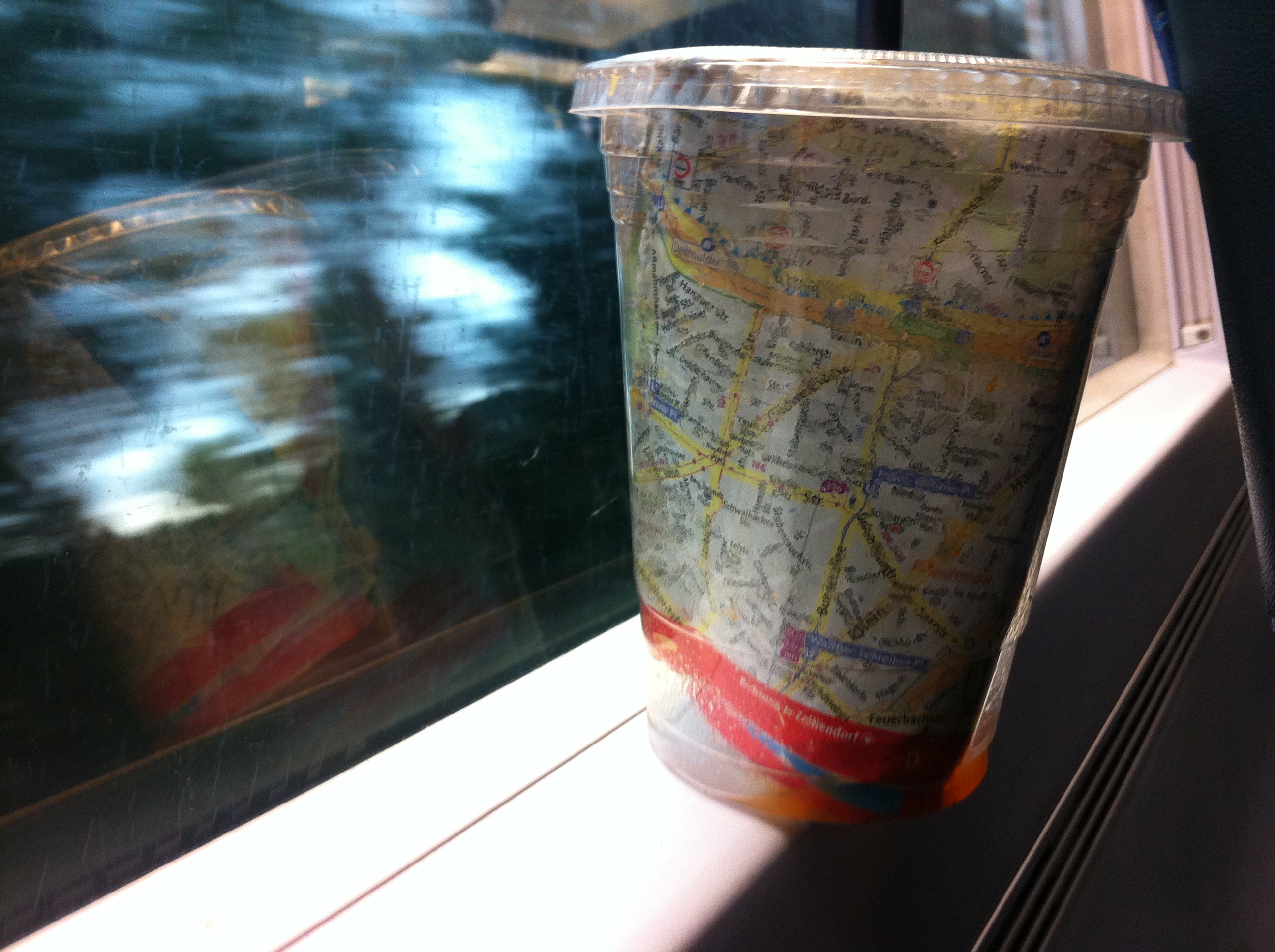
map in a cup

Last fall, when I was at the pilgrimage conference in Virginia, one presentation in particular caught my eye. The title of the paper was: The Fourth Question. It was a perfect hook. Of course I immediately wanted to go to hear that paper. I didn’t even know what the first three questions were. That didn’t matter. All I REALLY wanted to know was what the “fourth” question might be.

When we got to the session, the presenter turned out to be a scholar who had walked to Santiago in Spain back in 1979, when there were not as many people walking it as today. She’d walked it again recently, so she is a Camino veteran. And she said that in her experience, when you’re a pilgrim walking the trail, and you meet someone new, there are, almost inevitably, three questions that come up quickly in conversation, and one question you try to avoid.

The three questions that automatically come up are …… (want to guess?!)

The first question: where are you from?

That makes sense, I guess. It helps situate you. It establishes relations. “Oh, you’re from Canada. I have a sister in law who moved to Toronto….maybe you know her?” That kind of thing.

The second question has to do more with the trail. “Where did you start?” This is a bit more subtle. But having been on the Camino, many of us there knew what she meant. There’s a kind of pecking order among pilgrims, even if there shouldn’t be. If you started at St Jean Pied de Port, you’re doing the long haul. If you started way back in France somewhere, or up in Germany or the Netherlands, and have walked the whole way, then you’re really hard-core. And if you started out from a taxi that morning five kilometres down the road, well then you’re a beginner. So that’s the second question. It helps establish status, I guess. Although maybe that’s not such a good thing, it’s human nature.

So where are you from, and where did you start? The third question, the one that follows, is a bit like the second: “how far are you going?”

This question, she explained, is a bit exploratory as well. Because now you know where the other person is from and how serious they are, you also want to get an idea of where they’re headed. Given the fact that the trail can take over a month to walk, if the other person is going all the way to Santiago as well, then there’s a good chance you’ll bump into each other again. Maybe that would be nice. Maybe after a few minutes of walking together you already know you don’t really want to share days and days more time. Either way, it’s good to know where they’re headed.

And that, she said, is the list of the USUAL questions one pilgrim will ask of another in the first few minutes of polite conversation.

Of course, by that point all of us in the session are waiting on her every word. So? So? What about that fourth question?

“Now. The fourth question we pilgrims normally try to avoid asking each other…” she said, “begins with the word “why“….”

Jesus never ever asks the word why when he meets the disciples of John. It’s interesting. But I think it’s worth noting that he actually DOES ask almost the same thing in other words. When Andrew and the other young man start walking after Jesus, Jesus DOESN’T ask them where they’re from, or how far they’re going. According to John, he says this: what are you looking for?

In other words, why are you walking, here with me?

The WHY ARE YOU HERE question isn’t one that only pilgrims avoid. Sometimes it feels like it’s the one question that we, as a society, are keeping ourselves away from more than anything. Our too-too-busy lives, our 60-inch flat screens, our constantly being plugged into one form of distraction or another, our fixation on celebrities and sports….all of it adds up to an uncomfortable conclusion. If an alien from outer space, or someone from the distant past, were to walk into our world and look around, they might well ask themselves “well it’s clear that these people are trying to avoid something, but what is it?”

Perhaps at least one of the things we’re trying to avoid is this: things didn’t quite turn out like we expected them to. Most of us have been taught that if we try to be good people, and if we make money – a fair bit of money, we hope, and if we have children and buy a house and get a job and take a couple of vacations every year and do well, we’ll be, if not happy, at least content.

And some of us are. But if that script were generally true, then we wouldn’t be drinking too much, and watching an average of four hours of TV a day, and becoming overweight by eating when we’re not hungry, and taking pills for every twinge of depression and anxiety. We’re an overmedicated, underslept, over-stimulated, under-engaged and under-exercised, apathetic, wilfully ignorant and sick society. And because of where we live and how much we make, we’re suffering all this while actually being the most privileged general population in the history of the planet.

For us, the fourth question crosses the polite social fences we set up to protect ourselves. Why are you here? The fourth question represents the moment of risk, which is scary. But it’s also the moment of promise. Why? Because the fourth question is an invitation to relationship. “Why are you here?” (whether to a pilgrim or a friend or neighbor) means, or at least it should mean “I’m asking you this question because I care enough to hear the response. And I will honour it. And I may challenge it. BUT. Asking it will mean that we will walk away from this encounter, at the very least, having made real, human, community in this moment with each other.”

By asking the question “why”, Jesus invites Andrew and the other to contact. And they pick it up by asking Jesus another question. That’s how conversations go. They ask “where are you staying?” But this time Jesus cuts to the chase. It’s no more polite conversation but as Messiah and Lord, an invitation to community: “Come and see”.

Why are we here? is one of those big, existential questions. Maybe it doesn’t have an easy answer. But if we don’t even ask it, we’re avoiding one of the main reasons for being conscious (what they used to call ‘having a soul’).  We could do worse than to hear the words of Isaiah: It is too light a thing that you should be my servant to raise up the tribes of Jacob…I will give you as a light to the nations…”

The fourth question is one that, pilgrims or not, we should be asking ourselves and each other more often. Why are you walking this way, this lifestyle, this dream, this job, this home, this retirement, this path? Is there another way to walk? The Lord, who is faithful, the Holy One of Israel, has chosen you. As Jesus says, Come and see. May we hear the question, and the invitation, and follow the fourth question to whatever blessed and challenging places it may lead us.

Christmas Bloody Christmas

Image


From this week’s news:  GENEVA (AP) — A panel of U.N. investigators said Thursday it believes the Syrian government is committing a crime against humanity by making people systematically vanish…


In a report based on interviews with survivors and family members of victims, the panel said the war tactic being used by President Bashar Assad’s government amounts to a crime against humanity. It is a policy of spreading terror and mental anguish….Most of the victims have been young men.


And from Matthew’s Christmas reading: When Herod saw that he had been tricked by the magi, he was infuriated. And he sent and killed all the children in and around Bethlehem who were two years old or under….Then was fulfilled what had been spoken through the prophet Jeremiah: ‘A voice was heard in Ramah, wailing and loud lamentation, Rachel weeping for her children, because they are no more”.


Anyone who says that the Bible is not political has simply not read it. What could be more political AND more topical, these days, than mass murder in the Middle East, carried out by a desperate tyrant? Bashar Assad, meet Herod. Herod, meet Bashar Assad. There aren’t that many kilometers between Damascus and Jerusalem. There are more than enough similarities. Except that Herod was a good deal more clever than Assad. And built more monuments. And was, if anything, even more psychotically paranoid. Herod killed most of his own children.


Bible stories, when we take off the tinsel-covered glasses, are every bit as bad as today’s news. They are often – extremely often – accounts not of peace and harmony and carols sung by choirs, but of bloodshed, hate, suffering, disappointment and cruelty. There’s more blood in the Bible than in most books. And oddly enough, it seems that the birth of Jesus, before it brought life to the world, first brought death.


We especially forget that. The Prince of Peace, according to Matthew, came into the world with angels and nice pronouncements, but his arrival immediately precipitated mass murder. Jesus may have been what Hollywood would call a “good guy”. But if Matthew is to be believed, then there were a lot of parents in Bethlehem who would have had good reason to hate the Son of Promise.  This is no “Glory to God in the highest and on earth peace”. The Incarnation – the Good News – caused huge collateral damage. Maybe, part of the point is that it still could.


In other words, the  slaughter of the innocents is – or SHOULD be – a sobering reminder of the cost of truth and justice. There’s a hard learning here, especially for us who are comfortable: the RIGHT thing to do may not often be the popular thing to do. And it will almost certainly not be the easy thing to do. I’m one of those people who likes to please others, and for the most part, to stay safe. So it amazes and inspires me to read about people like me, like us, people maybe that you and I even know, from here on the South Shore/Montreal who go to work in the tough zones of the world, like the Syrian camps, or the Pakistan schools, or the clinics in Sudan. The kind of person who was killed just yesterday, a volunteer giving vaccinations near Karachi. Or closer to home, those people who stand up to the oil companies on the First Nations reserves or stand with them.


Yesterday I heard a rebroadcast of the interview with the young Pakistani girl, Malala Yousafzai. Her battle is not my battle. But I was amazed when the interviewer from the CBC said to her: what did you do when a Talib came to your school, or stopped you on the street? And she said, with such simple bravery: “I said to him, what I am doing is for you, too, and for your daughters and sons. I am not less than you because I am female. Education is a right.”


She spoke as if the man holding a gun would actually listen to her words and think about them. But we live in a world of Herods, where he wouldn’t, and probably won’t. Or maybe I’m wrong. Maybe he wouldn’t at first, but maybe, just maybe, enough Malalas might convince him.


And that’s where we come in. I’m not sure why this story about the babies being slaughtered because of Jesus is actually in the Bible. Frankly, it makes me uncomfortable. But I think that part of what it does, besides getting Jesus to Egypt, is to show how troublesome, dangerous and divisive the message of Jesus really is. And how Jesus’ birth requires COURAGE from us. Christmas is not just the stuff of greeting cards and FaceBook posts. The message of real love and justice at Christmas is intended to change hearts and minds. It’s intended to make us, at least sometimes, stand up in the middle of a conversation and say: “I don’t agree”. And that is a path that might, at some point, leave us standing with the First Nations at a demonstration, or in Palestine with the Lutherans there, or welcoming refugees, or demonstrating against a corporation or government that just doesn’t care.


This last week I watched the movie: “The Hunger Games”. It’s a story about power and the abuse of power. It’s about love and murder. It’s a very good movie, even though it’s Hollywood and not everything about the plot makes sense. But it shows the value of courage, and sacrifice, and how important it can be to stand up to power for the sake of love.


So: is the Bible political? And was Jesus political? Of course. Herod, who was a consummate politician, knew that Jesus’ birth was not ONLY religious, as if one’s beliefs could really be isolated from everything else. On the other hand, is our message ONLY political? No. Neither that. There’s lots of love and grace and salvation and justification and personal development in there too. But one side of our faith doesn’t take away from the other. How do we grow in holiness? By standing up for others. How do we find the peace that passes understanding? By looking where there is no peace. How do we greet the Messiah? By finding Christ in the face of those who are poorest and most oppressed.


This week, as we clean up after the celebration of the baby who lives, may we reflect on Matthew’s story of the babies who died. May we find in the holy birth of Jesus, the Messiah, a decision point and reason for our own faith. And may the story of the refugee who was the child of God inspire us to look in all such faces, on the roads we travel this year and those we may be called to travel, for the Christ yet to be born in and with us,

An Ice-Storm Christmas

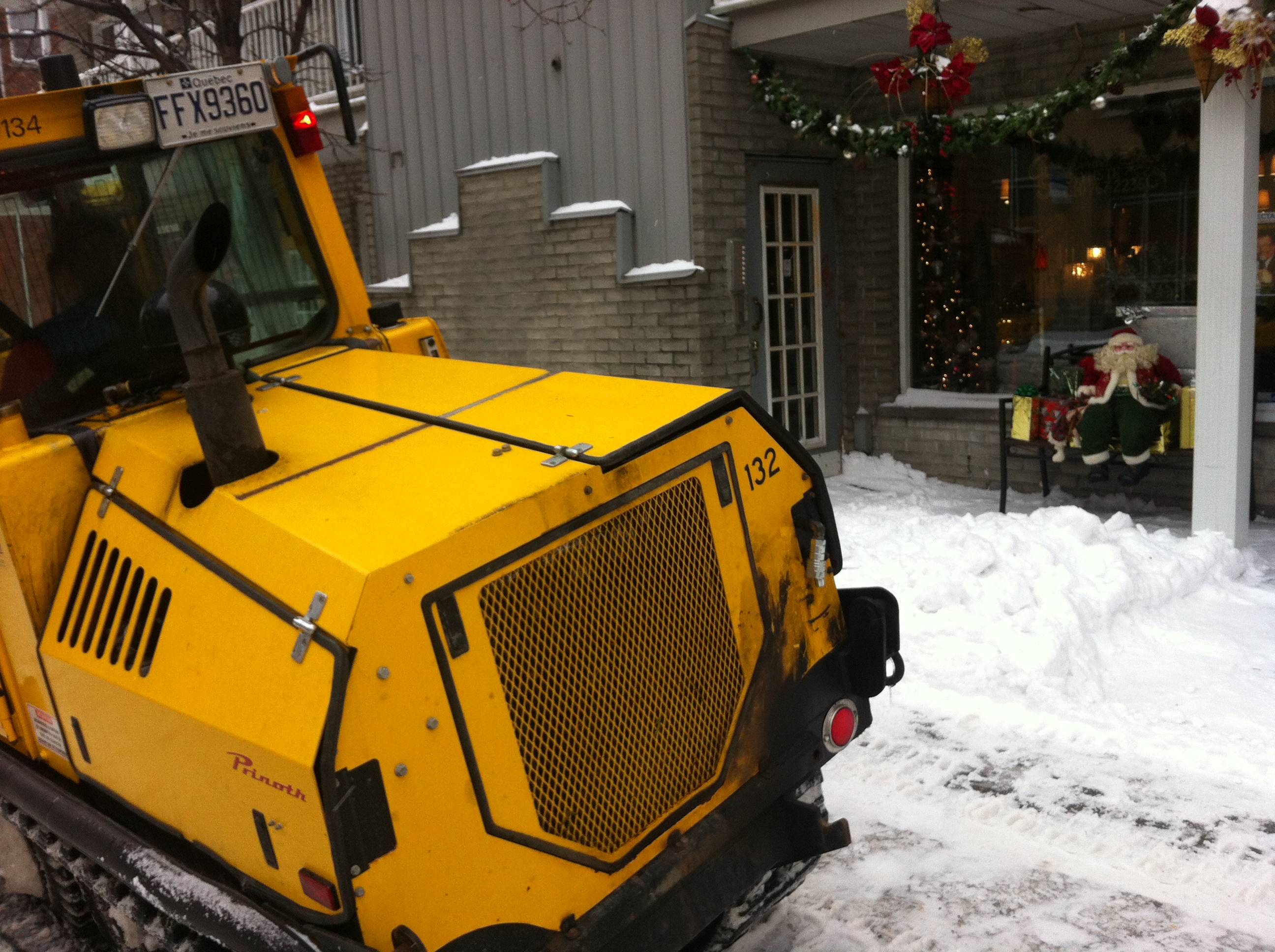
snow removal Santa

In the bleak midwinter, frosty wind made moan. Earth stood hard as iron, water like a stone. Snow had fallen, snow on snow. Snow on snow on snow. In the bleak midwinter, long ago.

I remember the church service we had here in Montreal in the middle of the ice storm – the other ice storm, the one back in 1998. No one was sure there was even going to BE worship. But in the end the people of Christ the Redeemer decided to try. All the bridges were closed because of falling guillotines of ice off of the signs, so I decided to risk the metro (which actually shut down completely about two hours after my return trip). Then eventually I caught a ride. When finally I got to the building, it was cold. There were only a few others, but all present seemed happy to be participating. We sang the hymns heartily and accapella; the organ couldn’t make a sound. Everyone wore their coats in the sanctuary, and some people held the worship books with gloves. After church, Ivar Traa, a big booming Norwegian who has since passed from us, brought his gas camp stove, and – making sure we had fresh oxygen supply – made tea and coffee and hot chocolate for everyone and reminisced about Christmases back in Norway where they had no power.

It’s odd – that day, almost none of the things that we normally associate with a good worship gathering were there – there was no majestic organ, no warm lights, no crowded pews. But, of that year, that is the one service that I remember clearly. I’ve often wondered why. Maybe because that hard experience connected in a whole NEW way with the message that we preach and teach and share and sing.

Everyone knows that the first Christmas, whatever it was, was not comfortable. We can argue over whether Jesus was born in a cowshed or a cave, in Nazareth or in Bethlehem, in the year 6 BC or 0 or some other time, in the winter or spring or summer. But one thing is clear. Whatever else it was, when the Word became flesh it was an unexpected birth, marked by difficulty, scandal and trouble, in the middle of a tough situation.

Which makes it all the more amazing that every year we spend so much time and energy and money trying to do the opposite, to find the “sweet spot” in marking an event that had no sweet spot. Completely unlike the few things we can assume about the first Christmas, in our time we want to find the deepest, most comfortable rut that runs through our memories, and crawl in there to hibernate in sugar, real and metaphorical, for a few, hopefully magical, weeks. The smell of baking. The hot chocolate or eggnog. The candles and smell of evergreen in our houses. The fires, the puula, the stollen, the songs. The wreaths, the gifts, the carols, the smell of cinnamon. We ALL do it, instinctively. I almost never eat herring throughout the year. But every Christmas I buy a jar and eat herring. Why? It’s a childhood memory from growing up in a Scandinavian home. It’s a sweet spot urge. We’re like children who want to put our stuffed animals (that is, our memories) in a very specific order around us as we cuddle into the long cold night that is winter.

That’s not always a bad thing. We NEED comfort, of course. Especially in winter. Nothing is more wonderful than holding someone precious, surrounded by lovely smells and warmth and love. But maybe, nice as that is, we shouldn’t mistake it for the only kind of holiness there is. Especially we shouldn’t do that when we have a faith that somehow always leads us back to the foot of a grave. There is more of ice storms from our God than we usually care to admit, and the spirit that spoke to the Baptist and called to Mary is often a cold wind that leaves us shivering and uncomfortable.

Ice storms, like the storm that has left so many tens of thousands in the dark right now all over central and eastern Canada, are a reminder of the fragility of all of our comforts. And they’re a reminder of the fragility of our security and safety in an environment that seems to be kicking back at us so-called “masters of creation” for our idolatrous beliefs that somehow we’re in charge.  I remember – as some of you must too – lying in bed in the quiet darkness and listening to the alarming sounds of tree limbs hitting the roof as they snapped and broke. There are lots of people living that right now, even though this time, here in Montreal, we’ve been spared.

A good friend of mine in a part of Ontario without power, posting on FaceBook, wrote “I’m not having fun yet” about her Christmas. She’s not the only one. So what can we learn from an not-fun, ice-storm, Christmas?

We can learn that there’s more growth in hardship than in comfort, almost always. None of us like them, but the hard times of life are often the most memorable. And instructive. If we survive, we come out stronger, despite our wounds. The light shines in the darkness, and the darkness has not overcome it.

We can also learn, deeper to that, what theologians and mystics call “the theology of the cross”, and the mystery of celebrating Jesus’ birth so close to the longest night of the year. It is when things are at their darkest, as Luther said, that the hidden God is closest. It is when there is no room in the Inn that the wondrous birth takes place among the animals and outcasts. It is when the darkness is deepest that we learn patience and hope, what to grasp onto and what we should let go, what is real and what is shadow. It is on the coldest of nights that we might hear angels singing strange and terrible songs that make us afraid and yet move us seek the child of promise in unusual places.

The good thing about sweet spots is, ironically, also the bad thing: they’re so good they keep us immobilized. When I gave a talk a few weeks ago about the annunciation and asked the gathering how a thirteen or fourteen year old Mary might react these days to the angel Gabriel’s annunciation, a jaded father in the back row pretended he was texting and had no time for the angel. We are a comfortable people, and that is a huge problem. The light came into the world, and the world came into being through that light, but the world did not recognize it. When you re-tune a guitar to play in a different string configuration, there is always a period of awkwardness and disharmony, before the new tones are established. Ice storms, of all sorts, are those awkward, disharmonius times, that we pray God will use to play in us a song the world would otherwise never have heard.

It’s easy for me to talk about these things this year. When I wrote this, I had fruitcake at hand, and I’d put some water with cinnamon sticks on the stove to give the apartment some more humidity. I actually managed to get a tree up, despite everything.

But I know, from experience, that this is not the only Christmas, or perhaps the best. Certainly not the most memorable. Christ was – and IS – born far from the sweet spots of life. We pray for those who are suffering hardship because of cold and lack of power right now. When heaven and nature sing “Joy to the World”, it will be a challenge to go out, into the cold, where they are, and where the restless, birthing God awaits.