Author: somethinggrand

writing and walking

The Pregnancy We All Have to Go Through

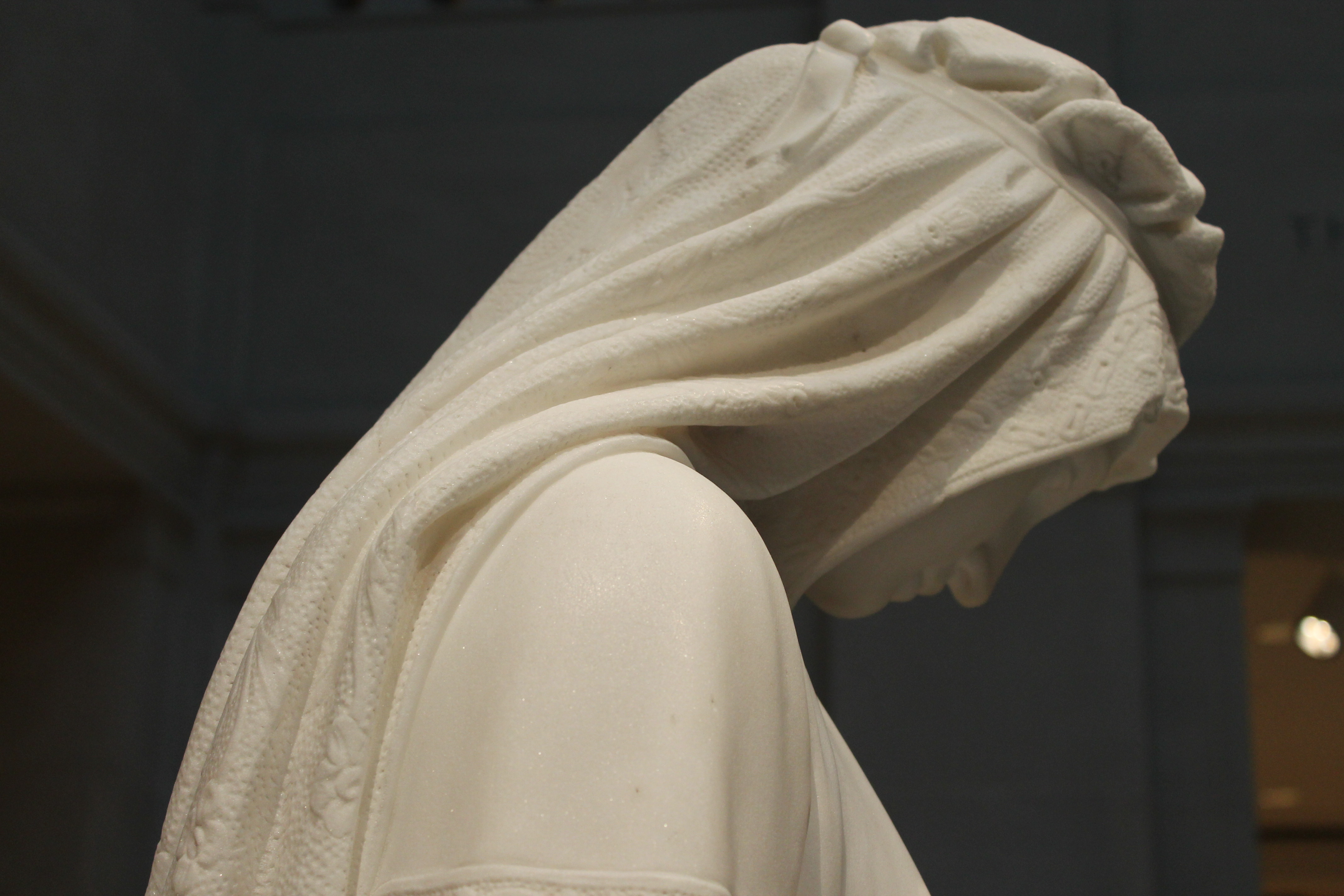
veiled in Chicago three

Do not be afraid Mary, said the angel Gabriel, for you have found favour with God. And behold, you will conceive in your womb…

Now: I’m a man. And if I’ve learned nothing else, in my earlier years, from having spent quite a bit of time around pregnant women, I’ve learned that for a man to talk about what it’s like to have a baby is a dangerous thing! How can ANY man really know? I’ve been fortunate enough to rub pregnant bellies. I’ve watched bellies grow, put my ear to a belly and listened to heartbeats, put my hand out and felt a belly kick while a tiny little arm or head or bum inside is moving around. I’ve done all that.

But I’ve never ever owned that belly that’s full with child. I’ve never ever had all that blood and amniotic fluid sloshing around inside me, never felt the water retention, the sore feet, the growing breasts, the relaxing ligaments, the stretching and pulling and fatigue and hormones. I’ve probably been almost as close as most men can get to a pregnancy. But I’ve CERTAINLY never been pregnant.

The fourth Sunday of Advent is the Sunday of pregnancy, and I am a man. What’s more, it’s the Sunday of the Virgin Mary, what the Church Fathers called the Theotokos, and I am a Protestant.

But despite that, I believe there’s something for all of us in this story of a conception and pregnancy. It’s no mistake that the last Sunday before Christmas is the most pregnant Sunday of all, not just literally, but also figuratively. Somehow, this particular day in the church’s calendar, just a few days before the most brash and crazy and hyped and frenetic and overadvertised and overstressed and yet somehow, we hope, one of the most holy – of all festivals, you and I are supposed to sit for a minute, like pregnant women who have to put their feet up. Today we’re supposed to consider what it means to be growing, like Mary, the Christ child within us.

In one sense, the story of Mary, placed as it is right now just before Christmas, is a call for some common sense about all births, but this Birth in particular. You can’t have a baby without a pregnancy, the Bible is saying. Right? Right. Of course! And we shouldn’t expect to have a real, meaningful Christmas without something growing and developing in us, either. In our world of instant everything, there is no disposable Nativity. I can hang out my Christmas lights at the last minute, but not my spirituality and my faith. If we think we can pull out love and joy, peace and goodwill like pulling the Christmas ornaments out of a box in the basement at the last moment, we’re sadly mistaken.

Babies don’t come from nowhere (now there’s a line!). They take nine months – sometimes awkward, sometimes difficult, sometimes joyous, sometimes frightening, sometimes even painful months, to develop. The same is true of a real, meaningful celebration of love and peace and justice.

This last week has been more horrific than most. The gunman in Australia who held hostages, resulting in deaths, in a Lindt café in Australia. The poor children murdered in Pakistan. North Korea hackers cause the shutdown of a Hollywood film, jurors deliberate in the Luc Magnota case right here in Canada.

Can you and I celebrate peace in the next few days? That depends: have we made a commitment in a hundred small ways to living peacefully and in justice from day to day with our neighbors and our family and children or whomever, throughout the year? Have we felt the growing pains of peace?

The same is true of love. Can we celebrate love born in the manger? That may depend on whether we’ve been willing to go through the hard slogging of loving each and every day, fulfilling the joyous commandment to love even those who do not love us.

It’s always seemed to me, as a man, that pregnancy is partly the baby starting to make its presence felt with the parents even before it’s out of the womb. At the very moment of the annunciation, Gabriel is already saying to Mary what kinds of things to expect: you will name him Jesus. And he will be great, and will be called the Son of the Most High, and of his kingdom there will be no end.

I find several things illuminating about this passage. It’s also more than a little strange that the angel Gabriel shows up in Mary’s private apartments. During that time, and in that society, for a young woman of Mary’s age to be caught with a visitor in her private space would be extremely scandalous. And dangerous.

And so: I’ve always wondered if, especially for a woman, there isn’t just a touch of irony in what Gabriel tells the young woman: Greetings, favoured one. The Lord is with you.

To be a thirteen year old, scandalized young child, pregnant and under suspicion? Some favour, and we who are Christians should keep this in mind when we think that we want to be God’s favoured ones. God’s favour is a difficult road. By the way, notice that it’s a woman who hears first the “good” news of the incarnation, and a woman who bears the pain.

This is God’s favour for Mary: she was about to become pregnant out of wedlock, risking losing her future husband and with him her chances for survival. She was about to live, for her whole life, the stigma that Jesus was an illegitimate child. She would never live down the accusations, and then when Jesus got old enough to go on his own and teach, he would almost deny her by saying that whoever listened to him was his mother and sister and brother. And then, finally, she would see her own Son, the one for whose sake she had already suffered so much, nailed between his wrist bones to the wood by the Romans for a crime he did not commit, there to die a most horrible death.

And Gabriel says that this is good news.

Mary seems much more realistic. She was much perplexed by his words, it says, and pondered what sort of greeting this might be.

In these last few days before Christmas, we would do well to ponder the message that we are also hearing this morning in these lessons. Because I believe that the Gospel writer wants us to consider Gabriel to be talking to us as well.

God would like us to be messengers in our world. But think of Mary – pregnant and unsure of what would happen to her. We are to be a new type of messenger – not just communicating with words, but also by growing a new way of life, a more Christ-like way of life, within our very bodies and homes.

Some people cannot have children of their own, but what this Gospel talks about is the kind of life we can all bring to term, whoever and wherever we are.

Being a man, I don’t really know ‘from the inside, as it were’ what pregnancy is all about. But even from the outside, I can tell you one thing for sure – clearly, even when ultimately it’s joyful, it’s never easy!

May you and I, wherever we find ourselves this blessed season, learn from Mary to be realistic about what God wants to do with our lives, and still have the courage to say: “May it be done with us according to your will”.


Off-Road in Bethlehem

Five years ago I was in Bethlehem. Five years isn’t that long, but it’s odd how the memory works. Or doesn’t work! I remember touring the church they say is built over where Jesus was born. I remember the Lutheran Centre where we heard speakers and bought some crosses and shared worship. But from the actual streets of Bethlehem I remember little.

DSCN0121

My strongest recollections are NOT of the official streets, the paths we should have taken. My strongest memories of Bethlehem are of the very few times – two, I think – of going off-road. Leaving the group. Abandoning the security of our guide and just exploring.

There was one main street that led from a drop-off point downhill to the Church of the Nativity. We had walked up and down that street a couple of times and frankly, to me, it got kind of touristy and boring. There were so many other streets to explore. So I asked my friend DL, whom I knew would have the same urge, if she’d like to try the side-street. Off we went.

It looked like it should run parallel, but you know the old saying about looks. Soon there was a left turn, and a right turn, and then a whole warren of little alleyways.

As we walked we were both getting quieter and quieter. I didn’t want to say anything to DL, and I suspect she didn’t want to say anything to me. It had only taken maybe ten minutes.

We were lost.           

A voice says: Cry out! And I said: “What shall I cry?” Did you hear that from Isaiah this morning? Get thee to the desert, it says, to the wilderness. And there prepare the way of the Lord, a highway for our God.

For whatever complicated historical and economic reasons, we live in a society that, more and more, wants to train the unpredictability out of us. We live in a world of systems. Computer systems. Communication and transportation and economic systems. Everything is a system. We’re told to behave in a certain way. Not only do most of us more or less successfully behave like that, but we get VERY upset with those who don’t. Or can’t. We put them into institutions. If John the Baptist were around now he’d be in a hospital or on the street. Or on meds. The only times we allow ourselves to see our wildernesses, our wild places, is up on the movie screens, where we can safely walk out of the theatre and tell each other that that’s nice, but it’s not real life.

We’ve become slaves in so many ways, and the worst kind of slaves – slaves that actually WANT to be where we are. We’re like the ancient Hebrews who told Moses: “why did you bring us out here into the desert where there’s no food? Weren’t we happier to be well-fed – even if we were in bondage”?

Today’s lessons, each in their own way, are about EXODUS, which is a word that doesn’t mean all that much in our world right now. But liberation, which is what Exodus leads to, DOES mean something. Or it should.

Advent is about preparing for liberation. And however much we decorate the church or our houses, Advent is ultimately about how well we prepare ourselves and our communities for justice, and truth, for incarnation and for the risk of being out there, maybe a bit lost, preparing for a new way in the world.

This last week some of us at the university got free passes for the movie “The Exodus”. It was a big Hollywood production, with absolutely fantastic costumes and sets and 3-D effects. It must have cost millions, maybe tens of millions, to make.

But the point, for all that, was simple: there is captivity, and there is freedom. And sometimes we make ourselves captives even while we think that we’re free. Where does liberation await us? Almost always, the movie seemed to imply, it’s off the beaten track. In the “wilderness”, wherever that is.

Our churches are failing. Not all of them, but many. We’re closing buildings, shutting down congregations, bemoaning the fact that there is so much grey hair in the pews.

In one sense, that’s sad. But I wonder if what’s really happening is that we Jesus-believers are being forced out to where it all began: in the wilderness. It’s in the wilderness of NOT knowing what a building should be, in the wilderness of NOT knowing who should be part of our group, and in the wilderness of NOT having big budgets and buildings and programs that we can do what the prophet says we should be doing:

Cry out, says God. Cry out that the grass withers, the flower fades, but the word of our God will stand forever. Get you up to a high mountain, O Zion, herald of good tidings; lift up your voice – and how are we supposed to lift it up? – Lift it up, without fear, and say“Behold! The advent of your God!”

It starts, I believe, with allowing ourselves, every day, in our homes and work, to be less safe, and more spontaneous. It means forgiving ourselves, and others, for failure, because only by doing that can we learn to try again to succeed. It means relying on others, for only in community can a person survive the wilderness.

And it also starts by seeking justice, however imperfectly, and by keeping our eyes open. By so doing, says the prophet, we will be preparing our hearts for the Christ child. And if we don’t spend some time in the wilderness, it won’t matter how many lights we’ve hung or how Christmassy our houses look, we won’t be ready for Jesus no matter what.

If it sounds unsafe, it should. Can you imagine a crazier-looking character than John the Baptist? But every year he is our model of preparing a way for the Lord.

Lift up your voice with strength O Judah. Do not fear. Every valley shall be lifted up, and every mountain and hill be made low; the uneven ground shall become level and the rough places a plain. Then the glory of the Lord shall be revealed. And all people will see it together, for the mouth of the Lord has spoken.

At one point in our wilderness way to the Church of the Nativity, we stumbled into an open square. It was a market. Spices, meats, nuts, dates….everything seemed to be there. There were lots and lots of people. But as far as I could see, not a single other face that looked like mine. They were all locals.

We went left. No exit. Right. Again, no exit. Down a stair…dead end.

Eventually, we found our way to another street, and from there to another street, and emerged, eventually, via a series of lanes and stairs, back onto the main thoroughfare that we had left behind.

Was it a bit frightening? Yes, at least to me. Was it interesting? A thousand times more than the other way.

Prepare the way of the Lord. How? By being less afraid, by being more human, by being willing to act a bit crazy and look a bit lost. By loving, seeking justice, and by embracing the life we’ve been given and not worrying quite so much about the opinions of others. Maybe it was a risk going off-road on the way to the Nativity. But five years later, that’s the only street I remember. May we each, in our own ways, hear God’s call to go “off road”, and learn what it is to be out there, preparing a way through our homes and through our lives.

P1070484

Yard-Art Love

Christmas in Verdun

(author’s note: This story was published on line in Maisonneuve Magazine a few years ago. Although it may not be immediately obvious, it’s actually a kind of Advent, Annunciation story. Interesting that it’s set in St-Henri, and I now live nearby in Verdun, although I didn’t when this was written.)


There I was, butt-up, head-down, outside at midnight in my dressing gown. Smack-dab in the middle of lining up my plastic snails, someone at Hydro threw the city’s breaker. The darkness was just so – you know – total, with no big fat moon sitting like a pumpkin just over the neighbor’s clothes-line, that I lost the snails for a moment. It kind of makes you think you could be anywhere. Or anyone. It’s like when we were St-Henri girls pulling down the shade pretending to be camping dans les bois even though we could still hear the humming of the fridge downstairs and the adults talking, voices rising and falling with the rye and coke, the shuffling of cards, the arguments, the calling through the screen door for fresh packs of du Mauriers.

It wasn’t easy making it all the way back to the porch in that kind of blackness. Every footstep’s a decision. I closed my eyes – for concentration – and figured my place in relation to the big cement angel fountain in the centre of the yard. Saint-Gabriel help me see my hand in front of my face, I said, and then I just went. Stepped right around the flock of pink flamingoes, each with their one foot up, waiting. Inched my feet around the frog, knowing the little rascal was there, even without the sound of water shooting out of his mouth. Pictured the glass fairy globes on their poles so clearly I could touch them, passing. Waited till I could hear the lazy clack-clack-clack of the windvane duck, so I wouldn’t bump it off its tethered flight.

I heard geese that night. I swear I did. It was a remarkable Passover. Their calling out in the high darkness to each other made me look up. Oh my God yes. If it’s true what they say, that in this world there are ghosts wanting bodies, then they could have had mine. Perhaps they did.

The night drifted, with the streetlights out. I don’t know, I really don’t – what happened, exactly. Stars trespassed the city, came up my street, crossed my eyes. I fell right over the yard butts (a family of four in descending girth, thick white legs like sausages from their slacks), still looking up. Don’t know how long I sat there. Like eating candy at the drive-in. A good long while, I guess.

What we long for, we live in fear of finding, open and waiting, wanting nothing more than to fall into our laps like fruit off the trees, forever luscious. I’m not saying it was the stars, exactly. But two things happened that night: my troll disappeared, the one sent to me by my mother’s cousin’s sister (somewhere in Norway, I’ve forgotten where). That nasty short fellow with his long nose never did fit with the leprechaun. Better he’s gone now.

And best: I sit on the porch, growing fatter and closer to term with my precious little baby each passing week. A real-estate agent came by today, a nice man in a fancy car, sweating in his spring suit as he hung over the fence trying not to look at either my big belly or the manger scene (I decided to leave it up at Christmas). He said “Ms. Elizabeth, I could sell your house for a lot of money.” I told him about the ultrasound the doctor ordered, about the bulb in the streetlight over my yard that keeps burning out now, the city crews that come back every few weeks to repair it. I showed him how my ankles have swollen with the edema. I asked him about my collection – what would happen to it if I sold? But he didn’t really answer. Eventually he left, my leprechaun making rude faces after him.

My One Measley Talent

bball

When I was in high school, I knew almost nothing about basketball. My friends played. I didn’t. I played other high school sports, but not that. My friends were mystified.

“You should come out and play,” they said. “No, I couldn’t”, I’d answer. “You should try out for the squad!” they told me. You’re on the volleyball team already. Just come out. You’d have fun.

No, I can’t, I’d tell them.

            I’m too busy. Too much homework. Too bored. Too tired. Too this, too that.

But really? Just too SCARED.

It looked like so much fun. But I was worried. Worried I’d get out there and look like an idiot. I don’t remember now, but probably I still remembered when I was in grade two, playing some kind of elementary school basketball. I’d been sent out on the floor when I was still a child and had been so mixed up I’d been passed the ball and had gone the wrong way. As a six year old I’d scored against my own team. It was one of the most humiliating moments of my childhood. Maybe it was the laughter still in my ears over a decade later in high school. It looked like too much. I was scared.

But my room-mate persevered.

“Okay,” he said to me. “Tell you what. You want to stay in shape, right?”

“Right.”

“It’s easier to stay in shape when you’re working out with others, right?”

“Right.”

“The basketballers are in training. Right?”

“Right.”

“Then…”

“Then?”

“THEN, just come out and run with us, and do the training. You don’t have to try out for the team. You don’t have to do anything. Just come out and run and maybe shoot some hoops, and then when the team is picked you leave. Okay?”

“Okay.” I was nervous. But I agreed. I didn’t say yes because my confidence level had gone up. I said yes for one reason, and one reason only. My friend had asked me. And I trusted him.

Once there was a propertyowner, says Jesus, who went away on a journey. And before he went he summoned his slaves, and to one he gave five talents, to another two, and to another one.

If you and I think about this story at all, which we probably don’t, usually, we think that this is a story about how we Christians DO or DON’T use whatever talents God has given us. And that’s true enough….as far as it goes. But maybe this parable is even more about how, with whatever talents we have in our hands, we do or don’t do what we do as disciples, precisely because of the way we’re already predisposed to see life, and love, and the God who gave us both.

In other words, maybe this parable isn’t so much about talent as about trust. Like me and the game of basketball. I didn’t have talent. But I had trust. Trust in my friends, who told me they’d help me out on the court.

Notice what the slaves say when the Master returns. The slave who had received five talents says: Master, you handed over to me five talents. See? I have made five more. And the Master answers: Well done, good and faithful servant…enter into the joy of your Master. The same happens with the slave who had been given two talents.

But interestingly, the slave who had been given one talent is the only one of the three who is listed as having an emotional reaction. Maybe that says something. Listen again: Then the one who had received the one talent also came forward, saying, ‘Master, I knew – notice that word, because it implies judgement – I KNEW that you were a harsh man, reaping where you did not sow, and gathering where you did not scatter; so I was afraid, and I went and hid your talent in the ground. Here you have what is yours.’

Maybe what’s being judged here isn’t really the slaves’ success rate. That would be too easy. Maybe what’s being judged here are the relationships, that is, the fear or the lack of fear, and the trust or lack of trust of those three servants. In the end, this parable is not so much about our talents, as how much we trust ourselves to the One who calls us to use them, and the community in which we might use them. The slaves who feel confident, who feel secure in that relationship with their Master know they can go out there and invest, and risk, and possibly lose, but also possibly gain, for their Master. The slave who is afraid and insecure behaves exactly as you’d expect. What happens if you’re all nervous when you go to tee-off in golf? You duff the ball. What happens if you’re all nervous just before you sing? Your voice cracks. What happens if you’ve been given love and support and you trust yourself to the people around you, even if you have no lessons and no experience? You dance anyway.

As a result, perhaps before we ask the “what” question – what to do in life, maybe we need to ask ourselves the “why” question: why should we risk ourselves? Are we accepted, and encouraged, and loved unconditionally?

Someone could say that this is dangerously close to preaching a God who is really just a mirror to us – and I’m not saying that. But the bottom line, just about everywhere in the Bible, is love. So our Maker doesn’t just reflect our presuppositions. BUT. There’s still a huge truth to the fact that in faith, like in so much of life, we create some of our own realities.

I was afraid, and I went and hid your talent in the ground. Those who do not trust will not risk. That’s as true of our relationship with God as anywhere else.

There’s a group here in Montreal called the “I Can Dream” theatre and dance group. It’s made up of kids who have autism, or have Downs’ Syndrome, or are mentally challenged in one way or another. Yesterday they had one of their concerts here in Montreal and very nearly sold out the Oscar Peterson theatre. Kids who in many cases would normally be told they have no talent for anything, were up there singing and dancing and playing instruments and repeating lines from memory. The musical wasn’t all good. But it was all good, if you know what I mean. And some of it – one song in particular last night, an Italian operatic duet, was SO good in absolutely every sense of the word, so clear and so emotional and just so cleanly and well sung, so note-perfect and emotionally perfect that five hundred people stood up spontaneously and cheered. It was extraordinary. I wasn’t the only one wiping tears from my eyes at the beauty of what those so-called challenged kids could do, on anyone’s scale.

With love. That’s the key. And acceptance.

Once upon a time there was a young man who was afraid to risk playing basketball, but who trusted his friends, if not himself.

That invitation to play along happened thirty-seven years ago. I really was like that slave who had only one talent. I only really ever had one talent for basketball. Not two. Not five. Just one. But I made the team. And even as a not-very-talented player, for over thirty years I enjoyed that sport. I had the time of my life, even a few moments of beauty, until I finally snapped my Achilles tendon at the age of 52.

It’s a good thing for trust, which of course is otherwise called FAITH. Otherwise all that enjoyment, all those years, would have been lost to me.

The Master in this story is God. We are the slaves. And we are called, like in the parable, to be daring for our faith. No matter if we only have one talent. One talent can be enough. Because we will be loved, and accepted, whether we make it OR we fail, whether we do something beautiful in the eyes of the world, or something that’s just beautiful in the eyes of our Lord.

Once upon a time there was a Master who had servants with varying talents. May God help us to remember who we are, and whose we are. May we be as confident as the slaves who had two and five talents, or like the singers here in Montreal in the I Can Dream project. And then, confident that we are free – free to risk, free to learn, free to grow, and also, free to make mistakes, may we take OUR talents, as they have theirs, and go out there into the world. We’re not just here to BE blessed. May we go further – may we learn, in faith and hope, how, also, to BE a blessing.

Why We Shouldn’t Sing O Canada in Church

This last week we’ve witnessed the terrible tragedy of two Canadian soldiers murdered, not off in Afghanistan or Iraq somewhere, but right here, at home. The first killing was a half-hour’s drive away, in Saint-Jean-sur-Richelieu. An unsuspecting middle-aged soldier was hit by a driver who came out of nowhere, for no reason. The second murder was just down the highway in Ottawa. That second soldier was a nice young man in the prime of his life, who was guarding – if you can call it that – the war memorial at the Parliament buildings. He must have thought his tourist duty was the best job ever. He wasn’t guarding so much as posing. That was his contribution to the war – he spent his days dressed in a kilt, probably picked for that duty because he was good-looking, mugging for shots with tourists from all over the world.

And yet he was shot, at point blank, for no reason other than wearing the uniform of the Canadian military.

Four men dead, two of them soldiers. Whether the killers were actually militant Islamists as they pretended to be, or mentally-ill home-grown Canadians who wanted to pretend they were terrorists, the fact remains. It was the war in Iraq and Syria, that somehow, in some convoluted way, led to these killings.

And even though our news media, to their credit, generally haven’t gone all crazy like the American networks about this, even though we’ve tried to be balanced and not assume that there’s a terrorist horde around every corner in Ottawa or Montreal, that maybe these killers were crackpots, still, it was war that gave the killers the delusions they needed to act out and murder these poor men.

Come with me now, says Psalm 46, and regard the works of the LORD.

            The Bible talks about war. We forget that. It talks a LOT about war, a whole lot more than it talks about a lot of other things. Come regard war with me, it says. Note what desolations God has brought upon the earth – behold the God who makes war, not to continue, but to cease. Behold the God who breaks the bow, who shatters the spear, and who burns the shields with fire.

All, apparently, so that we human beings can just keep doing what WE do best: building MORE bows, and forging more spears, and hammering out more shields – or their modern equivalents. So we can kill each other some more.

The official response to the killings this past week is already in motion. Ottawa is locked down. The Parliament buildings, where people like you and me could just wander before, will never be so open again. There will be more and more, and more surveillance, and we will have asked for it, all in the name of security. We will, voluntarily, become more and more the kind of police state that we have fought against in the past. All to try and stop this kind of crazy extremist from striking again.

It’s clear there’s something terribly wrong with the system. But not just the system, there’s something wrong with the human race. It’s something inside of us. Otherwise it just doesn’t add up.

Today I saw a Christian priest smile at a young Muslim couple, the mother in a head-scarf, the father carrying a baby, as they followed their toddler down a hallway at the university. Not long after that a Jewish man walked by, with his prayer shawl fringe hanging under his coat. Everybody looked so happy and untroubled. You could hardly find a more sincere picture of inter-religious peace. On the metro I saw a young Afro-Canadian man, dressed in black with tattoos, wearing headphones and looking tough, get up from his seat and offer it with a smile to an older white woman. Inter-racial peace, looking easy. I was at a conference where Roman Catholics and Protestants and Buddhists and Muslims all sat together and chatted about what their faith means to them.

And yet this is the same world where there are beheadings, and tortures, and mass graves, and drones and kidnappings and burnings and more horror than we can even imagine.

So which is it? And which are WE? Are we human beings capable of – and ready for – peace with each other, and acts of toleration and respect and love? Can we for once in history live out the Psalm when it talks about breaking the weapons of war? Or what IS it in us human beings that creates those two killers, capable of going to a place like Saint-Jean or Parliament Hill, and taking an innocent life for no other reason than the uniform, so clearly NOT thinking about the children and spouses and loved ones left behind, about the devastation and hurt?

Very truly I tell you, says Jesus, everyone who commits sin is a slave to sin. There is a terrible slavery to evil in our world, an intentional and evil blindness that not only allows, but actually encourages murder, and rape, and torture. I find it almost impossible to understand, but clearly it is there. And yes, it IS usually on the other side of the world from our nice suburbs and houses and universities and parliament buildings. But not always. That evil is close at hand, and not always foreign.

So notice what the Psalm says. How does war cease? Be still, it says, and know that I am God.

It’s when we think that WE are gods, ourselves, that WE have the power of life and death, that we make decisions about other creatures – human AND animal – that are based, not on respect or empathy, but on cruelty and ignorance. Gods don’t need empathy. Human beings do. Our first task is to remember who we are. And who we are NOT.

Evil, according to the Psalm, comes from pride and from a lack of connection. What STOPS evil is the realization, and the training, if we’re talking about raising children, that we are LIMITED. What’s important is to realize that we don’t, and can’t know everything. That maybe any decision we make might be wrong. Call it humility. Be still and know that I am God. You are not. YOU do not have the power of life and death. I do, says the God of Israel.

Jeremiah puts it another way. This is the covenant I will make after those days, says the LORD. I will write my law within them, and I will write in on their hearts; and I will be their God, and they shall be my people.

This is actually what the Reformation was about too.

No human being can decide, said Luther. Not the Pope, not the Bishops. Not the Princes. But we can know this. We can know, and feel, and remind ourselves and others that we are loved just as we are. We are not gods, with the right to decide. We are limited human beings. Our job is to spread and celebrate life, not take it.

You and I can’t stop what’s going on in the Middle East, even when it comes home in such a terrible and costly way. But what we CAN do is to take every single chance we can to fight idolatry. We can make peace at home, and pray God that it spreads. We can refuse to judge, refuse to objectify, refuse easy answers and quick solutions.

There was the cavalcade of vehicles today, carrying the remains of Nathan Cirillo back home to Hamilton for burial. Some of the pastors of our church wondered whether it was appropriate to sing O Canada in service. Not that anyone asked me, but my answer would be no. We can sing O Canada elsewhere. Here, in our places of worship, our job is sing of a land bigger than any nation. And to pray. To pray for Corporal Cirillo’s poor bereaved family. To pray for humility. To pray for peace. And to pray that the words of scripture might come true, and the blindness of evil might give way to the light of love, so that the God of Jacob might truly remain our stronghold, the surest defense.

The Jesus Wallet

Jesus wallet

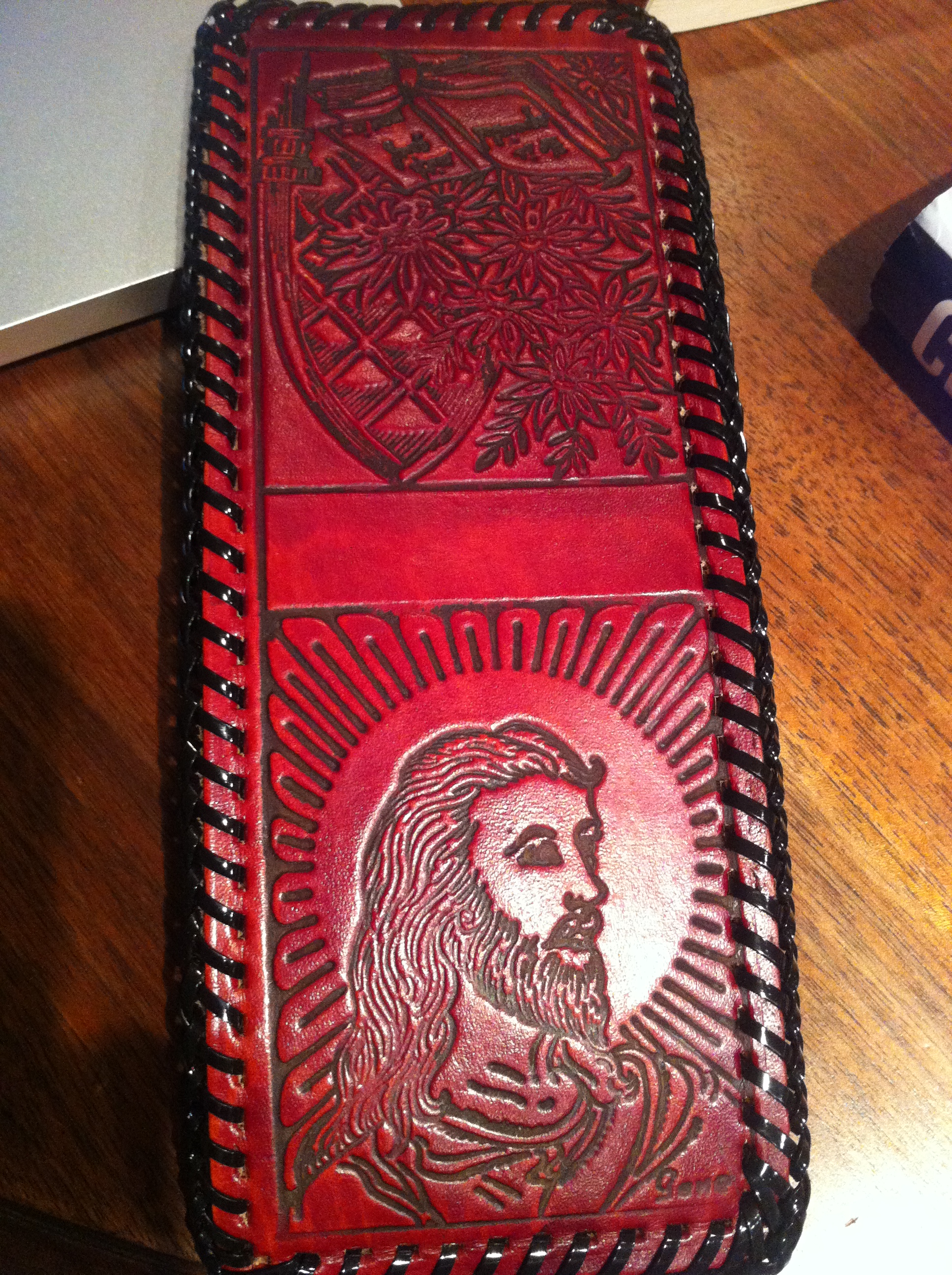
When I got home from the airport Thursday evening, waiting for me in the pile of mail, mostly flyers, that had accumulated while I was gone was a small parcel. The parcel was from Virginia. When I picked it up and turned it over, I saw the return address of my friend and fellow Lutheran pastor, Lyndon Sayers. The parcel had a little customs stamp on it saying what was inside. But I didn’t look at that. Instead, I did what any kid with a present would do! I ripped open the envelope and reached inside. And what I pulled out was this:

A wallet.

Now. There are lots of things I can imagine getting from Lyndon and his family. But not that.

Why would Lyndon send me a wallet, I wondered? It was red leather, one of those kinds of wallets I remember from growing up out west. A cowboy-wallet, with stiff, thick leather outers, an soft brown inner liner that smelled of fresh cowhide, and plastic threading winding around the outside. A BIG wallet. The kind you can imagine going with a cowboy hat and 100 dollar US bills. Nice, but not exactly my style.

I turned the wallet around so I could really see it, and that’s when I got the second surprise of the day.

There was the face of Jesus, carved into the leather by one of those leather-working tools and signed “Gene”. On the other side were some intricate flower patterns, and in the middle of them these words, taken from Isaiah 53: “For he was acquainted with grief”.

A Jesus wallet. A real Jesus wallet! Just for me.

When the religious leaders at the Temple in Jerusalem tried to trap Jesus, they did it by asking if it was right to pay taxes to Caesar. They thought they had him with that, since whatever Jesus said, he would have been either against the Emperor or against his own faith. But he answered like this: Why are you putting me to the test? Show me the coin used for the tax. And they brought him a denarius. Then he said to them: Whose head is this, and whose title? And they answered: the emperor’s.

I LOVE my new wallet. Lyndon knows I’m from the west, since he grew up in exactly the same small prairie town I did. And he knows I like kitsch. But as soon as you put Jesus’ face on a wallet, it seems to me that you’re entering some unusual – and potentially challenging -territory.

Imagine pulling that wallet out at the bar when you’re buying a beer. And there’s the face of Jesus, right there, looking you in the eyes. Now in the Gospel of Matthew, Jesus says that one of the things people criticise him for is being a “wine drinker and a glutton”. So maybe a beer wouldn’t be so bad. But imagine pulling out the wallet when it comes time to buy that fancy new cell phone that I KNOW I don’t really need. Or a meal downtown when I could have made a lunch. Or a four-dollar tea at Starbucks when I have a teapot in my office and Canadian Lutheran World Relief is asking for donations to help the refugees in Syria. I wonder if the Jesus wallet might just make me think twice then.

Jesus slid right out of the trap that the religious leaders were setting for him. He did it by saying that whoever’s face is on the coin is who that coin belongs to. Period. Give therefore to the Emperor those things that are the Emperor’s and to God those things that are God’s. In the ancient world, just as in ours, coins are – technically, at least – owned by the state. We just borrow what is known as legal tender.

But then what did Jesus actually mean about giving to God the things that are God’s? He could have been talking about what is holy enough for the Temple offering. Coins with a human image were considered idolatrous by the ancient Jews, who had to change them for special Temple coins that had no such image. But I think there’s a deeper meaning.

Jesus and his interrogators might have been opponents of each other, but as Jews they all believed one thing: when Israel’s God made human beings, it was in the divine image. Every human being bears the stamp of the Creator. As sure as any coin. Two thousand years later we who are Christians have inherited that belief from the Jews. We still say, at least, that we are made in God’s image. We can argue over exactly what that means – is that divine image in our capacity to imagine, to create, to love, or in something else? But somehow, in some important ways, we are, every single one of us, stamped with the divine.

In fact, a lot of books on spirituality say more or less the same thing. I was reading a Buddhist book this past week that said this:


“Science, in its zeal for objectivity, tells us that we are our bodies, the product of Darwinian evolution, originating in a chance combination of molecular gasses, our growth and decay dictated by genetic DNA codes. Thus death is the end. But there is something in the collective unconscious of the human species that intuitively knows that this “objective” definition does not embrace the totality of who we are…” (Levine, Who Dies? viii)


That book would not use the phrase, but we can: we are made in the image of God.

When faced with a dilemma, Jesus upped the ante. He’s like the businesswoman who is forced to sell her store to her opponents but then goes out and buys the whole franchise. Give the coin to the Emperor, he says. It’s only a coin. But you….YOU belong to God.

The point is: we can argue over all kinds of rules and customs. But it’s who and what we are in relation to, that’s important. When we have a baptism, and we pour the water, we say: “So-and-so, child of God, you have marked with the cross of Christ and sealed by the Holy Spirit forever.” For us that’s yet another of the ways we are first made, and then re-made, in God’s image. And our lives can either be a fractured mirror, broken by the sadnesses and troubles and hurts we all go through, or as we grow in maturity and in thoughtfulness and in peace with our own selves and with others, we can grow more and more into the beings we were intended to be. Our reflections will tell the tale.

It’s not easy, of course. Even Moses, when he wanted to meet God, was told he could only see God “on the way by”. You cannot see my face, God answers. I will put you in a cleft in the rock, and I will cover you with my hand until my glory has passed by, and then I will take away my hand, and you shall see my back, but my face shall not be seen.

Rather than a clear-headed, divinely-ordained clarity about the meaning of life and love, most of us kind of muddle through. We live in a world that looks rather more like God’s backside than anything else. We get flashes of what we think might be the truth. But then we fall back into our routines, where life just passes and our email inboxes are so full we despair of ever answering all those messages and we have too many bills to pay and worries to worry about and occasionally real catastrophes, and most of the time we barely even feel awake.

Luther emphasized what he called the “hiddenness of God”. He called it, in Latin, Deus Absconditus. But the message of Matthew seems to be that while we struggle through the darkness, the clearest thing we can do is to seek that image of God in ourselves, and in serving others. The person sitting beside you right now – that is the image of God – for us Christians, that is what Jesus looks like. The baby brought to the font – he or she is the image of God. The foreigner, the immigrant, the differently-abled, the sick, the hungry, the imprisoned. That is what God looks like, for us.

It does feel just a bit weird, having a Jesus wallet. But it’s not Jesus who had a problem with faith and money being so close together. It’s us. When we realize – really realize – and take to heart the image of God in us and in those around us, then we will see that Jesus doesn’t just show up on wallets. He’s everywhere: calling us to real life, and real service, looking for how we can lift up and honour that holy image wherever we find it.

Life is a Bowl of Cherries

IMG_1208

As many of you know, the first time that I ever went on the Camino pilgrimage in Spain I was wounded. I’d snapped my Achilles tendon and had it repaired by surgery. So I was in a cast that tilted my foot straight down, which was like having one foot in high heels. Add 25 pounds of luggage on your back, and the effect is to drive your toes into the fiberglass with incredible force and cut the skin with every step.

I just couldn’t keep up. So after four or five days, it seemed wise that I would let the more-or-less healthy-bodied continue to walk on without dragging me along like an anchor. Also, as nice as it was to be the welcoming committee of one, it didn’t seem the best use of my time or money either, to hire cars from one little village to the next and sit alone in abandoned town squares all day waiting for my friends to show up. So with the help of my colleagues at Concordia I’d cooked up a plan. I would head off to a country home in France owned by these colleagues, and spend a week with them enjoying lovely conversation, incredible wine, and the unmatched delights of the countryside.

Of course, there are plans, and then there are realities. Unfortunately my colleagues turned out to be not healthy enough to travel, and certainly not to France. No problem, they said graciously. Here are the keys to our place. You just go ahead and enjoy it. So I waved goodbye to my Camino friends, and jumped a train.

Three trains, an overnight in a semi-abandoned hotel at the border, and LOTS of walking later, I arrived at my little town in France. I was exhausted. There was no other word for it. I’d dragged my crippled body through more stations and up and down more stairs than I wanted to remember. I dropped my luggage, found out where there was a grocery, and walked another great distance through the town to a store to buy food. I hadn’t eaten properly for two days. I got my groceries. It turned out, with the requisite drinking water, that it was quite a few bags. No problem, I thought. I’ll just ask the check-out clerk to call me a taxi.

When they think you’re an idiot, the French have a way of speaking with a kind of disdain that really, only they seem to have mastered. The clerk arched her eyebrows at me, as if I had failed to register even a score on the IQ test of how to survive in little French towns. “Monsieur,” she informed me, “you are not in Paris. There IS no taxi here.”

Thus it was, that after 800 kilometres across country by train, completely exhausted, hungry and tired and alone, I tied six bags of groceries to my wounded body and set off, limping and hopping, jostling and sloshing, through an amused little French town to my destination. I was NOT happy. I was NOT pleased. And definitely I was complaining.

From the wilderness, says Exodus, the Israelites journeyed by stages. They camped at Rephidim, but there was no water for the people to drink. And there they quarreled with Moses, saying “Give us water to drink.” And they complained, saying: “Why did you bring us out of Egypt, to kill us and our children and livestock with thirst?”

There’s a long Biblical tradition of whining, but this has to be one of the lowpoints! At a place sometimes called “the rock at Horeb” and sometimes called “Massah and Meribah”, the complaints of the Hebrews reached a fever pitch.

In reality, they had escaped from murder, genocide and forced labour. They should have been happy. But somehow, wandering around in the desert, they were definitely NOT getting the deal they felt they were promised. They maintained, as we so often do, an unhelpful image in their minds of a future that became more and more unreal and romanticized. Oddly enough, the perfect place in those former slaves’ minds, began to look more and more like Egypt, the land of their oppression. It’s odd how often we wind up attracted to the very things that oppress us.

So they complained. They complained and they complained. And Moses – poor, put-upon Moses, reacted by – what else? – complaining too. Moses cried out to the Lord, saying: “What shall I do with these people? They’re ready to stone me.” There’s more humour in the Bible than we realize. I think this is one of those places. Moses is complaining about the Israelites complaining. In other words, the whining just keeps going up the chain of command.

We live in a culture of complaint. The City complains about the police not doing their job, the police complain about the contract negotiations, people complain about how cold it’s getting when two weeks ago we were all complaining about how hot it was. We worry about this and that and something else, without realizing how fortunate we actually are.

I’m sure you’ve heard the expression that with some people it’s: “easier to get water from a stone” than to get them to change their attitudes. The story from Exodus shows us that God’s people (including you and me) are SO stubborn and whiny that sometimes it’s easier to get water from a stone than to change human nature. So God opens the boulders and the water comes out. God can pull miracles out like rabbits from a hat. Even raising someone from the dead. But even God apparently can’t always change human nature. Then OR now.

There was a landowner, Jesus says, who went out early in the morning to hire labourers for his vineyard. He agreed on a fair daily rate with them. Then he decided he needed more workers, so he went back at 9 am to get more workers, and noon, and three o’clock. Even at five pm he went out and got a few more people to work in the vineyard. Then, at closing, when he gives the last-hired a good wage, the first to be hired start rubbing their hands. Great, great, they think. But what’s this? He gave them all the exact SAME pay, the ones who had worked all day sweating in the sun, and the one who had only been out an hour. Complain? You bet they did. And the landowner says to them: Friend, I am doing you no wrong…Are you envious because I am generous? So the last will be first and the first will be last.

When it was written, this text is probably about how the non-Jews, people like us, get a relationship with God even though we’re not Jewish and haven’t really earned our keep. For us, now, I think it also has says something about complaining. Do we really realize how fortunate we really are? If we did, wouldn’t we act differently?

That day in the little French village, I was berating myself for deciding to buy so much drinking water. Yes, it’s tough being crippled. As I staggered home under the weight of bags and with my crippled leg, I was wondering if I should just give up and break open the wine. Finally I managed, with lots of stops and despite all the smirks of passers-by, to stumble home. My fingers were raw from carrying bags. My toes felt like they’d been put in a vise grip. I unpacked and sat down, sweating. And then eventually I walked into the back yard of this little place.

“How in the world did I wind up here?” was what I was thinking right then. I was tired, and hungry, AND alone, in a foreign country. “What am I going to do in this abandoned place?” Sort of like the Hebrews. I was complaining. Just then I felt my cast squash something in the grass. I looked down to see what I’d stepped on. It was red, and squishy. There were lots more red and squishy things. I looked down, and then, finally I looked up. And what I saw was this: I was standing, hungry, under a whole tree full of beautiful ripe cherries.

The moral of this Bible text is simple: “God will provide.” Not necessarily in the ways we expect. Not without pain. Not without surprises. The wandering Hebrews did NOT expect water from a stone, or quail at nightfall, or manna in the morning. But God DID provide. And as God did for them, so God will for us. In ways both unexpected, perhaps painful, in the short term at least, and ultimately surprisingly full of grace and growth. Like the workers in the vineyard.

The last question the Israelites asked at Massah and Meribah was this: “Is the Lord among us or not?” And the Gospel answer is always the same: Is the Lord among us? Yes.

Let us wait on the Lord. Life may not always be a bowl full of cherries. But sometimes it is. And through the pain and the trouble, through the thanks and the complaints, though a future that so often seems uncertain and troubled, somehow, we can ALWAYS be sure of this: God will provide.


The Football Party

IMG_2133

Years ago I lived in a high-rise university residence. Usually our residence was very quiet, especially on the seventh floor, where I lived. But occasionally, someone would have a wild party. And that’s what happened this one evening.

I ‘d been working nights, all summer long. So I hadn’t had a good sleep in a long while. Very crabby, very tired, I decided to settle down early.

That’s when the party started. Someone, somewhere on those 12 floors, was having a major bash. And it spilled over. First into the halls, then into the elevators.

I tried putting my pillow over my ears.

Up and down slid the elevator, every floor. The door opening and closing. Young women shrieking and young men yelling in big burly voices to each other. It was like frosh week all in my elevator. The noise was especially irritating since it echoed up and down the shaft. I was already in a very bad mood.

I tried closing all the doors in the apartment. I turned on some classical music.

Nothing. Nothing helped.

Finally I broke. For once and for all, I thought, I am going to stop this.

Grabbed a housecoat. Flipped on the lights. Grouchy and going to do something about it. Fuming. Steaming. Don’t bother calling the cops, I thought, I want to take care of this myself.

Went out to the hallway, to where the elevator was. I could hear the kids partying and yelling and laughing as the elevator went up and down and up and down. Forever up and down.

I leaned hard on the button. Kept my hand pressed down, putting all the frustrations of the day into that grip. Muttering to myself: Come to me. Come to me.

You could hear the noise of the elevator approaching, and with it, the party. With every rising decibal I got angrier. Now I’m going to tell those punks a thing or two, I thought. Angry. Furious.

The car came to a stop with a whine. Finally, finally, I was going to get my say. The door slip open. “What do you think you’re doing!” I started. I looked down. That’s funny. Something wrong. Then looked up. Way up. I was looking into everyone’s chest. My anger started to fizzle.

There I was, in my housecoat, looking at an elevator full to the brim with absolutely huge university football players.

The biggest, beer in hand, looked down, WAY down, at me: “Excuse me. What did you want?”

Conflict.

It takes either courage or stupidity to go into a conflict willingly.

But that’s exactly what our lot in life often is, and the Gospel reminds us that being a follower of Jesus doesn’t mean avoiding conflict at all, but maybe – just maybe – handling it differently. Because it isn’t just late-night parties that need resolving. Usually – I hope – you and I don’t face those situations. Sometimes it’s a matter of justice for those we’re supposed to remember – the outcast, the poor. Often, it’s something closer and more personal, maybe something chronic, and we need to ask ourselves: what ARE we willing to confront?

What about relationships? what about our past? our parents even if they’re gone, our children, even if they’re grown, the things we have done ourselves that have never been dealt with.

If the passage about going and pointing out fault, in Matthew, is about anything, it’s about this: ADDRESSING THE ISSUES AND CARING ENOUGH TO FACE UP, IN LOVE TO CONFLICT.

I wonder how many of us can name a moment when we really cared enough to do that, to confront something in ourselves or others, or in the system. One moment which had the power to change our lives. It takes courage to confront. And perhaps the reason most of our lives are so UNlike that elevator encounter has more to do with our lack of courage than our lack of anger.

If another member of the church sins against you, go and point out the fault… says Jesus.

So as far as conflict goes, these words in Jesus’ mouth do not exactly describe a love-in. It’s hard for us to realize that sometimes the better part of love might be to confront something rather than letting it go. In fact, in this particular Gospel lesson we see a way in which conflict is seen as something which can bring people back together rather than driving them apart.

It’s hard to believe, because conflict hurts, and nothing that hurts, our society tells us, can be good. But there, our society is wrong. Sometimes the truth IS painful, and sometimes confrontation which is painful at the time is the only way toward growth in our lives. Anyone who has had a child knows this. There comes a point, with a young child, where the parent has to bite the bullet and put up with the anger. No, your son or daughter CANNOT always have an ice cream EVERY time you go past the ice cream store. If you do that, you’re lost. A little conflict, sometimes, helps to build rather than destroy, relationships.

And the same is true for how we think of the world. In the attempt to see the truth in everybody’s viewpoint, have we lost the notion of truth itself? In the attempt to be fair, have we forgotten that maybe differences can enrich us rather than scare us? That maybe there are actions, and thoughts which are just wrong? Extremism, like we see in ISIS on the news, is just wrong. Greed, that says it’s okay if all the honeybees die so long as I make my stock dividends, is just wrong. Police who are above the law is just wrong. And it takes passion to address such problems, too, in the name of justice, like the prophets did.

It took a lot of anger and fatigue to confront those people. But it takes just as much passion – and a lot more love – to stay connected to people. To build bridges rather than knock them down. To reach out. To go the extra distance. To confront someone and overcome harm and distance and bad blood and bad feelings. To be reconciled, one of the nicest Christian words of all. “God was in Christ,” says Paul, “reconciling the world to himself”.

Conflict – if it is honest, and approached in love – can lead to growth.

We also need to know WHY we confront. “Where two are three are gathered in my name,” said Jesus, “I am there among them.” That’s the key. Our courage is not based – or should not be – on the idea that we are right and someone else is wrong. In other words, we don’t face each other in self-righteousness, but on the belief that when our Lord sits with us, all of us who are human and frail and fallible can work through anything with each other.

For me that evening in the student high-rise, standing there all confrontational like that, I probably didn’t look all that frightening in my bathrobe. But somehow, the largest and burliest and ugliest of these football players looked at me, then at the beer in his hand, and said: ‘Sorry about that – we didn’t think anyone was in bed already. We’ll take it easy and clear the elevator.”

Wow. Confrontation can lead to surprises – occasionally even nice ones. May you and I have the same strength that comes from passion, strength enough to confront our pasts, our presents, injustices, even ourselves. May God grant us to learn from the courage and spirit and reconciliation of Jesus, who so perfectly embodied passion expressed in love.

The Man, not the Mushrooms

chanterelles 2014

This last week I was passing by a big downtown church that I’ve walked by a dozen times, when I noticed that, unusually, the doors were open. Not only that, there was a big sign on the sidewalk that said: “come in, we’re open”.

Now, I’ve always wanted to see the inside of that church. So why not, right? Inside there were a few people milling around looking at things and some folks in the pews just sitting. I stood there a second and then a young woman approached me: “I’m a volunteer guide,” she said cheerfully. “Do you have any questions?” Great, I thought – this gets better and better. Not only are the doors open, I get my own personal guide. So I asked her about the stained glass.

She never skipped a beat. Immediately she pointed up to the front. Do you see that panel there? I squinted. Yes. That’s a Canadian soldier, she said, with an air of great authority. And do you see that one there? I looked. Yes. That’s Saint George. And that one there? I nodded. That’s St-Iona. Then she gave me the date of the windows too.

I was so excited at having my very own guide that I almost didn’t realize at first what she’d said. Umm…. Wait a minute, I said, finally, almost apologetically, when it hit me. Did you say “Saint Iona“?

Yes, Saint Iona, she repeated. Again, that air of absolute authority. As if she’d been studying Saint Iona for years and had become the world expert on all things Saint Iona-ish.

The problem is: this is something I actually know a bit about. Iona isn’t a person. It’s an island. Last I checked, pieces of land can’t become saints. Except sometimes towns in Quebec!

Isn’t Iona an island? I asked her. I was honestly confused. Maybe I’d heard wrong. Do you mean St Columba, I said to her, you know, the saint who lived ON Iona?

For the first time her face dropped a little and her voice became just a tad less authoritative. Oh…she said….right. Then she looked away. I meant to say St Columba. I must have gotten my words mixed up. Saint Columba….you’re right. Then she looked up again at the window. But that person there? she went on. That’s a Canadian soldier. And that knight is St George. Her certainty started to come back and with it, her tendency to point.

I noticed, at this moment, that the OTHER woman at the desk, an older woman, had been watching our conversation with a worried look. She came scurrying over. “What did she tell you about the window?” the older woman asked. She was looking steadily, and a bit accusingly, at the younger person. “I just said what it was,” said the younger woman. “Well?” asked the older, looking at me. I hardly knew what to do. All I’d wanted to do was to see the church.

Who do people say that the Son of Man is? asked Jesus.

            It seems like a fair enough question. Who do people say the Son of Man is? But it’s a tough question. One theologians are still trying to answer, two thousand years later.

In the Gospel of Matthew, when Jesus first asks this, apparently all the disciples have a go at an answer: Some say John the Baptist, says one. Others are guessing Elijah, says someone else. They think perhaps Jeremiah, shouts out a third. Or maybe one of the prophets, adds somebody from the back.

This group almost sounds like one of my classes at the university. There’s a lot of discussion because of how Jesus has framed the question: “who do people say the Son of Man is?”

So long as it’s general, it’s easy to have opinions. I have an opinion about how best to lose weight. Just don’t ask me if I’m doing it. Or if someone says to me: ‘what are people saying these days about how best to help save the environment?’ I have lots of opinions about that, too. I could show you books. But if that same person were an environmental activist, and were to turn to me and say ‘and what do YOU say? What are YOU doing?’ that’s a different thing entirely.

So long as it’s general, a question is just a topic of conversation. But if you read the Gospels, Jesus is never safe. Jesus does what Jesus ALWAYS does: he makes it personal.

Who do YOU say that I am?

On Friday a friend of mine gave me a bag full of fresh chanterelles mushrooms that he’d picked out in the woods in the Eastern Townships. At first when he gave them to me I was so happy I could hardly wipe the grin off my face. What luck! What a generous thing to do! I’ve had pfifferlingen in Germany and was lucky enough to pick some in Sweden last summer with another friend. I didn’t think I’d get a chance this year. I couldn’t wait to get home and saute this batch up with onions and start eating. As I hurried home I could taste them already.

But then while I was walking I started thinking. My friend in Sweden is a mushroom expert, who has taken courses in how and what to pick. My friend in Verdun, so far as I know, isn’t. A nice guy, and probably knows a lot about them. He and his wife had probably eaten from this batch, I was pretty sure. But the words “pretty sure” kept sticking in my mind. I put the mushrooms in the frying pan, sauted them up, and they looked beautiful. But by the time I’d put them on my plate, that bit of doubt had gotten lodged. What if my friend had made a mistake? The wrong mushrooms….well. You know.

The point is: in the end, doesn’t faith always come down to a person? Do we TRUST ourselves to this person? Opinions are cheap. But when someone asks us what we’re really willing to put on the end of our fork, then we realize, even in that little bit, what faith is.

Who do YOU say that I am? asks Jesus. And the response cannot simply be “I believe this and this and this about you.” That’s information. What trust is, is “I believe YOU.” Enough to eat the mushrooms, which I did, and they were delicious. Or in the case of Jesus, enough to follow, and to try to understand how to live under the cross. Enough to take time over years to learn from your living presence about suffering, and hope, and death, and life, and being real, even in pain, and about solidarity and justice, and peace that passes understanding, and a spirit that wants to shout out sometimes from the pure joy of living.

The question who do you say that I am? isn’t to be answered with some kind of proposition. We don’t say to the person who has just unburdened their heart in front of us and broken into tears: I believe you are a friend. Or I believe that once upon a time you must have been a friend. To someone, somewhere. We say: I am your friend. You are mine. Here I am. Here is my hand.

This week in the big church downtown, it turned out that my tour guide really didn’t know what she was talking about. The older guide had to set me straight about just about everything.

Belief isn’t something abstract and it’s not something automatic. It’s not even a thing, really. It’s about people, and what we’re willing to commit ourselves to and test and forge, and forgive, and learn from and grow into. Sometimes, as with my guide, we make mistakes. Belief is taking a chance, because in a relationship there’s always risk. Even with Jesus. But if we DO risk, if we DO trust, then we begin to build the links that can guide us in life AND in death. And Jesus says that if that happens, even “the gates of Hades will not prevail” against such a faith. Pray God it’s true, and trust God it is.

One Bad Peach

Ontario peaches first basket

On Friday I stopped by my local grocery store to get something for a recipe I was making. As you probably already know, the Ontario peaches came out this week. There they were, on sale, so I stopped at the display. I lifted one basket out and looked at the fruit. The peaches weren’t ripe yet, so I replaced that basket and was just lifting another out when a man, who was looking at the same peaches beside me, did something strange.

Up to that moment I hadn’t really noticed him. From the corner of my eye he seemed normal enough – perhaps unshaven and a bit rough, although that could be my memory playing tricks. A man in his mid to late 50s, maybe, a bit older than me. Shorts and a black tee-shirt. Nothing worth remarking. But what he did was noticeable, and it was this: he’d been checking the peaches in another basket and apparently, must have found one he didn’t like. While I was lifting out my basket, he reached over, put the bad peach right on top of MY basket, and then took another.

Very slowly and deliberately, I removed the offending peach from my basket and put it right back where it belonged – in front of him. “There are bruises on it,” he said, when I turned fully around and glared at him. “Fine,” I answered, “that’s your problem. Not my basket.” He looked absolutely undisturbed. “Not your basket,” he repeated, and turned, and chuckled, and walked off.

It’s not everyday we come across such examples of what I would call entitlement. But it’s not exactly rare, either. Entitlement means believing you have a right to something, or to an a action, in a way no one else does. In this case, this man’s desire to get rid of a peach meant he could care less where he put it, even on top of my basket. The guy who throws garbage out the window of his car is falsely entitled, or the former Alberta premier who skims money from the public purse. The police in Ferguson Missouri who feel they don’t even need to explain why an unarmed 18 year old black youth was shot several times when his hands were up in the air are really horrific examples of entitlement, and of an attitude toward oneself and others that has gone badly, badly wrong. Entitlement comes out of, and leads to, injustice.

Our world, however, tells us that in one sense at least we have to be entitled. ‘The only way to get ahead is to believe in yourself’, say the best-selling books. “No one else is going to give you anything – you have to take it.’ Never apologize. Never look back. The squeaky wheel gets the grease. We all know that at least.

The woman we heard about today in Matthew’s story of Jesus, was just doing that. She was the squeaky wheel. She was taking what she had to take, damn the consequences. It must have taken guts. Because there were all kinds of reasons why this person shouldn’t have been approaching Jesus. Number one: she was a woman, and he a man. Number two: she was not Jewish, and Jesus was an observant Jew. Number three: she was a Canaanite, the first-century version of being black, or native, or whatever downtrodden minority you want to mention. You know how annoying beggars downtown can be, or those guys who do squeegee on your car windows? That was her. It’s no wonder the disciples are quoted as saying to Jesus: Send her away, for she keeps shouting after us. They were probably embarrassed to have her around. A dirty little Canaanite.

So in point of fact, she WASN’T like the man beside me dumping his bad fruit on my basket. And she really wasn’t acting entitled. You can tell that from what happens next in the story. She comes to Jesus, kneels, and says Lord help me. He responds in a way that, to be honest, sounds a bit entitled himself: It is not fair to take the children’s food – meaning, my healing is intended for Jews – and throw it to the dogs. Meaning, you.

She should have been upset. Enraged, even. At least as frosted as I was about the peach. Instead, she answers Jesus like this: Yes Lord, but even the dogs eat the crumbs that fall from their masters’ table.

This is not false entitlement. This is real bravery. She is standing up for what she needs – actually what her daughter needs – and she doesn’t mind the trouble, or ridicule, she will endure to get it.

And the good news is, Jesus calls this faith. Great is your FAITH he says to her. In other words, if this incident is to be believed, having faith is reaching out and grabbing on to our Lord for help even and perhaps especially when we don’t feel we deserve anything. But it does not come out of a sense of defeatism or a lack of self-worth. That Canaanite woman absolutely knew she was worth something, labels or not. Faith is what she did. It is reaching out for help, for what we need, or for what someone else needs, for JUSTICE, for mercy, and for healing, even if no one thinks we, or they, deserve it.

Too often in the church we think there are only two options: either the entitled jerk, or the too-nice, smiley and polite victim. And since we don’t want to be jerks we play the nice guy, the victim, even if we don’t really feel that way. The Canaanite woman was NOT being a victim. Not even playing at it. She was standing up for herself. She was being courageous. AND she was testing the boundaries of what was allowed. But she was doing it honestly, and with an eye to others – to Jesus, but first of all to her daughter.

The other bit of news we’ve been hearing about all week is the suicide of Robin Williams. Those of us who haven’t gone through it can’t pretend to understand severe depression. But what people who have experienced it say, is that it is like living in a prison.

Somehow, in spite of living in that prison, Robin Williams brought a great deal of joy to a great many people. There is a special tragedy in the fact that in the end, he was not able to escape the prison himself, and to have the confidence to reach out for help again. That should never be a cause for judgment, but for mourning. The actor felt, in the end, like he could not reach out to anyone. We can, but it is not easy. It requires a balancing of ego and need, of self-understanding and love. Great is your faith, says Jesus to the Canaanite woman. Rare, but not impossible.

When I arrived at the cashier on Friday, with my peaches in hand, guess who happened to be the person right in front of me in the line? Of course. God must have been having some fun with me Friday.

Okay, I thought. He’s just a weirdo. The world is full of them. Have patience and remember the times you’re a weirdo too. So I stood and waited my turn. There was a young woman at the till, maybe 20, 25 years old, and this fellow was saying something complicated to her about marking his groceries for delivery. I hadn’t been listening. All I heard was the very end of their conversation.

“You’re lucky I didn’t ask you for your telephone number,” he said to her. “Pardon?” she said. “Your telephone number,” he repeated, not looking at her. Then that chuckle again, and he walked off, not looking back.

I could see the young woman stiffen. Her facial expression didn’t change, but there was a bit of colour that came into her cheeks. I looked the other way, and waited. Embarrassed to be a man, and a man my age. There was nobody behind me, so I had lots of time. Finally, a minute later, I heard her say ‘Bonjour,’ to me as if nothing had happened.

The Canaanite woman was not entitled, or rude. Her self-confidence was not selfishness or thoughtlessness, or a delusion that made others around her miserable. She had found that balance, that blessed balance between need, and doubt, and courage, and self-awareness, that Jesus calls faith. There are a hundred times a day when we are tested. May we learn, in this case, not so much from Jesus, as from the under-class woman who showed what dignity and faith, what courage and love look like when they all comes together in the presence of our Lord. And learning that, may we too model justice, and find mercy and healing.