Uncategorized

You’re What? An english-speaking Finnish pastor from Canada? How does that work?

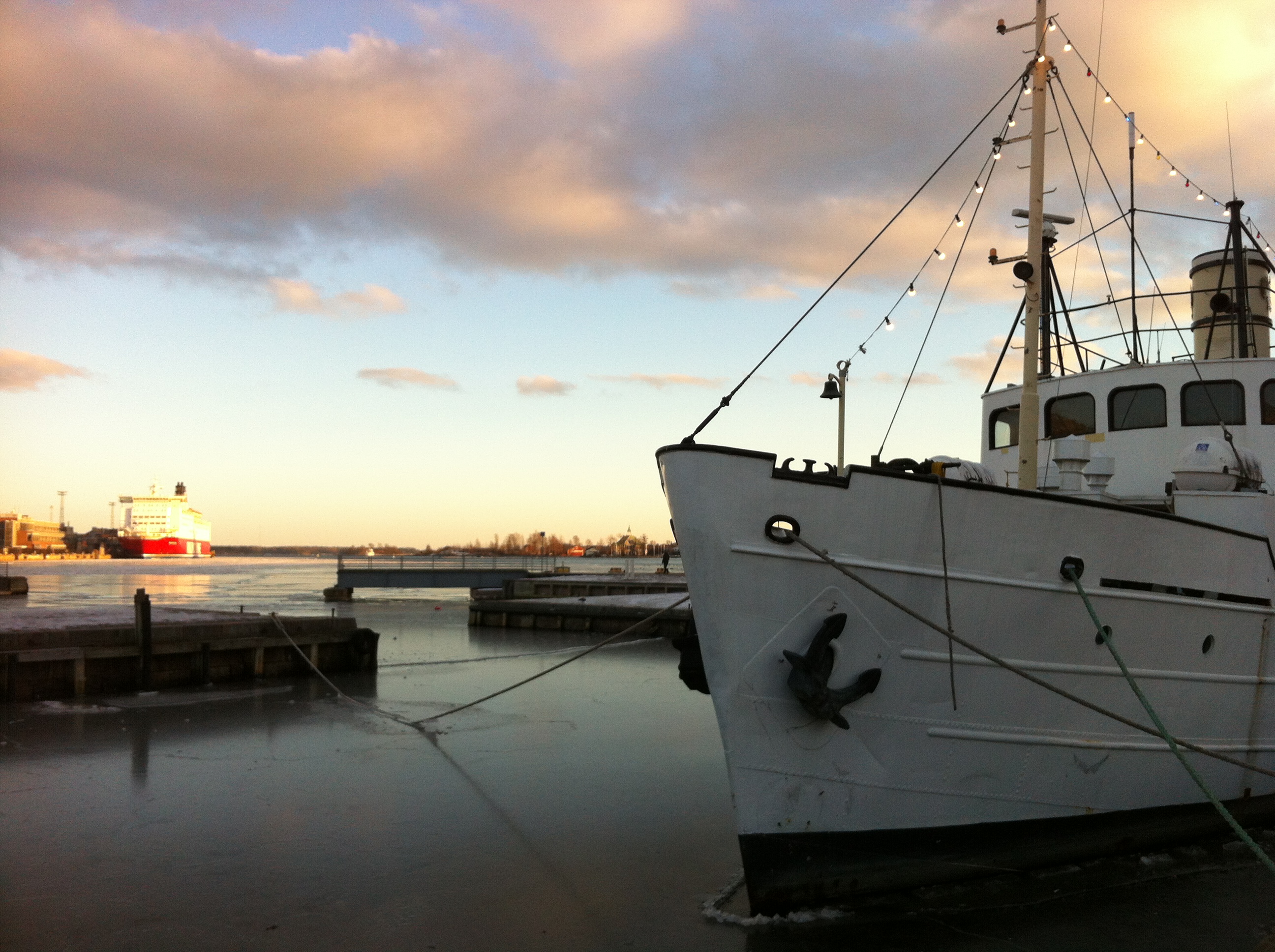
Helsinki harbour in ice

When I walked by the Fazer chocolate shop and teahouse, there were two young women standing outside, shivering in heavy coats and aprons. “Do you have hot chocolate?” I asked them in English. They nodded enthusiastically: yes! And for free! So I had some hot chocolate and drank it while looking for the Kappeli, where I was meeting my afternoon appointment, a professor from the Greek Institute.

What a great welcome to Helsinki. And in February, too.

My first full day in Finland was a busy one. At breakfast I met Teemu, who came with two of his children. He was to be my “barefoot” (as the Helsinki locals call themselves) guide. But a last minute situation meant we could only visit over breakfast. “I love Thunder Bay,” he confided. “I go there often. Canada is a good country. Almost great.” He smiled, that same quiet, ironic smile I’ve seen on so many Finns. Waiting for me to get the joke.

I bought a one-day transit pass and hopped the #9 streetcar to the Kallio area. I was treated to lunch and my first Laskiaispulla, or Shrove Tuesday bun, by Heidi R., a pastor, journalist and passionate interfaith worker. The pulla was amazing – but really, really hard to eat! And hard to eat during a radio interview. We spoke about Finns in Canada and the USA, my two documentaries, and the Camino de Santiago. The interview, once edited, is supposed to be aired on Finnish national public radio at some point in the next few months.

After, Heidi took me on a quick tour of a building I’d passed and wanted to see, the Kallio Church. The style, inside and out, is “Finnish Art Nouveau”, says the pamphlet. It looks a lot like Art Deco to me. It’s beautiful, and I loved the altarpiece of Jesus with the local working people of the neighbourhood.

Then it was back downtown by metro to meet Mari R-S, an academic whose work I had seen in the library and whom I had contacted. She brought her new four-month baby, and I managed to steal some time to hold him while we talked about tourism and pilgrimage. We also talked about rashes, and allergies and how much babies sleep (or don’t)! There was more Laskiaispulla, which of course had to be eaten.

After Mari left I walked up to the Cathedral. There was a pastor sitting in the corner, to whom I introduced myself. She seemed a bit confused, but friendly. “You’re what? An english-speaking Finnish pastor from Canada? How does that work?” I told her I wasn’t quite sure how it works, but that it does. She smiled and shook my hand. I’m not sure she believed me, just showing up like that, unannounced. Finns would never do that.

On the way back to my hotel I did some tourist shopping, and then had just enough time to change before meeting Kati B, a former church council member from the Finnish church in Montreal, and Mari T, a journalist who worked at Isien Usko and Kanadan Sanomat, for dinner. Both have now returned to Finland. Over salmon burgers and fish we talked about Canada and Finland, about how long one can be away before they ‘stop being Finnish’ and how long it takes to be Finnish again after coming home. “Maybe our generation is more used to this in-between feeling of never completely belonging in any one place,” said Mari. I believe that in our globalized world, that might be true of many people.

After dessert I walked the two of them to their tram. Tomorrow I fly to Rovaniemi. I’m thankful that the Suomi Conference has sent me here “to experience Finnish culture”. There seemed to be quite a bit happening, even in what was just my first day!

laskiaispulla Shrove Bun

Heidi Rautionmaa Kallio church

Jesus and working class clearest

Fighting Hercules

IMG_1187

There’s a fascinating myth, from a time long before the New Testament, about the most famous of the Greek heroes, a half-man, half-god known as Heracles. Heracles is the hero we usually know by his Roman name, Hercules. There must be a hundred tales about Hercules and his exploits and combats and loves. But Isaiah 40 makes me think of one where Hercules meets a Libyan named Antaeus. Antaeus is a giant, and a terrible monster. Every passer-by he challenges to a wrestling match. And every wrestling match he wins. And then Antaeus kills those passers-by and uses their skulls to build a temple to his father, Poseiden. No one travels anymore. The giant has terrified and desolated the whole area.

Hercules meets Antaeus when he is forced to go past him on one of his quests. Antaeus, as usual, challenges the traveler to a wrestling match. Hercules, never one to shy away from combat, of course says yes. Antaeus is a giant. But Hercules is….well, he’s Hercules.

Unfortunately, despite that, the wrestling match doesn’t go well for Hercules. Strong as the hero is, every time he throws Antaeus to the ground, the giant only heals and becomes stronger. In fact, every time Hercules throws him down he comes back twice as fast and twice as tough. Something is terribly wrong.

As the Greeks tell the story, it’s only at the last minute, only just as he’s about to die of exhaustion and from the beating he’s getting, that Hercules realizes the giant’s secret. Antaeus takes his strength from the earth. Hercules realizes that so long as he’s in contact with the earth, Antaeus cannot be beaten. So then Hercules shows that he is a hero not just in brawn, but also in brains. He lifts the giant up from the ground and holds him away from the soil and hugs him in a terrible bear hug. Try as he might, the giant Antaeus cannot reach the ground. And so Hercules finally crushes him, and frees the country, and saves his life.

In this story, it’s actually the giant I identify with, not the hero. We hear, more and more, that we’re the first generation so completely disconnected from the real world. Where is the earth, for us? We’ve covered our planet in so much concrete, and spend so much time indoors, and so often we go straight from work to car to shop to house, that we don’t feel that vital connection to the environment that we need. I know some Finns who actually had their neighbors call the police when they saw them put their baby in a stroller and leave them outside. Outside is considered dangerous in our country! The younger we are, the worse it is, with our heads in screens or on smart phones or working in cubicles or texting. Too often we don’t feel that connection from which, like Antaeus, we gain our strength.

Have you not known? Asks Isaiah. Have you not heard? Has it not been told you from the beginning? It is the Lord who sits above the circle of the earth, who stretches out the heavens like a curtain, and spreads them like a tent to live in, who brings princes to naught and makes the rulers of the earth as if they were nothing.

And apparently, ONLY the Lord. A lot of our problems in this world arise from the fact that we human beings have ignored the fact that we’re NOT gods. We’re not above the natural world – we’re PART of it. We’re not above time, we’re IN time. And we’re learning more and more every year that we’re certainly not above our bodies. We’re not above the muscles, bones, organs and skin that make us up. We are – every single one of us – finite and physical. And so we need things: we need rest. We need renewal. And we need connection.

Isaiah 40 is one of the strongest reminders in scripture of who we are, and of exactly what connection we need. Have you not known? asks Isaiah. Have you not heard? The Lord is the everlasting God, who does not faint or grow weary.

Believe it or not the point here is not just about a deity. By drawing such a strong image of God, Isaiah is showing us what we human beings are NOT. Even the most powerful among us can be brought low by a cold, an infection, old age, or a tragedy. Our riches ultimately mean nothing. Our accomplishments will fade. As Isaiah writes Scarcely are they planted, scarcely sown, scarcely has their stem taken root in the earth, when God blows upon them, and they wither, and the tempest carries them off like stubble.

I don’t know if you’ve seen images of the massive snowfall in New Brunswick this week. There’s been something like – what is it? Four FEET of snow that’s fallen. They’ve been shoveling all week. There’s a video going around that some guy took on his cell phone of a train coming down the track near Moncton. It’s hilarious. You can’t even SEE the train at times, through all the snow that it’s pushing out of its way.

That’s the truth about the world, and about us. We’re in a world that is part of us, and from which we cannot and should not escape. Winter has a way of reminding us – we human beings are not so high and mighty as we sometimes think. We’ve spent so many years thinking we’re NOT part of the created order that we’ve fouled our own homes. The environmental crisis shows it. Imagine if Isaiah had known about asthma, childhood obesity, rising rates of cancers and the epidemic of measles and other diseases caused by the fact that, stupidly, we know about vaccinations but don’t use them: Even youths will faint and be weary, and the young will fall exhausted.

In perhaps the most ironic twist of all, we’ve also separated any faith we have from our creatureliness. We’ve acted, even in the church, as if God and creation were separate. Paul writes, in Romans: The creation itself waits with eager longing for the revealing of the children of God. According to the apostle, the world, like us, is part of this grand interconnectedness of all things, this sin and rebellion and redemption cycle. Creator-creation-creation-creature. We and our Creator and the earth that we are part of, all belong together. And only together can we connect with the strength of that earth, of being “created good”.

When we go to a funeral we hear these words: “we are dust, and to dust we shall return”. That giant, Antaeus, knew that it was the dust that made him strong. We too take our strength from being part of the creation where God has placed us. The more we realize that, the more we will allow ourselves actually to BE creatures. We’ll allow ourselves to admit that we have needs. We will allow ourselves to admit that in fact, suffering and pain, too, are a natural part of life. And the strange thing is, if we can really be weak, then oddly enough, we will be stronger for it.

God gives power to the faint. Those are the words of Isaiah. The powerless can and will be strengthened. He goes on to say: Those who wait for the Lord shall renew their strength. They shall mount up with wings, like eagles. They shall run, and not be weary. They shall walk, and not faint.

This is what our faith tells us. Hercules is a fine hero, and Antaeus a villain. But I understand my faith, not through the hero, but through the vanquished giant. Like him, we NEED the earth. Like him, when we remember where we come from, when we stay in touch and don’t let ourselves be isolated, from the earth AND from the One who created it, we will be the stronger for it.

Have you not known? Have you not heard? asks Isaiah. Wait on the Lord and renew your strength. God is faithful. May we learn to rely on that faithfulness, and from that faithful Creator, in our world, take our strength.

Why We Can’t Trust God

A few years ago I had a student who cheated. Pure and simple. There was no way around it. She handed in work that was not hers. She had simply gone on the internet and cut and pasted a bunch of stuff. She didn’t even cheat all that well. Then she handed it in and put her name on the top.

The student was totally unembarrassed. She could have cared less about what I thought. I talked with her gently about the cheating. But she refused to admit it. I gave her a second chance. She handed in the same plagiarized material. I asked her about the cheating, and she looked at me with that that kind of privileged attitude that told me that what I thought wasn’t important. She could do what she wanted. She was rude and self-righteous and most importantly, she didn’t stop.

Finally I didn’t know what to do, so I went to the administration. “Can you justify your accusations?” they asked me. It took time. I had to go on the internet and find and copy all the same things this student had copied. It took me several hours – hours I didn’t have – but I did it. I listed all the websites that she had used for cheating, put it all into a nice document, and handed it in.

“Okay don’t you worry, they said. “We’re going to take this problem off your hands.”

Great, I thought. I forgot all about it.

Then came an email. “We’re going to have a meeting with you and the student,” said the email from my bosses. “So that we can talk about this together.”

Talk about it? There was nothing to talk about. The evidence was all there, right in front of them. You’d have to be blind not to see the cheating. But I had no choice.

At the meeting the student was there, and some representatives from the university.

“We have a student here who is highly motivated to make this case work,” said one of my bosses. “We have agreed to let her submit her work again to you a week from today.”

“WHAT?” I thought. I have to do all this again?? Can I do something? Make some complaint? No, came the answer. You are to mark her paper again.

A week later the student handed in another essay. And again, the essay was full of other people’s work, badly cut and pasted.

I’ve always loved the story of Jonah. But the reason I love it you might find a bit odd. I love it because of how much it annoys me. God said Nineveh would be destroyed. And it wasn’t. Like my bosses at the university, God kept giving the benefit of the doubt to people who didn’t deserve it.

Jonah was told by God to go to Nineveh and try and get the people to repent. But Jonah doesn’t WANT them to repent. Jonah wants them to suffer. “I’d just as soon all Ninevites turned to toast,” Jonah tells God. “In fact, as an Israelite and their sworn enemy, that would delight me. And secondly, even if I go and tell them, those people will never change”.

Go, said God. And eventually, with some convincing in the person of a big fish, the story is that Jonah goes to Nineveh. According to the Bible Nineveh was so vast that it took the angry old prophet three whole days just to walk across the city. “I’m telling you – it’s never going to happen,” Jonah says, trudging along. So like a sulky kid, upset with God for making him do this, he walks one whole day and then mumbles out what God told him to say.

“O great city of Nineveh, repent,” mumbles Jonah.

And miracle of miracles, the city actually DOES it! (Unlike my student) Nineveh repents.

And the people of Nineveh believed God, it says, and they proclaimed a fast and everyone, great and small, put on sackcloth.

And then, to my mind, comes the most important part of this lesson:

And then God saw what they did, it says, And God changed his mind about the calamity that God had said would come upon the city; and God did NOT do it.

But that’s not how the story ended for Jonah. Because if you keep reading on in the book, you find out that there was one unhappy prophet, still stuck there in the place he hated most in the world.

“What?” he yells at God. “You’re going to what? Cancel the destruction?!? All this trouble I’ve gone through, all the evil this city has done, and you’re changing your mind? How dare you?”

And so Jonah marched straight out of Nineveh and sat down and crossed his arms and said that he wasn’t going to budge until God lived up to his word and destroyed the place.

Most people, when they read about Jonah, get hung up on the details. Was there a whale or a great fish or what exactly? Is it a fable or a tall tale or history?

Thinking about those things is missing the point. To my mind, the whole point of Jonah is to tell us that God will do what God wants. Especially being unpredictable.

God both CAN, and DOES have a change of mind. And that means God is the one in charge. Not us.

Good thing we’re NOT the judges of the world. Because, like Jonah, my suspicion is that we would actually be much harsher, on ourselves and on others, than God turns out to be.

This last week a New Testament professor named Marcus Borg died. He wrote several books I’ve used in my classes, and a great book titled “Meeting Jesus Again for the First Time.” He had a lot of what you could call “liberal” opinions about Jesus and the resurrection. And yet, he was open to the spiritual, open to others who disagreed with him, and confessed that Jesus was God’s messiah not only in history, but also for him.

What I liked best about Borg was that you couldn’t completely pin him down. He practiced a real gracefulness in his writings, and an unpredictability that looks, to me, very Christian.

Somewhere out there, in this city, is a student who graduated from my class without doing the work she was supposed to do. She’s a cheater. Pure and simple. And I’m still upset that justice wasn’t done.

But our God says that what’s important in life, actually, is not justice, but mercy. And that means that maybe, the next time WE screw up, the next time WE’RE the ones who are stubborn, or unfaithful, or impatient, or irresponsible, or late or sick or tired or just plain wrong, we can be thankful that we are loved, and worth being loved, anyway.

Once there was a prophet who got angry with God’s change of mind. The bottom line of Jonah is that we have a God who practices constant, and sometimes surprising forgiveness. Like Jonah, sitting under his tree, and like me with the university administration, may we learn that our judgments don’t really matter. And knowing that, may we learn to be less like Jonah, and more like Jonah’s God: more graceful, more forgiving, more surprisingly unjust in our mercy, and thus more like Christ.

end of term Loyola

Saying Goodbye to a Tough Season

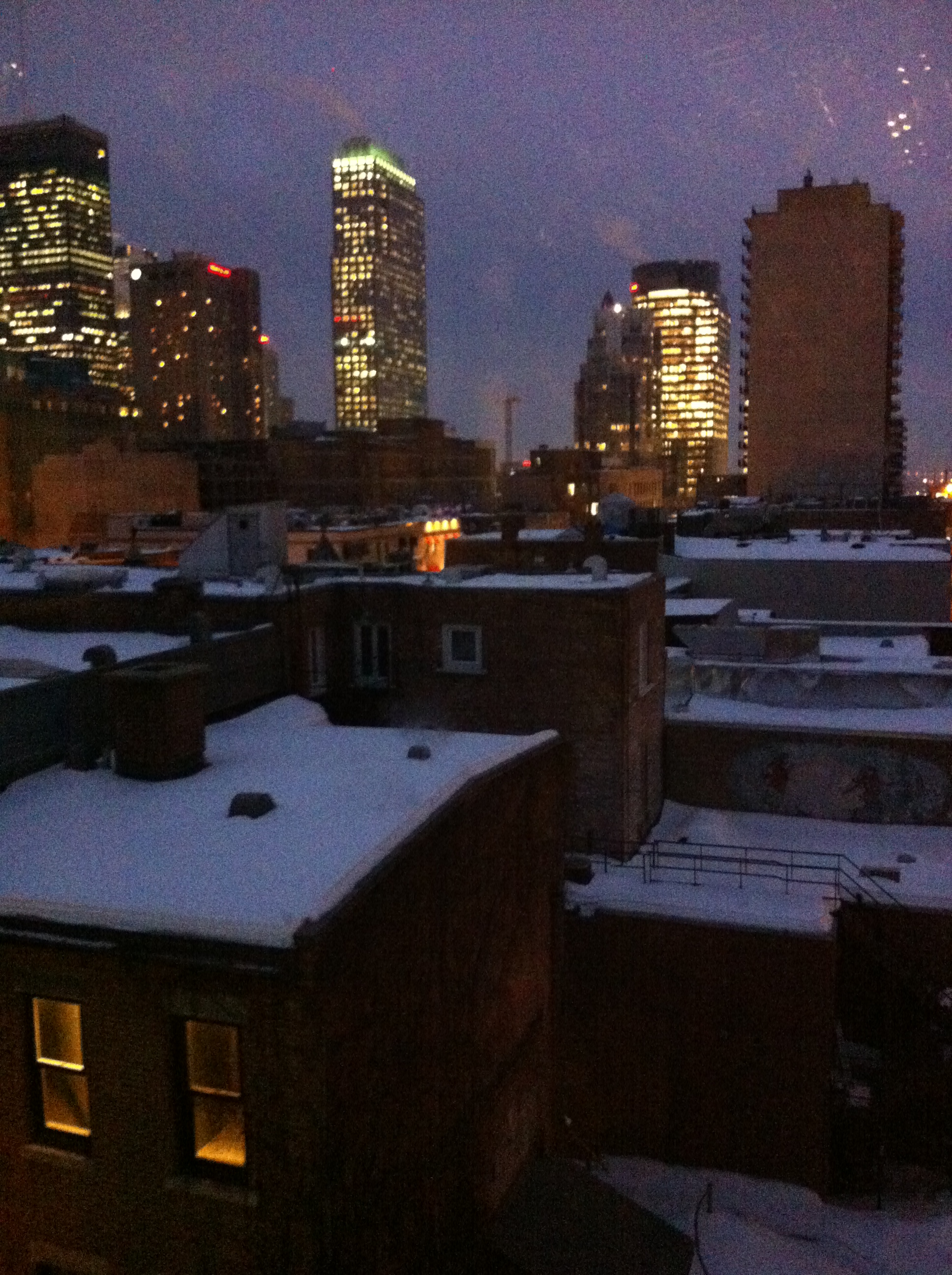
Montreal night Jan

There were two ugly Christmas ornaments on my tree again this year. Every January I think of getting rid of them, but I never can. So I pack them away in boxes for next December and know that when I take them out I will think of the woman who sold them to me.

At that time we were living in a posh neighbourhood. This woman and her family didn’t “belong”. She and her three kids lived with her mother in a ramshackle place down the street. Their house always had something going on. No one seemed to have a job. Strange vehicles and hard-looking men came and went. The police made regular visits. The grandmother, a saint, did a lot. For long periods the woman would disappear. She had that gaunt, undone look of someone with addictions.

One snowy December afternoon our doorbell rang. I opened it. It was the neighbour.

At first I didn’t know what she wanted. Then she drew out of her coat pocket two boxes – large Christmas balls and small ones. She handed me one. She had hand painted crude designs of trees and snowflakes on dollar-store glass balls. Aren’t they beautiful?

I’m selling them to raise money for Christmas presents for my kids.

There really was no question. I bought two. And we hung them on the tree that Christmas.

That was many, many years ago. I’ve long since moved away. The three kids have grown up. Occasionally, I see one of the young men, who seems to be doing well. But their mother is gone. She died – they say of a drug overdose – a few years after selling me the decorations.

Maybe it’s just sentimentality that has me keeping these childish ornaments. But in the glitter and glitz that is Christmas, every year it seems a bit more important to pull them out of the box and think about them. And I remember a mother so desperate for money for presents that she went door to door, to her neighbours, without shame. And that reminds me of all the others for whom putting away ornaments is saying goodbye to a tough, tough season.

A Destination Worth Our Trip

highway hearse 2014

Years ago now, I read a lovely short story. I don’t remember the author or the title. But I remember it was about a quite elderly, widowed man who had finally decided the time had come to move into a nursing home. He moves in, and downsizes. One of the things he is about to lose is his car. He has decided to give his beloved old Cadillac to his granddaughter since he won’t need it anymore and doesn’t feel he’s as safe a driver as he used to be. The nursing home, this man, and his children all agree: giving up the car is the best thing to do.

The day before he is supposed to hand over the Cadillac, the man takes the keys, and walks out from his little room to the parking lot to see it one last time. He thinks about the car….how he’d been to Florida with that car, how that car had taken them on family vacations and in recent years, how it had been his constant ally as he drove to more and more funerals – and he opens the door and gets behind the wheel one last time. Then, in a surprise even to himself, he puts the keys into the ignition, starts it up, and drives away from the nursing home.

As the story progresses, you don’t really know why he’s doing this, or what’s going to happen. At the home, it takes a while for them to discover he’s gone. But once they do, they think he’s skipped town, or maybe showing dementia, and there’s a panic over what might have happened. His children don’t know what to do, and wonder if he’s changed his mind about staying at the home.

Meanwhile, the man drives west. He listens to the radio awhile, rolls down the window, notices the prairie grass, smiles at the sunshine and the big, big sky. The miles tick away as he rolls westward.

At the nursing home they hesitate and hesitate, waiting to see if the man will be back for dinner. When that doesn’t happen finally they all the police. The family are in a state. Everybody is consulting with everybody about the state of emergency. Is the old man suicidal? Is he lost? What’s happened?

The man stops at a truck-stop diner where he has a wonderful warm conversation with a little child and a good heart-to-heart with a waitress. But soon he’s right back behind the wheel. He’s intent on driving. He stops at a roadside hotel for a few hours of sleep. But then, with the sun, he’s awake and back driving. Prairie towns and cities fly by as he keeps the big Caddie’s nose pointed west.

At the time of King Herod the Great, it says, after Jesus was born in Bethlehem of Judea, Magi from the East came to Jerusalem, having traveled a great distance to see him.

So what happened, exactly, that made the Magi travel so long, and such a distance, to follow that star?

They weren’t running away from anything, the Magi. They were traveling TOWARD something special.

It seems a bit trite to say that life is a journey, but it is. It’s a journey we start on before we can remember, before we even realize fully, that we’re traveling. Sometimes the journey is exciting, and often it’s just a day-by-day slog. We walk through green valleys, and sometimes across high mountains that are difficult but rewarding. And there are, inevitably, in every life, hard, difficult and painful paths, paths we’d rather not go down, but have to. Even though I walk through the valley of the shadow…., like it says.

Sometimes it takes faith to keep going in life, and it would take faith, in the ancient world, to travel across the East as the Magi are supposed to have done. I’ve been watching a Netflix TV series called Marco Polo. It’s not starting off all that well – the plot is hard to follow, the Chinese and Mongolians all speak English, and there’s lot of violence that has nothing to do with the plot. Apparently, according to the reviews, the story line gets better.

The basics of the show are really good, however. How can it not be? It’s about Marco Polo – the great adventurer. The vistas and costumes and settings are magnificent. And historically, Marco Polo brought back to the west tales of a wonderful, exotic, foreign, and strange and terrible and beautiful world. One of the things that caught me about the show was that in it, Polo looks to the stars called the “Three Sisters” and tells himself that that will always be the way home.

Epiphany means, “the light shines” – in our case, and in the case of the Magi, the light of the Christmas star. It too was a guiding star. The Messiah star is a light that’s supposed to guide us, to cheer us on when all else fails. When we don’t know what else to expect, there will always be that star, that one point of faith we can hang on to. In other words, like the Magi, our journeys do not have to be random, and our way does not have to be without hope.

We don’t know for sure, but the Gospel of Matthew was probably written by a Jewish-Christian to a small and struggling group of other Jewish-Christians. It’s natural they’d be wondering about enlightenment. Why did THEY, this small group, follow Jesus as Messiah when the vast majority of Jews didn’t? Why did they believe what others rejected? Probably, the way they worked out their loneliness and disappointment was by deciding that they happened to be the only ones who had seen the star, metaphorically speaking, and knew what it meant.

These days, when organized faith is less and less fashionable in our society, we’re again in a bit of a position like that. How can it be that we see this star, when everyone else dismisses it so easily? Why are we traveling in this particular direction, when other paths seem so much more common?

When they saw that the star had stopped, they were overwhelmed with joy. And then, opening their treasure chests, it says, the Magi offered the child gifts of gold, frankincense, and myrrh. And having been warned in a dream not to return to Herod, they left for their own country by another road.

It’s nice to look at Wise Men in our creches. But the Gospel doesn’t even tell us if there really were three, or whether their names were Caspar and Melchior and Balthazar. So more important is to consider what the Magi DID: they were willing to go on a difficult journey to discover truth. They were pilgrims. And they left gifts.

For me, the most important verse in the whole Epiphany story is the last verse. After everything that they did, Matthew says, the Magi did one last thing: they went home by another way. My understanding of a true Epiphany is that even after a small one, you can never go home by the same way. Once our God reveals something to us about love or grace, about justice or the truth or perhaps about ourselves, there’s no going back. We will always be changed.

In the story of the man and his Cadillac, it tells how he finally reached Calgary. You think maybe he’s going to stop there but he doesn’t. He keeps going, straight through the city, driving west, always west.

Now, you all know what’s west of Calgary……

Right. The Rocky Mountains. And there’s where the story ends.

It says that the man drives his Cadillac into the foothills, and right up to a viewpoint lookout on the side of the highway. And there he parks, gets out of his car with the cool high altitude air in his lungs, leans back against the hood, and looks up at the beauty of the Rocky Mountains. The ancient granite walls rising majestically from the foothills. Only for a few minutes.

Then finally, he calls his children, who are worried sick. “I just needed to see the mountains with my own eyes,” he tells them. “One last time.” And then he gets in the Cadillac, turns it around, and heads home. “Now I am ready,” he says.

You and I are on a journey. Many journeys, of course, some we hardly even recognize we are traveling. But the question we need to ask ourselves is: “Is the epiphany we have felt, the spiritual vision we have witnessed, going to sustain us?”

May we too, like that elderly man, and like the Magi, be given guidance for the easy and the not-so-easy roads ahead. May we find joy in our destinations. And by this world and the miracle, the Word and the Spirit, may we also be granted a vision – the equivalent of the mountains, or of the Magi’s star – to guide us through all our coming years.

The Disappearing Nativity

Harburg Monument

“Now I can die,” said Simeon, holding the baby high up in the air. “For mine eyes have seen thy salvation.”

Harburg, Germany, as some of you might know, is a suburb of Hamburg. In a public square in Harburg, near the S-Bahn station, there’s a monument titled “The Monument against Fascism”. Or maybe I should say that there USED to be a monument there. Or maybe I should say that if you go there, there still is a monument, KIND OF. Except that it was once there and now it’s gone. Or it’s still there. But you just can’t see it anymore. Or something.

When this monument was first created in 1986 it was 12 metres tall and 1 metre square, a tall rectangular pillar covered in lead. That’s big.

But it was also a performance piece. Most monuments are built to last centuries. “We will forever remember…” – this or that battle, or sacrifice, or person, or whatever. The typical statue, for me, is some bronze bearded guy on a horse high up in the sky with a bayonet in the air. You can see a beautiful example of that down on the corner of Rene Levesque and Peel.

But the statue in Harburg is very, very different. It was built precisely so that it would disappear. So that it would bury itself. Two artists, Jochen Gerz and Esther Shavez were responsible for the idea. Like I said, the column was (or is, depending on how you look at it) huge: 12 metres tall, one metre square, and covered in lead. Germans especially, but also people from all over the world were invited to sign their names on the monument, as a sign of their commitment to the ongoing struggle against Fascism. It was also supposed to represent their memory of what the past held, especially in Hamburg, where after the war everything was rebuilt as if those terrible years had not existed.

The artists provided two steel pencils so that people could mark whatever they want onto the obelisk – their names, their commitments against fascism, their losses, their hopes and dreams and their struggle against the forces that take away our humanity. It was supposed to be about memory and commitment. As it sunk, it was also supposed to be about how much of something we let go, or SHOULD let go, or not, and how much is permanently with us, or should be.

So here we are, barely three days after Christmas and where a few short days ago you couldn’t find a place ANYWHERE to get away from Christmas carols and songs, now you can’t hear them anywhere. We’re busy burying Christmas right now. If you’re like me, you’re thankful that recycling day is right after Christmas because it’s perfect – you can just get all that paper and cardboard right out of the house, pronto, and make everything clean again.

It’s amazing to me sometimes how big we make Christmas, and then how quickly after December 25th such a massive celebration sinks right out of sight. This is one of those times where the difference between secular society and the teachings of the church are the most glaring. In the church, I always feel like we’re saying: “not yet, not yet, not yet” BEFORE Christmas when all the ads are on TV and they’re having the Christmas parades in early November and cutting trees in October and putting up angels before the snow has even hit the ground. And then from December 26th on, when everyone else is rapidly forgetting the whole thing like it was some kind of overindulgent party, here in the church, we’re saying “wait, Christmas is not over yet!”. Hold on for January 6! The gifts are barely out of the wrapping before everything gets packed up again and the world is talking about New Year’s Eve and Retrospectives of 2014.

FORGET Christmas. That’s where most of our world is right now. But you and I are still being invited to gather around the cradle in Bethlehem.

When I read the Song of Simeon, or I think about the Slaughter of the Innocents in Bethlehem, and I think about the statue in Hamburg, it’s hard not to think that there is an unhelpful way for Christmas to disappear, but maybe also a faithful way to let Christmas go.

The unhelpful way is to to turn away in disgust from the commercialism and all the debt and buying and overindulging and to say: thank God we’re done with that. Or at least: thank God until we all go crazy again next December. Learning from Simeon, the faithful, grace-filled way to remember the Nativity would be to let it enter us in a more permanent way.

That image of that statue of lead sinking into the earth is extremely powerful. I remember a woman from one of my former churches telling me once how she accidentally stepped on a pin, and never had it taken out immediately. Over time it sort of healed over, and now for years it’s been embedded permanently in her foot.

For me, that’s what the Hamburg memorial represents. A needle in the flesh of the earth. It’s not really gone. That’s what the artists wanted. It’s there – and we can either forget it, or not. It’s a memorial beyond fading, because it forms part of the very fabric of the earth that we walk on.

And I think that’s what CAN happen, also, to the good news the angels sang. For some Christmas can just sink out of sight. But if take some time – in and even AFTER this season, to remember the Baby, and Simeon, to think about how life and death and justice are wrapped up in this story, then it can become more like that Memorial. Maybe it can sink into the unconscious working out, day by day, of our faith, no matter who we meet or where we go in 2015.

Simeon was content to witness the good news and then let it sink into him. “Master, let your servant now depart in peace,” he says, “for my eyes have seen this amazing salvation that you have prepared in the presence of all peoples.” And he knew it wouldn’t be easy, either, for the people around Jesus. Why else would Luke have him turn to Mary and say, “and a sword will pierce your own soul also”?

Whatever else you can say about a baby, anyone who’s ever been close to one knows that once they arrive, whether you are a mother or a father, a grandparent or an aunt or uncle, the family is never the same again.

And Jesus, in particular, was to be a life that would forever change the world. Starting with the babies the Gospel of Matthew says were slaughtered by Herod, Jesus would turn out to be the kind of new life that resulted both in violence AND peace.

From the time it was first created in 1986, because of the incredible weight of all of that lead, and also because of the location the two artists chose, the Monument Against Fascism began sinking into the earth. This was what the artists wanted. You can see the thing on the internet, and see how it lost height every year as it sank into the earth. By 1993, seven years after it was built, the last of the signatures and the graffitti at the top of the column sunk below the surface. Apparently, if you go by that square in Harburg now, you will only find a plaque with a text in seven languages, reminding visitors of what was once there.

There is a text that the two artists put at the very top of that 12 metre column, and now it’s the only text you can read on a sign by where the statue USED to be. It says this: “In the end, it is only we ourselves who can rise up against injustice.”

We ourselves. You and I are in a world that would now like to forget the Nativity and move on. And in that context we are the living monument, the ones who have signed this remembrance and must now keep it alive. May the child born in swaddling clothes, the God made flesh, and the Word who came to his own even though his own knew him not, help us to live out the true message of Christmas. May we, as we should, become LIVING Christmases, embodying, as did the Messiah, God’s love in our lives.

A Pointe St-Charles Nativity

(with thanks to Alice Zorn, http://alicezorn.blogspot.ca )

From the south shore of Montreal, if you were to drive over the Victoria Bridge and then, just past Costco, turn left on Wellington, you’d pass the train yards toward my house. If you did that, you’d go right through Pointe-St-Charles.

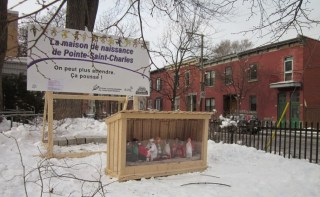
We all know the Pointe. The Pointe will always be the Pointe. But it’s changed. Property values have gone up. Gentrification has set in. Lots of it is still a tough neighbourhood, but it’s mixed now – there are plenty of upscale places sharing space with some of those old, hard-times homes. And they really know how to do up Christmas in the Pointe. In particular, if you were paying close attention as you drove down Wellington, you’d see a very special Nativity scene set up outside a clinic.

Nothing special about a Nativity scene. Right? There are hundreds of them in that neighbourhood. But if you were to slow down and look more closely at this particular one, you’d be surprised. My friend Alice Zorn, a writer who lives in the Pointe, alerted me to this. The centre, when you read the sign, is actually a Birthing Clinic. A place where young women go to have their babies. Nowhere more perfect for a Christmas nativity scene.

Except that, despite how it looks, the Crèche out front of this Centre turns out to be NOT very traditional. There’s a roof, and what looks like a stable. But when you get up close and look at the little figures, the manger is actually a bed. And while there’s a Mary, sort of – a young woman, anyway – she’s not wearing a blue robe and staring peacefully at a baby Jesus. She’s on her back. Shouting. And there’s no Joseph, standing in a bathrobe doing not much of anything. There’s a midwife, in action, helping the baby to be born. And there are no angels. Instead, there are a whole bunch of other pregnant women figures, standing around watching and helping as the young woman gives birth.

The first time I saw this, I felt tricked. From a distance, it LOOKS like a manger scene. But where’s Jesus? Where are the cattle and sheep and oxen (even though the Bible doesn’t actually mention any animals except sheep)? Where’s the little drummer boy? (And Rudolph?!!!) And where are the shepherds and the angels?

This isn’t a REAL nativity scene! Or is it?

Well, that depends, maybe, on what the nativity really means.

In the eyes of many people, tonight and tomorrow are the highest pressure times of the year: Christmas. And in our usual way of seeing the world, Christmas is supposed to be about love and happiness and warm feelings and family and forgiveness. If we’re religious, as we are, then it’s about the birth of Jesus, which is remembered as a sort of lovely historical event that means something nice, but not always very defined, for us now.

If we’re being honest, we have to admit that part of the charm of the traditional Christian Christmas is that it’s set so firmly in an imagined, highly-stylized past. During the reign of Caesar Augustus a decree went out that all the world should be enrolled. And Joseph went with Mary, his betrothed, who was heavy with child, to the town of Bethlehem… and she gave birth in a manger, for there was no room for them in the inn.

It’s lovely. The problem is, the past we celebrate is also wrong. I grew up thinking about Jesus being born in a stable, with straw and hay and cold puffs of air coming out of animal’s nostrils and the smells of a barn. I LOVED that image, the traditional image of the crèche, and the manger.

But in fact, as I learned when I was in the Holy Land in 2009, the place most people kept their animals in Biblical times, in Palestine, was in caves. So if there was no room in the Inn, Jesus would have been born in a cave. Not some quaint medieval European barn.

Our manger scenes are beautiful. But absolutely inaccurate. Which goes to show that maybe history isn’t the most important thing going on here, and that the Birthing Clinic in the Pointe may not have everything wrong after all.

So what ARE the basics, then?

There’s a birth. The most human of beginnings. The birth takes place in a marginal place, an uncomfortable, makeshift place, because of society’s indifference. There’s a young woman. A scared man. An oppressive political system. A baby. Witnesses who are used to living outside in the cold and dark. And God is present, being born into the darkest time of the year and the darkest places of our world.

On second thought, it sounds to me like the people in the Pointe may have the essence of the Christmas story exactly RIGHT.

Do not be afraid, said the angel to the shepherds. To you is born this day in the City of David a Savior, which is Christ the Lord.

Why? Why these people? Maybe Luke’s Nativity is a way of saying two things: firstly, it’s the poor and outcast and outsiders whom God is paying attention to. And secondly, it is what is poor and outcast and an outsider in US, and in our lives, where our Lord is being born in us. When we are stripped of all the fancy clothes, the bells and whistles and the pretensions we load on ourselves, maybe that’s when Christmas really comes.

Luther said, again and again, that the fact that Jesus was born in a rough and rude stable means that the Gospel can go, and BE, anywhere. In the most desperate of situations, hope can be born. This also means something very important for us: if and when we fail, and we find ourselves marginalized, or feeling like we don’t belong, or knowing we’ve messed up, or simply cast aside by a success that passes us by, then our place with God is not worse. It’s just as strong, or stronger. Do not be afraid, said the angels. This good news is for you. And this will be a sign, for YOU.

Above the unusual Nativity scene I was talking about is a sign in French that reads: Pointe St-Charles birthing centre. On ne peut plus attendre. Ca pousse! Which might be translated as: we can’t wait any longer! It’s coming!

That, also, is the essence of the story from Luke. Ca pousse! It’s coming! Once Jesus is born, there’s no turning back. Once Messiah has come, and come in a way that surprises and shocks and upsets the normal order, then nothing normal should ever be normal again.

For it is only when we are outsiders ourselves, and realize that we are so, that we can stand with the Shepherds, watching in wonder as rank on rank of angels fill our skies, singing their hope and love and promise into our lives.

“For unto you is born this day in the City of David a Saviour, who is Christ, the Lord.” What a promise. What a wonderful blessing. And in faith, and from faith, our answer is clear: Glory to God in the highest, we can respond. And on earth: peace and goodwill!

The Pregnancy We All Have to Go Through

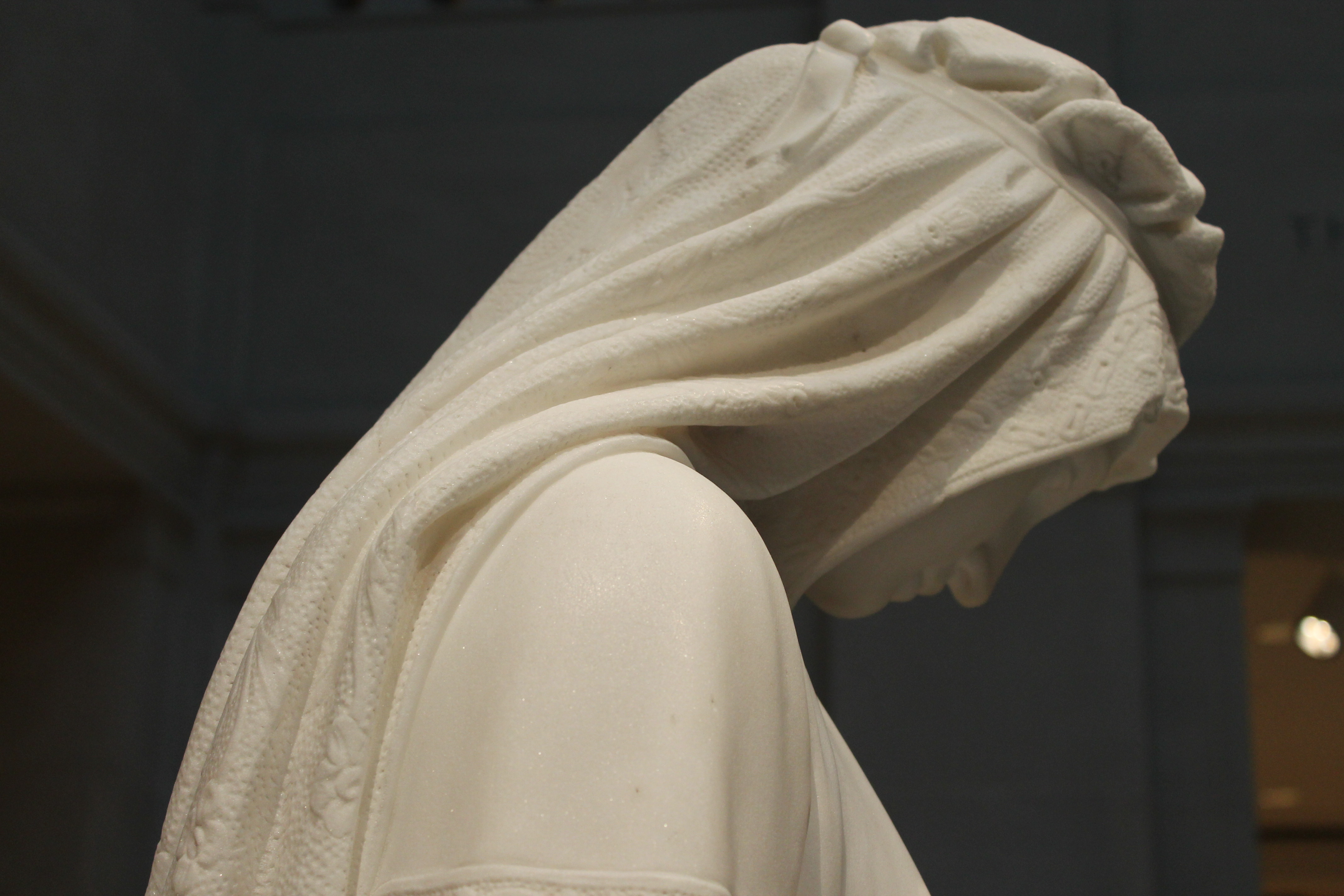
veiled in Chicago three

Do not be afraid Mary, said the angel Gabriel, for you have found favour with God. And behold, you will conceive in your womb…

Now: I’m a man. And if I’ve learned nothing else, in my earlier years, from having spent quite a bit of time around pregnant women, I’ve learned that for a man to talk about what it’s like to have a baby is a dangerous thing! How can ANY man really know? I’ve been fortunate enough to rub pregnant bellies. I’ve watched bellies grow, put my ear to a belly and listened to heartbeats, put my hand out and felt a belly kick while a tiny little arm or head or bum inside is moving around. I’ve done all that.

But I’ve never ever owned that belly that’s full with child. I’ve never ever had all that blood and amniotic fluid sloshing around inside me, never felt the water retention, the sore feet, the growing breasts, the relaxing ligaments, the stretching and pulling and fatigue and hormones. I’ve probably been almost as close as most men can get to a pregnancy. But I’ve CERTAINLY never been pregnant.

The fourth Sunday of Advent is the Sunday of pregnancy, and I am a man. What’s more, it’s the Sunday of the Virgin Mary, what the Church Fathers called the Theotokos, and I am a Protestant.

But despite that, I believe there’s something for all of us in this story of a conception and pregnancy. It’s no mistake that the last Sunday before Christmas is the most pregnant Sunday of all, not just literally, but also figuratively. Somehow, this particular day in the church’s calendar, just a few days before the most brash and crazy and hyped and frenetic and overadvertised and overstressed and yet somehow, we hope, one of the most holy – of all festivals, you and I are supposed to sit for a minute, like pregnant women who have to put their feet up. Today we’re supposed to consider what it means to be growing, like Mary, the Christ child within us.

In one sense, the story of Mary, placed as it is right now just before Christmas, is a call for some common sense about all births, but this Birth in particular. You can’t have a baby without a pregnancy, the Bible is saying. Right? Right. Of course! And we shouldn’t expect to have a real, meaningful Christmas without something growing and developing in us, either. In our world of instant everything, there is no disposable Nativity. I can hang out my Christmas lights at the last minute, but not my spirituality and my faith. If we think we can pull out love and joy, peace and goodwill like pulling the Christmas ornaments out of a box in the basement at the last moment, we’re sadly mistaken.

Babies don’t come from nowhere (now there’s a line!). They take nine months – sometimes awkward, sometimes difficult, sometimes joyous, sometimes frightening, sometimes even painful months, to develop. The same is true of a real, meaningful celebration of love and peace and justice.

This last week has been more horrific than most. The gunman in Australia who held hostages, resulting in deaths, in a Lindt café in Australia. The poor children murdered in Pakistan. North Korea hackers cause the shutdown of a Hollywood film, jurors deliberate in the Luc Magnota case right here in Canada.

Can you and I celebrate peace in the next few days? That depends: have we made a commitment in a hundred small ways to living peacefully and in justice from day to day with our neighbors and our family and children or whomever, throughout the year? Have we felt the growing pains of peace?

The same is true of love. Can we celebrate love born in the manger? That may depend on whether we’ve been willing to go through the hard slogging of loving each and every day, fulfilling the joyous commandment to love even those who do not love us.

It’s always seemed to me, as a man, that pregnancy is partly the baby starting to make its presence felt with the parents even before it’s out of the womb. At the very moment of the annunciation, Gabriel is already saying to Mary what kinds of things to expect: you will name him Jesus. And he will be great, and will be called the Son of the Most High, and of his kingdom there will be no end.

I find several things illuminating about this passage. It’s also more than a little strange that the angel Gabriel shows up in Mary’s private apartments. During that time, and in that society, for a young woman of Mary’s age to be caught with a visitor in her private space would be extremely scandalous. And dangerous.

And so: I’ve always wondered if, especially for a woman, there isn’t just a touch of irony in what Gabriel tells the young woman: Greetings, favoured one. The Lord is with you.

To be a thirteen year old, scandalized young child, pregnant and under suspicion? Some favour, and we who are Christians should keep this in mind when we think that we want to be God’s favoured ones. God’s favour is a difficult road. By the way, notice that it’s a woman who hears first the “good” news of the incarnation, and a woman who bears the pain.

This is God’s favour for Mary: she was about to become pregnant out of wedlock, risking losing her future husband and with him her chances for survival. She was about to live, for her whole life, the stigma that Jesus was an illegitimate child. She would never live down the accusations, and then when Jesus got old enough to go on his own and teach, he would almost deny her by saying that whoever listened to him was his mother and sister and brother. And then, finally, she would see her own Son, the one for whose sake she had already suffered so much, nailed between his wrist bones to the wood by the Romans for a crime he did not commit, there to die a most horrible death.

And Gabriel says that this is good news.

Mary seems much more realistic. She was much perplexed by his words, it says, and pondered what sort of greeting this might be.

In these last few days before Christmas, we would do well to ponder the message that we are also hearing this morning in these lessons. Because I believe that the Gospel writer wants us to consider Gabriel to be talking to us as well.

God would like us to be messengers in our world. But think of Mary – pregnant and unsure of what would happen to her. We are to be a new type of messenger – not just communicating with words, but also by growing a new way of life, a more Christ-like way of life, within our very bodies and homes.

Some people cannot have children of their own, but what this Gospel talks about is the kind of life we can all bring to term, whoever and wherever we are.

Being a man, I don’t really know ‘from the inside, as it were’ what pregnancy is all about. But even from the outside, I can tell you one thing for sure – clearly, even when ultimately it’s joyful, it’s never easy!

May you and I, wherever we find ourselves this blessed season, learn from Mary to be realistic about what God wants to do with our lives, and still have the courage to say: “May it be done with us according to your will”.

Off-Road in Bethlehem

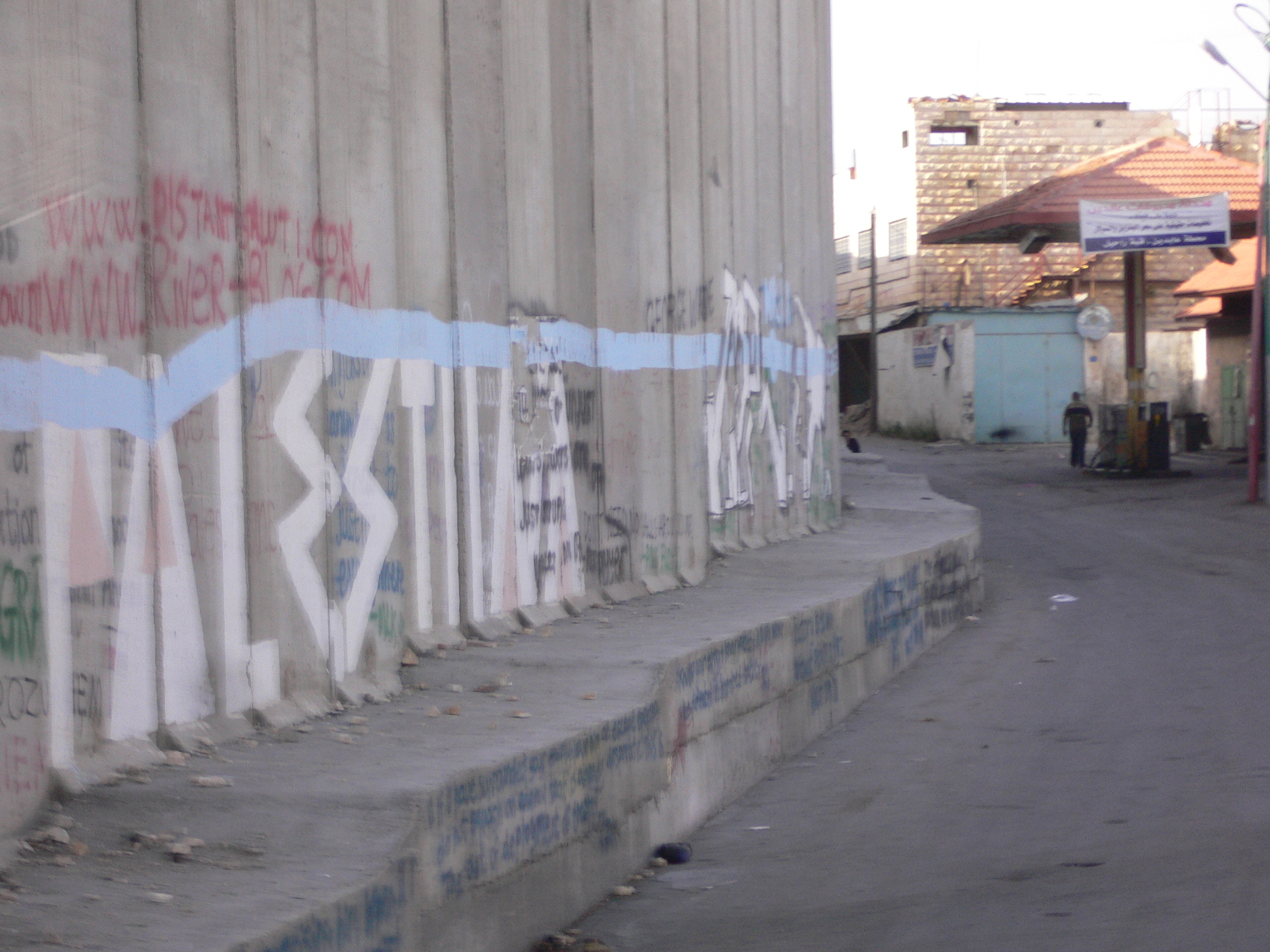
Five years ago I was in Bethlehem. Five years isn’t that long, but it’s odd how the memory works. Or doesn’t work! I remember touring the church they say is built over where Jesus was born. I remember the Lutheran Centre where we heard speakers and bought some crosses and shared worship. But from the actual streets of Bethlehem I remember little.

DSCN0121

My strongest recollections are NOT of the official streets, the paths we should have taken. My strongest memories of Bethlehem are of the very few times – two, I think – of going off-road. Leaving the group. Abandoning the security of our guide and just exploring.

There was one main street that led from a drop-off point downhill to the Church of the Nativity. We had walked up and down that street a couple of times and frankly, to me, it got kind of touristy and boring. There were so many other streets to explore. So I asked my friend DL, whom I knew would have the same urge, if she’d like to try the side-street. Off we went.

It looked like it should run parallel, but you know the old saying about looks. Soon there was a left turn, and a right turn, and then a whole warren of little alleyways.

As we walked we were both getting quieter and quieter. I didn’t want to say anything to DL, and I suspect she didn’t want to say anything to me. It had only taken maybe ten minutes.

We were lost.           

A voice says: Cry out! And I said: “What shall I cry?” Did you hear that from Isaiah this morning? Get thee to the desert, it says, to the wilderness. And there prepare the way of the Lord, a highway for our God.

For whatever complicated historical and economic reasons, we live in a society that, more and more, wants to train the unpredictability out of us. We live in a world of systems. Computer systems. Communication and transportation and economic systems. Everything is a system. We’re told to behave in a certain way. Not only do most of us more or less successfully behave like that, but we get VERY upset with those who don’t. Or can’t. We put them into institutions. If John the Baptist were around now he’d be in a hospital or on the street. Or on meds. The only times we allow ourselves to see our wildernesses, our wild places, is up on the movie screens, where we can safely walk out of the theatre and tell each other that that’s nice, but it’s not real life.

We’ve become slaves in so many ways, and the worst kind of slaves – slaves that actually WANT to be where we are. We’re like the ancient Hebrews who told Moses: “why did you bring us out here into the desert where there’s no food? Weren’t we happier to be well-fed – even if we were in bondage”?

Today’s lessons, each in their own way, are about EXODUS, which is a word that doesn’t mean all that much in our world right now. But liberation, which is what Exodus leads to, DOES mean something. Or it should.

Advent is about preparing for liberation. And however much we decorate the church or our houses, Advent is ultimately about how well we prepare ourselves and our communities for justice, and truth, for incarnation and for the risk of being out there, maybe a bit lost, preparing for a new way in the world.

This last week some of us at the university got free passes for the movie “The Exodus”. It was a big Hollywood production, with absolutely fantastic costumes and sets and 3-D effects. It must have cost millions, maybe tens of millions, to make.

But the point, for all that, was simple: there is captivity, and there is freedom. And sometimes we make ourselves captives even while we think that we’re free. Where does liberation await us? Almost always, the movie seemed to imply, it’s off the beaten track. In the “wilderness”, wherever that is.

Our churches are failing. Not all of them, but many. We’re closing buildings, shutting down congregations, bemoaning the fact that there is so much grey hair in the pews.

In one sense, that’s sad. But I wonder if what’s really happening is that we Jesus-believers are being forced out to where it all began: in the wilderness. It’s in the wilderness of NOT knowing what a building should be, in the wilderness of NOT knowing who should be part of our group, and in the wilderness of NOT having big budgets and buildings and programs that we can do what the prophet says we should be doing:

Cry out, says God. Cry out that the grass withers, the flower fades, but the word of our God will stand forever. Get you up to a high mountain, O Zion, herald of good tidings; lift up your voice – and how are we supposed to lift it up? – Lift it up, without fear, and say“Behold! The advent of your God!”

It starts, I believe, with allowing ourselves, every day, in our homes and work, to be less safe, and more spontaneous. It means forgiving ourselves, and others, for failure, because only by doing that can we learn to try again to succeed. It means relying on others, for only in community can a person survive the wilderness.

And it also starts by seeking justice, however imperfectly, and by keeping our eyes open. By so doing, says the prophet, we will be preparing our hearts for the Christ child. And if we don’t spend some time in the wilderness, it won’t matter how many lights we’ve hung or how Christmassy our houses look, we won’t be ready for Jesus no matter what.

If it sounds unsafe, it should. Can you imagine a crazier-looking character than John the Baptist? But every year he is our model of preparing a way for the Lord.

Lift up your voice with strength O Judah. Do not fear. Every valley shall be lifted up, and every mountain and hill be made low; the uneven ground shall become level and the rough places a plain. Then the glory of the Lord shall be revealed. And all people will see it together, for the mouth of the Lord has spoken.

At one point in our wilderness way to the Church of the Nativity, we stumbled into an open square. It was a market. Spices, meats, nuts, dates….everything seemed to be there. There were lots and lots of people. But as far as I could see, not a single other face that looked like mine. They were all locals.

We went left. No exit. Right. Again, no exit. Down a stair…dead end.

Eventually, we found our way to another street, and from there to another street, and emerged, eventually, via a series of lanes and stairs, back onto the main thoroughfare that we had left behind.

Was it a bit frightening? Yes, at least to me. Was it interesting? A thousand times more than the other way.

Prepare the way of the Lord. How? By being less afraid, by being more human, by being willing to act a bit crazy and look a bit lost. By loving, seeking justice, and by embracing the life we’ve been given and not worrying quite so much about the opinions of others. Maybe it was a risk going off-road on the way to the Nativity. But five years later, that’s the only street I remember. May we each, in our own ways, hear God’s call to go “off road”, and learn what it is to be out there, preparing a way through our homes and through our lives.

P1070484