Uncategorized

Who’s Missing at Christmas

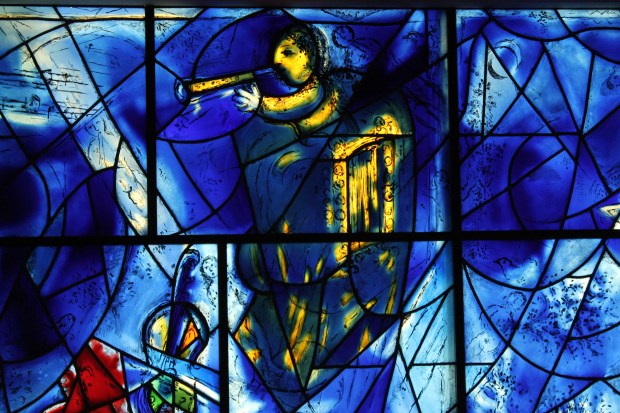
Chagall Chicago Art Inst of Design

I have a confession to make. I haven’t made a parcel for my son D. yet this Christmas. This has been on my mind a lot the last few days. I haven’t gotten something together and baked cookies and wrapped up little reminders of home and sent it all away via Canada Post. Christmas morning will come, and way off in England somewhere, D. and his girlfriend E. will wake up, and brush the sleep out of their eyes, and get some fresh coffee, and stretch and yawn, and then they’ll sit and open presents. And there won’t be anything from Daniel’s pappa. Me. And the worst part is: it’s too late now. I could make all kinds of excuses: it’s final exam marking time, there are so many emails going back and forth about the Finnish and Estonian churches, the research for the book on pilgrimage is taking too long. Things were crazy-busy at the university. All true. But really, is any of that an excuse? I just haven’t been paying enough attention.

At this time of year, one of the questions that comes up, in very many families, is who will be missing this Christmas? We don’t just decorate the table – we start to think about who will be around it. And who won’t. Sometimes it’s because of a death. This is the first Christmas for me without my mother. Some of you have lost loved ones in the last couple of years. You know how hard that is. Sometimes it’s because of distance, as it is for me with my middle son. Sometimes it’s for other reasons. Children grow up and go to their partners’ parents, or have Christmasses of their own. Sons or daughters, or grandsons and granddaughters, are off at school, or away traveling. Maybe there’s been a rupture in the family. That’s especially difficult it seems, at Christmas, in what is supposed to be a season of love and forgiveness. There’s a reason that this is also the season of greatest depression and anxiety. “I’ll be home for Christmas” isn’t just the title of a song. It’s a feeling we have in our heart. It’s an urge, almost instinctive, to be home, wherever we feel home is. It’s an unconscious, powerful urge to gather in loved ones under our wings.

One of the ironies of Christmas, is that that warm, family, clannish keeping track of who is home and who is away is actually not very Christmassy. If, by Christmas, we mean the first one.

The first announcement wasn’t about pulling the family all together. It was, instead, about expanding the very notion of family. Blessed are you among women, cries out Elizabeth, as if she can’t help herself: and blessed is the fruit of your womb! Why? Because Jesus was going to help his family? Actually, no. As it turns out, he was about to tear his family apart. And a sword will pierce your heart also, the old prophet Simeon warns Mary about her future. This kid will be trouble. But for humanity – well, that was something different. This child was born to expand the whole concept of family, to include, in the sense of all the prophets of Israel, all those people traditionally left out.

God’s mercy is for those who fear him from generation to generation. NOT the rich. Not the upper-class. Not the influence-peddlers and intellectuals and business-people. For the mighty one of Israel has brought down the powerful from their thrones, and has lifted up the lowly. God has filled the hungry with good things – even better than a Canada Post box from home – and God has sent the rich away empty.

Who is missing this Christmas is an issue that has to do, not with sentimentality and longing, but with who we see and who we ignore.

Christmas, according to Luke, is NOT about happy faces around a table where everyone is related to us. We know that. Of course. But it bears repeating. Christmas is much tougher, and more real. It’s about raw power. It’s about justice, and injustice. It’s about how much a cup of coffee costs, and who manufactures our shoes, and whether some government committee paid for by our taxes cuts funding for social programs. And God’s choice, this Christmas, is as it was the first Christmas, is NOT for US. It’s for the refugee, and the migrant, and the outsider, and the poor, and the working poor. God chooses to lift up, not the rich, not the happy, and not even the middle-class. God’s incarnation was and is, to lift up the lowly.

Blessed are you among women, says Elisabeth. Because God is doing something important through you. In you, God is already lifting up the lowly, and remembering the long-standing promise.

Mary is, in a Biblical sense, the spoiler. When you think about it, she’s a lot like the whole Biblical nation of Israel wrapped up in one person. For just as God once chose a weak, insignificant nation of slaves, so God once chose a weak, insignificant girl.

Firstly, she was a girl. At a time when women were property only one step up from the furniture, God chose of all people, a woman. In addition, she was young – we don’t know quite how young, but young. And finally, she was caught in a scandal, in a society not so different from the societies today where a young woman in Mary’s place would be murdered brutally by her own family for so-called shame of getting pregnant.

This was the one God chose as the theotokos, or: “God-bearer”. My soul magnifies the Lord, and my spirit rejoices in God my Savior, she replies to the angel. For God has looked with favour on the lowliness of his servant.

The message for us is this. If God chose someone as weak and insignificant as Mary for something so important and powerful, then SURELY God continues to choose the weak and insignificant around us. And we need have no shame when we feel that way. AND: we should be ashamed when we ignore the theotokai – the weak and insignificant – who are the prophetic witnesses to what is important and real in our own world.

In the Paris climate talks that just wrapped up, one of the things we learned is that climate change isn’t just about protecting ourselves. It’s about justice. Because it’s more often than not the poorest who are the first to feel the effects of unstable climate. So climate change is once more, a question of how we work out our faith, or fail to.

In Judea, in Paris, in Montreal, wherever you are, God is in the business of using nobodies to perform powerful foolishness. Like Mary said: “God has brought down the powerful from their thrones, and lifted up the lowly. God has helped this servant, in remembrance of such a great mercy.”

My urge, this Christmas, like yours perhaps, is to bring the family together as much as possible. I want to know who’s missing at Christmas. Somehow to include my son in England. And that’s not a bad thing. But God wants me – God wants us – to think even BIGGER. Who’s missing at Christmas isn’t just the son who isn’t getting a parcel on time. It’s the one who never gets a parcel, the one who waits at the border, the one who lives on a reservation without drinkable water.

What can we do?

We can say with Mary my soul magnifies the Lord, and my spirit rejoices in God. And then we can let justice be born in us. Even when we are nobodies, worth almost nothing, we CAN do that, with love for Christ and for each other. For we are like Mary in one last, important way. When we think we have and are nothing, but we are open to the announcement of the angel, that’s when God can use us most of all.

The Stranger who travels with Us

Dovrefjell

I recently heard a story about a Norwegian acquaintance of mine. She was in Germany at a conference, and when one of the German academics first met her, she told her: “oh, you’re from Norway! I’d love to visit Norway someday.”

That’s nice. Right? Norway is a beautiful country. Nothing strange about what this woman said. Presumably, lots of people would love to visit the land of fjords and mountains. But what was a bit jarring was what came next. “My grandfather always told me stories, as I was growing up, about how lovely a country Norway is,” this German academic told my friend. “So I’ve always had this image of your homeland as a very special place. He said that in the early 1940s he spent some of the happiest years of his life in Norway.”

My acquaintance was a bit nonplussed. Did the German not realize what she was saying?

Yes, World War Two is long over. Yes, now Norwegians and Germans are neighbours and, very often, even friends. Yes, there are lots of German tourists welcomed in Norway every year. But did the German not realize that the ‘happiest years of life’ for her grandfather, who almost certainly was in Norway as a soldier during what was a brutal occupation of the country, were not exactly the happiest years of Norwegian history?

Countries, like people, don’t mature and grow up without suffering, and sometimes, without causing suffering. And the church is the same.

Perhaps no institution in the western world has been the cause of so much growth and help, relief and education and hope as the church. Perhaps no institution in the western world has been the cause of so much misery and pain and ignorance and hate and death, as the Christian church. So when we hear the words of the prophet: the voice of one crying out in the wilderness, Prepare the Way, we need to start by being a LOT more sensitive than that German academic. We have to ask ourselves exactly how we, personally, might be implicated in the message. Is Advent good news, or bad news?

For one thing, it means, without apology, that it’s okay to be political. The first words we hear about John the Baptist are political: in the fifteenth year of the reign of Emperor Tiberius, Luke writes, naming the dictator of the day: when Pontius Pilate was governor of Judea, and Herod was ruler of Galilee… You can’t escape it. Advent always comes to us in the midst of politics.

This year, the politics are again brutally obvious: more and more and more shootings, most recently in California, and all the while some Americans saying that there’s nothing to be done. Rivers of blood staining the streets in Syria. Extreme weather events killing people and creating refugees globally – even as world leaders gather in Paris, in a city so recently scarred by the awful terrorist murders of innocent youth, to debate whether the climbing thermostats will make the world uninhabitable for our grandchildren. Millions of people flooding across borders and across oceans. A mass migration of misery. Children dying. Drones dropping bombs. Changing governments, a plummeting dollar, financial insecurity, increasing surveillance, and everyone uneasy.

Prepare the way of the Lord. As if we have time and space and hope enough for that, we think. Make God’s paths straight.

The most basic thing these words tell us is that something IS happening. We can’t put our heads in the sand. Changes are coming – have always been coming – and we can’t pretend otherwise. The world is changing. We are, as individuals, as institutions, and as families, facing massive upheavals. Our bank accounts, our homes, our educations, will NOT be walls high enough to save us. None of us will be the same ten years from this Advent. We can’t escape.

We are heading down some sort of path, into this hard environment, what the Bible calls this desert.

Making paths STRAIGHT seems to be about how we go forward, which is a matter of justice. When it comes to refugees, it’s clear, in recent news, that we can either straighten refugee routes, or we can block them. Between those two options, the Bible is quite clear. Hospitality to the poor and the oppressed is not just expected. It’s demanded. I was naked, and you clothed me, says Jesus, in Matthew, I was a stranger, and you welcomed me. I was on the evening news huddled in the rubble on the newsfeed, and you did something. Whatsoever you have done to the least of these, you have done for me. To prepare the way almost never seems to be about protecting our own interests. Far more, it’s about allowing into our shelters and onto our paths those who need it most. I do not desire your offerings, says the LORD in the Hebrew Bible, but let justice roll down like streams. And yet. And yet we ALSO need to have a good solid sense of ourselves to undertake that prophetic work, otherwise what we do will be insincere and superficial.

And maybe this is the other part of the story. It seems like a paradox, but it’s a basic truth: the more comfortable we are with our own selves and with our own place, the easier it will be for us to travel through the coming desert, to face adversity and to make the paths straight for others. Our basic equipment, so to speak, is how we feel about ourselves, and what we know ourselves to be.

If we FEEL loved, we are better able to love. If we know that we are valuable, it’s easier to value others. If we learn to be gracious and forgiving with ourselves, we will, in most cases, have an easier time being gracious and forgiving with others. So our first task is to remember – and to remind ourselves and others – that WE are valued creations, loved, and accepted, just the way we are. Then we can treat others that way.

We are ALL strangers, and preparing a way means making that highway through the desert big enough for everyone.

There was a lovely video I saw recently about the settling of Saskatchewan. It was so well designed and shot. It talked about how life was hard for the European pioneers, but how life got so much better, and about how prosperous most of those families are now. In one sense, there was nothing wrong with the video at all. It was quite beautiful. But when it was done, I thought the same thing as that Norwegian academic I started out describing, thought of the German: do they not realize? Yes, the pioneers – among them my grandparents – worked hard. Yes, prosperity came. But at what price? The film, meant to be so inclusive, never once mentioned the First Peoples, and the disaster that European settlement was for them.

For us to celebrate an anniversary, or to prepare a way through the wilderness, two things must come together – a commitment to justice AND a sense of our own fractured and imperfect belonging. My friend Kathryn recently posted a quotation from a 4th century ascetic, Amma Syncletica, about how we develop a relationship with our Creator. Amma was a desert woman herself, and she wrote: In the beginning there is struggle and a lot of work for those who come near to God. But after that, there is indescribable joy. It is just like building a fire: At first it’s smoky and your eyes water, but later you get the desired result. Thus we ought to light the divine fire in ourselves with tears and effort.

The desert is not ahead of us. It is where you and I are traveling already. There will be cold nights and hunger and difficulty. As we journey, we can either take note of our fellow travelers, or not. When we do, and when we welcome them, and work for justice, and share love, we are already making the paths straight – for the Creator of all, the One who calls us, is already that stranger who travels with us.

The Pillars of Paris

Grief in Pere Lachaise cemetery      

      Those of us who’ve been fortunate enough to be to Paris are probably all thinking, today, about that place. A lot of us have memories – often very good memories, of being there. It’s such a wonderful city. But it must have been a very dark, a very frightening place, Friday night. I imagine it still is, with lots of fear and anxiety and grief as Parisiens try to recover from something it’s impossible to recover from. I was there just for four days last February, staying near Pere Lachaise cemetery, very close to where the attacks took place.

The bloody murders of so many innocent people give a new meaning to Jesus’ words: Beware that no one leads you astray. …. When you hear of wars and rumours of wars, do not be alarmed; this must take place, but the end is still to come.

The news Friday felt so apocalyptic. It feels like the end of everything we count on being stable in a society, when gunmen enter a nightclub for the sole purpose of murdering innocent youth. Yes, I know we’ve been spared what others go through regularly. I know that such violence is tragically the case in too many places in the world. Beirut for instance. That poor suffering city. But not Paris, or London, or New York. Or Montreal, we hope. I was busy texting my daughter on Friday night: “where are you?” “are you okay?” We cannot imagine the fear. We cannot imagine the loss, for those parents and grandparents whose children did not come home that night, who now, because of hate, will never be able to come home.

For nation will rise against nation, Jesus said, and kingdom against kingdom.

The borders of France are now sealed. The army is in the streets. Presumably, soon there will be even more cameras, more checks, more eavesdropping and surveillance. The French, like the Americans after 9/11 and like us last year with the attack at Parliament Hill and Bill C-51, are going to be even more willing to give up freedom in exchange for the promise of security.

It’s that word – SECURITY – where the warnings of Jesus really hit home. Jesus was standing by Herod’s Temple, and his disciples were going on and on about the stones. Yes. They ARE great stones. I’ve been there. The stones in the Temple foundations are, individually, the size of city buses. Can you imagine if our buildings were built on solid pieces of granite the size of a Montreal city bus? Not just one but thousands of them? We’d think ourselves pretty secure. In Jerusalem the stones are beviled and cut so carefully that you would think they’re put together with mortar, the lines are so perfect. It is a feat of engineering and strength. Something you would think would last thousands of years. But in the end, did even such a miracle of engineering offer security to the people of Jerusalem? Not at all.

Do you see these great stones? asked Jesus. Not one stone will be left here upon another; all will be thrown down.

Jesus’ point is about security. Where it exists and where it doesn’t. No matter how hard we try. For one thing, he’s telling us, security DOESN’T exist in or through the state. The Jerusalem Temple was the closest thing that Jesus and other Jews in his day had to a state institution. It was grand. It was permanent. But Jesus points out – it’s NOT going to save you. And it didn’t. All will be thrown down.

When we put our trust, as we will, in cameras and guns on the street, and surveillance, we will be saying at least in part we DON’T put our trust in community, and discussion and peace-building and mutual concern and education. We will become, perhaps marginally safer, but at a cost to ourselves. And that’s always the way it is with our attempts to safeguard ourselves. They injure us. Ultimately, in this changeable and dangerous world, Jesus is saying that all attempts to be secure and safe result in our putting trust where it doesn’t exist – in other words, all such attempts end in idolatry. FALSE security.

It was actually the Temple, and the City, and the State, that eventually put Jesus to death. Because the authority of the state ultimately rests on violence as well, even if that violence is systemic rather than a bomb strapped to some deluded martyr’s chest.

So. Where do we find security? Only one place: the place where, paradoxically, as Jesus showed us, security seems the MOST absent. The foot of the cross. Paul wrote: I decided to know nothing while I was with you, he except Jesus Christ, and him crucified. In other words, I will live with complete insecurity, for the sake of love.

Where do we find our peace? It’s not that complicated. When we depend entirely on Love, especially the love that created and sustains us, that’s Gospel. When we depend on threat and power, that’s NOT Gospel. And so police, insurance policies, borders, weapons, buildings – precisely those things that normally make us feel solid about ourselves, are probably the exact things that put us on shaky ground with our God, and with the community of love we are supposed to be trying to build.

In one sense, it’s always about security – where we try to get it, where it fails, and how THEN, we go out and try to find security elsewhere. Paris is terrible, and right now feels unique. Yet there will ALWAYS be wars and rumours of wars, earthquakes, flood and drought. In other words, we’re chasing a dream. We can do what we can do. No more. Try as we might, security will NEVER actually be “secured”.

Beware that no one leads you astray, said Jesus. Permanence is not something out there, in walls and stone, in guns and fences, but in here, in who and what we belong to. Walls go up – and walls come down. Someday EVERYTHING that we consider permanent, if it’s manmade, will probably be changed. There’s no getting out of life without suffering, or ultimately, without death. That should not make us careless of life, but it should remind us that security comes from reaching OUT rather than walling IN.

Paris has always been known as the ‘City of Light’. That fact reminds of a quote from Dr. Martin Luther King Jr.: ‘Darkness cannot drive out darkness.’ Dr King went on to say, and he was speaking from hard experience, ‘only light can do that. And hate cannot drive out hate. Only LOVE can do that.’

When I was in Paris in February, the last day we stopped by Pere Lachaise cemetery, where so many famous people are buried. The cemetery is within a few blocks of many of the attacks Friday. There are beautiful monuments everywhere you look in the cemetery. One of them in particular is a statue of grief, standing beside the dead person, mourning. That’s the photo here.

That will be Paris for some time. Grieving its dead. Inconsolable. We will pray for Paris and its people. And we will also pray for Beirut, and for the thousands of unknown little villages in Syria and Iraq and in so many places where this kind of hate and violence are a fact of life, the kind of hatred that is causing so many to flee.

This must take place, Jesus said, but the end is still to come. It is the PEOPLE who are the real pillars of Paris, and of our shelter, and humanity is the roof that is over our heads. We pray that these are the bricks and mortar that can be strengthened, in love, in Paris and throughout the world in the coming weeks and months.

All Saints and Some Bones

Kateri painting

Yesterday, as some of you know, a group of us went to Kahnawake. We’ve been told by our last National Convention and also by our Bishops that we Lutherans should get to know our First Peoples neighbours. For us, that’s the Mohawks. So the Montreal Lutheran Council and Dean Jim Slack planned a morning of visits. Yesterday, off we went, across the Mercier Bridge.

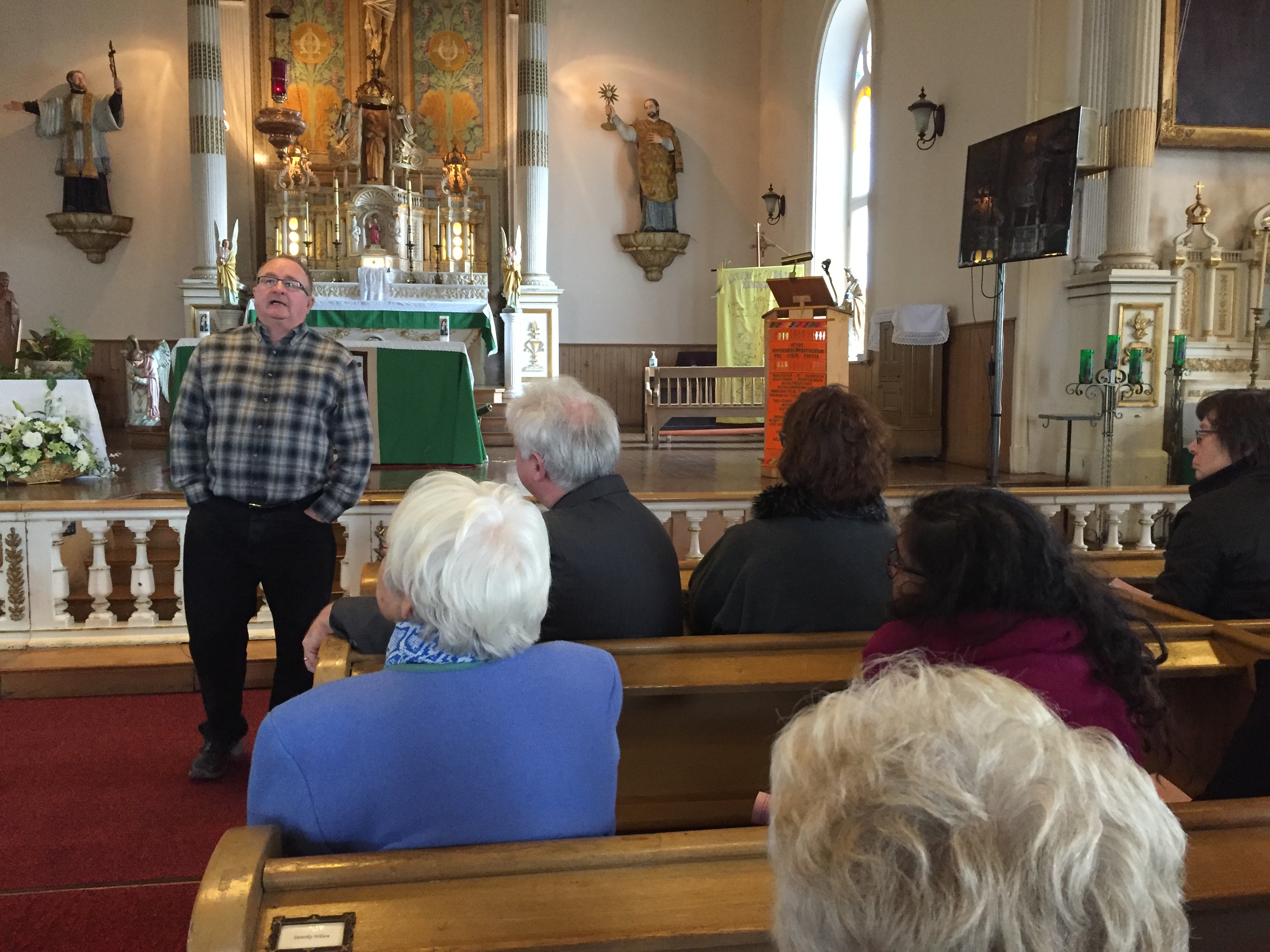
Part of our visit was to go see the shrine of St-Kateri. Kateri was – IS, I should say – the first ever Indigenous woman sainted by Rome. A local saint. A lot of the Mohawk don’t go to church anymore and don’t necessarily care that much about it. But there was a member of the parish of St Francois Xavier church who gave us a very nice historical intro to Saint Kateri . Our guide proudly showed us the marble Kateri shrine containing the remains of the Saint. He showed us the painting of Kateri, who it is said, suffered from terrible smallpox scars on her face up to just moments before her death, when her skin miraculously cleared up and was made clean.

Our guide was a nice man, a very kind man, and a generous man. And clearly he was very interested in Saint Kateri. He was enthusiastic. He’d finished his historical intro and we were going to sing a hymn and say a prayer, when he said: “wait – if you’re interested, I have a special treat for you.”

What could he possibly mean? We wondered. He disappeared and came back with a small woven basket, with something in it. “Since you’re interested in Saint Kateri,” he said, “This may be for you.” There was something white in the basket. “If you’d like to have a special moment of veneration,” he went on, “we have one of the wrist bones of St Kateri. You can pray with the bone of the Saint right here.”

We all smiled. Several people nodded their thanks. Then our guide left. And we Lutherans just sat there, a bit stunned.

As a good Roman Catholic, it was perhaps the most gracious thing our guide could have done. It was incredibly generous. In one way, it was very thoughtful. But did our guide miss the memo? Did he not know that the group who were visiting the shrine yesterday was a group of Protestants? Not just that, but Lutherans? And visiting on, of all days, Reformation Day, the very day commemorating Luther, who railed against relics?

            Then I saw a new heaven and a new earth, says the book of Revelation, for the first heaven and the first earth had passed away, and the sea was no more. And I saw the holy city, the new Jerusalem, coming down out of heaven from God, prepared as a bride adorned for her husband. And I heard a loud voice from the throne saying, ‘see, the home of God is among mortals…and then the clincher: God himself will be with them.’

There’s something special when you can remember with ALL your senses. I don’t know about you, but when I smell certain smells – maybe a birch forest, or the smell of fresh bread, or the smell of grass right after a rain – memories just come flooding in. Touch is the same. I have a beautiful Bavarian sweater given to me by some friends in Germany. Every time I put it on and feel that rough wool, the memory of my visit with them comes back to me as if it were yesterday.

So I guess that’s what a saint’s bones might do for a person. That is, the right kind of person, in a tradition receptive to it. Which is not, to be honest, my tradition. I suppose that bones can be a symbol of what the prophet hears in Revelation, when he hears the comforting words God will be with the children of creation, not in idea only, but right there. Not having grown up with any kind of feeling for relics, I must admit that mostly, I found the sight of a wrist bone a bit off-putting. It was, for me, bizarre. I’d prefer to remember Kateri in my mind than to look at her actual enamel and marrow.

But does my discomfort mean there’s nothing to learn, or to be blessed by, in that situation? I don’t think so. Sometime we who are Protestants are too quick to dimiss the physical nature of memory, and the physicalness of the Creator’s love toward us.

On this mountain the Lord of Hosts will make for all peoples a feast, says Isaiah. And it won’t be a feast of ideas, but of real, solid things we know and treasure – the kinds of things we can taste and touch and smell: A feasts of rich food, of well-aged wines. It IS true that certain aspects of our faith are far, FAR more than intellectual. It’s true that some blessings need to be received that way: we taste the eucharist, we feel each other’s hands, or cheeks, when we pass the peace, perhaps we wipe tears from our eyes when we hear a hymn or a passage that touches us deeply. For me, and I think for others, one of the most powerful moments of the deconsecration service for Good Shepherd and for the Finnish church home was when we reached out and physically touched the walls with our fingers while thanking God for the shelter those walls had provided. Our Creator sometimes speaks most strongly to us through our senses.

There’s some talk that now-former Prime Minister Stephen Harper – who is, of course, very much alive – will be honoured by naming the Calgary airport after him. If that happens, it will be like Pierre Trudeau airport here in Montreal – a memorial that lasts long after the person is gone. Memory is inevitably connected to what is physical.

All Saints’ Day is a day for us to participate in this MORE-than-just-thinking, but-also-feeling kind of remembering. It’s a day for recognizing the ways in which, by means of much more than bones, those whom God has called saints have left us their witness. Physically. In bricks and mortar AND in bones AND in all kinds of other ways. This is what is sometimes called the “deposit of faith”, or Tradition. The witness of those who have died still lives on in ways that might surprise us. In our bank accounts in our churches, for one thing. In the hymnbooks in our hands. In our gestures. That witness might be in the very DNA we carry from faithful parents and grandparents, aunts and uncles, all the way back to the apostles themselves.

Death will be no more; mourning and crying and pain will be no more, for the first things have passed away. The scriptures want to tell us that this isn’t just the future and it’s not just the past. New life, in love, is what can be beginning, in hope and in the spirit, in our lives, right now. I am the Alpha and the Omega, says God in Revelations. The beginning and the end, the constant source of love and the memorial that can outlast each and every change, even the grave.

I watched what happened at the Kateri shrine after our guide went back to his office for a minute. Some of our little group of Lutherans wandered this way and that in the church. Some looked up at the frescoes. Some prayed quietly where they were for a minute. A few lit candles. Most went straight to the museum and the gift shop. Only a couple went to look at the bone. But nobody seemed all that bothered by it, one way or the other.

The most lasting memorial is love, however it is expressed. It can be expressed by a Roman Catholic guide who offers the best witness he has at his disposal, from his Tradition, to a group of strangers whom he wants to welcome. Love, says the Bible, endures. It is stronger than books AND bones, stronger even than the grave. Death will be no more, says the Lamb on the throne. But love goes on. Behold, I make all things new.

As we remember our loved ones with the sound of a bell and the smell and light of candles, and as we celebrate the faith that made those we remember saints, may these bones we inhabit really live. May the words of the prophet call forth the Spirit from the four winds, into our lives. And may the Almighty and the Ever-Gracious, the Lord of life, someday grant us, in our turn, the best, most real, and most lasting, memorial of life – a love that is remembered, physically remembered and lived out, even in, past and through, the grave that awaits but cannot contain us, God’s saints.

our guide

The Old Man behind Young Man Luther

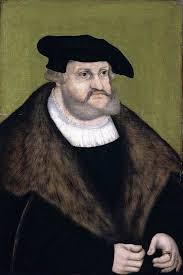
Frederick the Wise

Every year, on Reformation Sunday, I feel a bit silly. You know how every now and then you hear that it’s “pet appreciation day” or “national wildflower day” or something like that? Well, Reformation Sunday feels a bit like that for me. It FEELS made-up. Reformation Sunday is a celebration no one but Lutherans knows about. Frankly, nobody seems to care that much about it, either.

If you were to walk over to the grocery store after church and ask people who Luther was, you’d get blank looks. Maybe a few folks would know something about Martin Luther King Jr. But no one remembers the 16th century monk after whom our church is named. Except us. And even us, not so much.

Just in case you think I’m being cynical, I’m not. Clearly, there IS a place, if not for Luther, at least for Reformation. This week we Canadians voted out one majority government and voted in another. We voted out one prime minister and voted in another. Overwhelmingly. A lot of people must have thought there was a need for reforming things. And that’s just the way life goes.

In his world, Martin Luther was a great beacon of change, a fighter for the common person. But today I’m interested in someone else, someone who was there with Luther, but very much behind the scenes. If Luther is not that well known, this person is even less. He was Elector Frederick the Wise, of Saxony.

I think we should aim to be someone like Frederick. Maybe not with quite so big a stomach….

Frederick was the Duke who sort-of, from behind the scenes, helped Luther. The reason I’m interested in Frederick is that he was old. Like most of us. He was also quite happy with the way things were. He didn’t need change. Probably was suspicious of it, a bit. He was basically comfortable. Again, like most of us. And, at least until Luther came along, he was likely pretty invested in keeping things the way they were.

It all sounds quite familiar. Frederick was NOT a young revolutionary. But somehow, despite all that, when the moment of decision came, when God’s moment to shake up the Church came, Frederick had the courage to be the old man behind the young man Luther. He knew what he knew. He could see with his own eyes that things needed changing. And he risked his own comfort to help make that happen.

I think that’s our battle. Not to be Luther. We’re too old, and probably most of us too comfortable. But to be – at least – Frederick. That takes courage too.

The days are surely coming, says the LORD, when I will make a new covenenant with the house of Israel and the house of Judah. It will NOT be like the covenant I made with their ancestors…

Yesterday Bishop Pryse came to Montreal for his regularly scheduled visit. He told us what we already know: you’d have to be blind not to see that the church is changing. Our pews are emptying out. Young people are not coming in. The old days of big church picnics and full programming and not enough space for all the people are gone. The average age in our congregations is, at least, in the 70s. The days of a full-time professional, paid pastor for every church are gone. What does that tell us? The old ways of doing things aren’t working.

But are you and I going to be Luther? Really? Do we have the energy and the vision to nail our thoughts to the public doors, to debate against the powers of our world, and to take them all on?

I’m not sure that’s our battle. I’m not sure it’s who we are. So perhaps, being older Lutherans, from older, established congregations, congregations that are facing the end of things as we know it, congregations that often have more money than vision, we need to look out at our world and say: okay, maybe I’m not the one to actually bring the changes. But. Maybe I’m being called to support, to pray for, to guide, to help pay for, to protect and cheer for. Or – at the very least – not to stand in the way.

I will make a new covenenant, it says. Emphasis on the word NEW. It will NOT be like the covenant I made with their ancestors…

The Bishop told us that the very model of what it means to be a church has to change. The structure of our Synod and committees goes back to the 1950s and 60s. It was based on the corporate model, on companies like GM. Well, look at what happened to GM! We’re behind the world, not ahead of it.

The needs are just as great as they always were. Luther fought against oppression and ignorance and slavery. Those things are still, very VERY much, with us. We still have the hucksters. Like in medieval times, our leaders still try to use fear to control us.We’re STILL offered fake salvation, this time in bank accounts, in what we call ‘securities’. Our Creator still needs courageous disciples to speak out for freedom, and dignity, and respect for a gracious and free gift of life in our days.

The struggle is happening. So what role will we play?

Frederick had to swallow a lot from Luther. For one thing, Luther taught and preached against relics. Ironically, it was Frederick, Luther’s protector, who had the biggest relic collection in all of central Europe. Luther’s JOB – his professorship – was paid for by the very person and relics he was attacking. Do you know what kind of courage it takes to take a public stand against your own paycheque? But then imagine the courage it takes to let an employee speak against you, just because he or she may be right.

Reforming an institution isn’t easy. When we tore down the old church at Good Shepherd, it was not easy to see the walls and ceiling we had worked hard on, come down – I remember sitting on that roof myself. But the walls HAD to come down, in order for a new way of being church to be born. Just like Frederick’s relics had to become useless so that the good news of God’s love could be told in a new way.

You will know the truth and the truth will set you free, Jesus told his followers. We still need to hear that, and to share it. And since we now live in a world and a time where people are not flooding in through our doors, we need to find ways to go OUT through those doors. To be the church out THERE, in the world. Like for Frederick, it will mean supporting others, if we don’t have the ideas ourselves. It will mean seeing a Luther, and giving up something to make their gift of change happen.

            I know how sad I was to leave my last house. I’d spent so much time and money to make it just the perfect kind of space. I’d designed it to be perfect. But the time came to move. And I remember how STRANGE my new apartment seemed when I first moved in, and how odd the neighborhood felt.

But now, I can hardly imagine being anywhere different. I’ve discovered joys I didn’t know before, of being able to walk to work, of cleaning a smaller space, of a neighborhood with so many good restaurants. Things I would never have known without moving.

One thing is certain in our churches: we need to change. As the Bishop has said, it won’t always be easy. Probably, like Luther, we’ll make some spectacular mistakes. But if we don’t try, we won’t be faithful to this day, Reformation Sunday.

It still feels a bit, to me, like a made-up day. Our version of “adopt-a-caterpillar” day. But if Reformation Sunday seems a bit odd, perhaps we could call it Be-Like-Frederick day. And we could remember that, even old, and settled, and stuck in our routines, and happy with our lot in life, God might still be calling us comfortable Christians to support the winds of change blowing through our church. That way, we too might play a part in bringing the good news of love and life in a new way, to a new world.

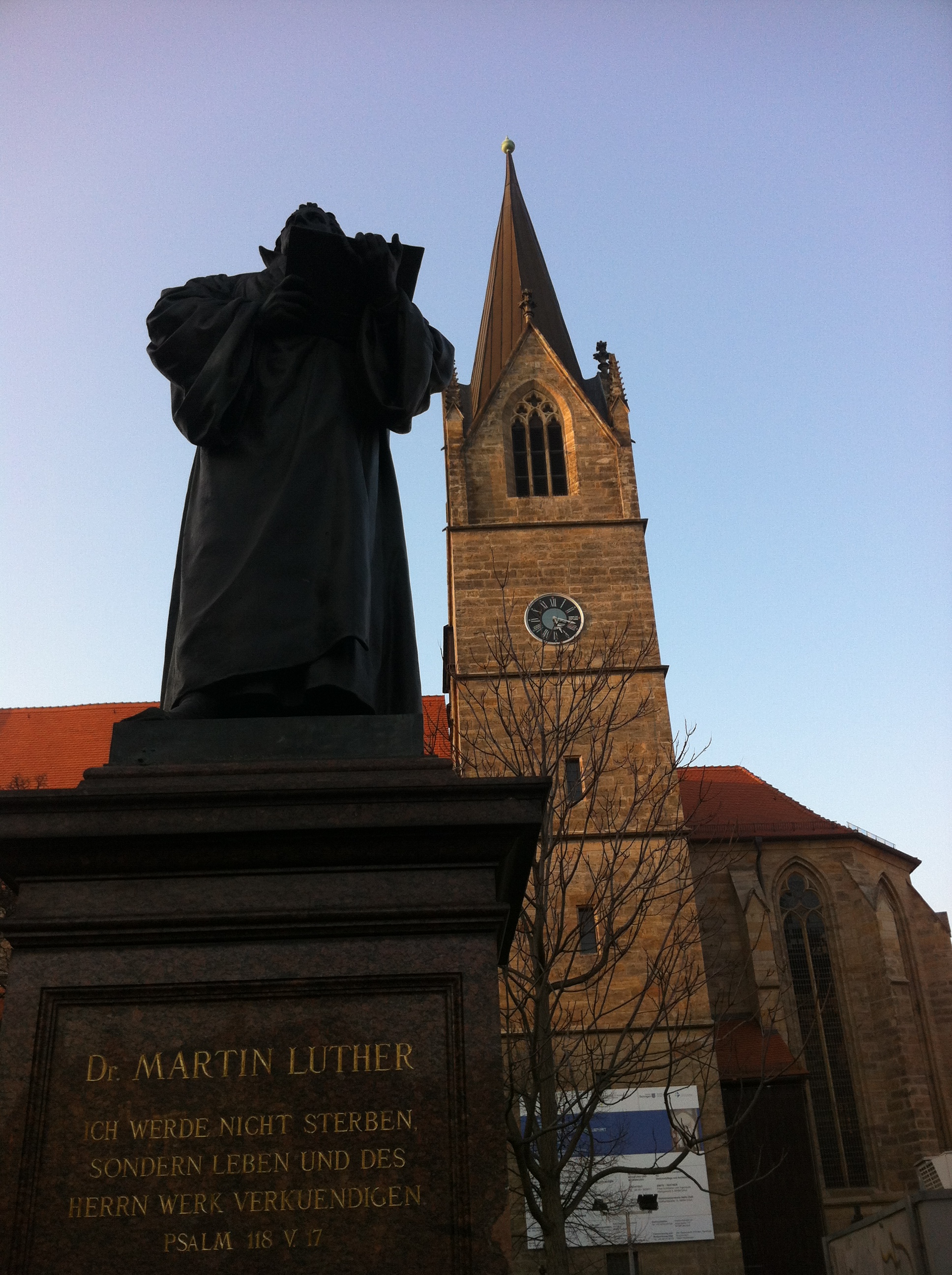
Erfurt Luther statue

Making Something of our Wounds

trust no one graffitti

Years ago I heard a story that has always stuck with me. It’s a parable about two brothers in Scotland in the Middle Ages. They were from a good family. But somehow they started hanging out with the wrong crowd, and under the influence of others who didn’t respect the law, their childish pranks turned into worse and worse crimes. There was a rash of sheep who had disappeared in this part of the country and the local farmers thought that there must have been a wolf on the loose. But one day, it was discovered to the community’s horror that it was these two young men who were rustling their sheep and selling them.

Normally, in that society at that time, the boys would have been hung. But their respected family pleaded for them. So both of the young men were given the choice: either death or having the brand ST, for sheep thief, burned permanently onto their foreheads with hot irons, so the world would forever know their crimes. Both chose to be branded.

The story goes that the brothers were so shamed that they were forced into exile. They left their part of Scotland and wandered for years. One of the brothers never got over the crime, and its punishment. He blamed his family, even though it was thanks to them he was still alive. He blamed the community for failing him. He knew the letters ST would always mark him and so he continued to make the wrong choices, to get into fights, and to steal. He was a marked man, and eventually, bitter, he died too young and too unhappy, his life a tragedy.

But the other brother was changed by his punishment. He felt that his life had been spared to give him another chance. Since his marking with the brand made him among the lowest of the low, it was here that he decided to try to do what he could. For years he labored to help others who were poor and without jobs. He knew what it was to be a criminal, so he tried to help others who were in danger of falling into the mistakes he’d made. Over the years, bit by bit, his stature in the community grew, and with greater respect he continued to work for justice for those who didn’t have any. He was strong-minded but flexible, and because of his own mistakes wise to the ways we human beings can fail and be wounded. He knew what it was to have faults, and so was always ready with a kind word. He did not judge, except those who practiced no justice. Eventually, he became a leader of the community that he had wandered into, so far from his childhood home.

Of course, he had the brand on his forehead as well. But after many years, it faded a bit, and the generation who had known what it meant passed away, while new people just considered it an oddity. When finally this brother died and was buried, a visitor to the community, amazed by the number of people who had come to see the casket and pay their final respects, remarked on the brand. “Look at that,” the visitor said, “ST. What does it stand for?” To which one of the locals, answered, “you know, we never asked him. But I suppose it must be short for saint.”

Who is wise and understanding among you? Says the writer of the book of James. Show by your good life that your works are done with gentleness born of wisdom.

The developmental psychologist Erik Erikson believed that every age we go through as human beings has certain tasks associated with it. For him, the task that is associated with maturity is the task of integration. When we reach a certain age, we put the stories of our lives together and try to make sense of them. To redeem the meaning and value of our lives (or not) we need to try find the value in whatever has happened to us – whatever that might be, whether we had the equivalent of an ST burned onto our foreheads, or something else. We either learn to live with our wounds and scars, or we don’t. If we remember that Jesus lived through a cross, in love, then that will help us immeasurably.

Many of us are at what Erikson would call the “integrative stage”. What is the meaning of our lives? Can we finally give up blaming our parents for who we turned out to be? How have we succeeded and how have we failed in caring for those God has put around us? How do we treat others and treat ourselves? Can we make our peace with those who disagree with us or have harmed us? These are the questions from which wisdom can sometimes, with grace, come. This is the time where, if we are fortunate and if we practice the discipline of love, remembering that we are forgiven people, we just may turn that ST on our foreheads into something redemptive.

A capable wife who can find? says Proverbs, sounding a bit like a Yiddish old man. But this text is not  just about women! She opens her hand to the poor, it says, and reaches out her hand to the needy. It’s ALSO, and just as much, about values. It’s about what will help us to cultivate the kinds of things about ourselves we want to, in order to become the people God wants us to be. Notice how many of the thoughts are similar to James: Strength and dignity are her clothing, it says, about the woman. Strength. Dignity. Good strong words. And the good wife laughs at the time to come. She opens her mouth with wisdom, and the teaching of kindness is on her tongue. The wise, forgiven, loving, just and generous woman AND the wise, forgiven, loving, just and generous man.

Today here in Canada is the Terry Fox run day. It will be hard for me to get back downtown after church, with at least one of the bridges closed for the marathon. But think about Terry Fox. He was a bit like those two brothers in my story. Marked forever by losing a leg to cancer. Terry Fox had every reason to be bitter. Young and active, he was condemned by a disease he did not choose, to death. And yet somehow, through his determination and an openness to a grace that turned him toward others, his disease was transformed, through his run, into such a gift to the world. Decades later, his wisdom and strength are still helping others.

Its interesting to me that in the never-ending election campaign we are going through, there’s a lot of talk about money, but not about which values might help us decide how to spend money in one way and not another. There’s been a lot of talk about immigration. But again, not a lot of talk about the values that can help guide us in our decisions about who to accept, and from where. And there’s been lots of talk about the economy, but almost none about the kind of people we want ourselves to be through our economy.

James is a letter that is written to people who are trying to live out their faith, and doing that in a community. We could do a lot worse than to listen to what he says. In his warnings, he seems to be describing a government, and a people, who have given up values except for money and power: for where there is envy and selfish ambition, there will also be disorder and wickedness of every kind, he writes. But the wisdom from above is first pure, then peaceable, gentle, willing to yield, full of mercy and good fruits.

Once you get to a certain age, you know that none of us gets through this life without some kind of ST burned into our foreheads. We are all wounded, somehow, by life. The question of faith then becomes, how do we live with those wounds? By grace and through faith, can we transform them? Can we accept the love and forgiveness we have as children of the creator? Do we work for justice and peace, in wisdom and dignity? Or do we bite and cut, never forgiving ourselves or each other?

Jesus took a little child onto his lap and said: this is the way of the Kingdom of Heaven. Draw near to God, says James, and God will draw near to you. This week, and every week, may we think about what wounds life has given us, and pray and work and trust that they can be transformed in us, until, like the brother who found peace, we too can take our place among the saints.

Silent Spots

the Frenchman River valley is a wide, wildly beautiful swath through the prairie. It’s also a place that cell towers don’t seem to reach. So I may not post for a day or two. 

Yesterday Hugh and I had the enjoyment of 9 other pilgrims walking out of Val Marie with us, two of them naturalists. For hours we examined plants and birds on the native grasslands. It was wonderful but slow! It was especially nice to walk so many miles with Trevor Herriot and to learn from his passion and experience. 

But when at 6 pm Trevor and the photographer Brandimir left us at the 8 mile mark (the others had turned back long before) Hugh and I still had five miles to walk to the old farmstead where we camped. We flushed meadowlark and blackbirds, and a few whitetail deer, as we walked into a red sunset. Despite having to slog around several sloughs we made good time but still late by the time all was settled….too late to eat. Only time to set up the tent, pick as much speargrass out of the socks as possible, and stretch out the aching legs to the sounds of night creatures and coyotes.  


Deconsecrating but not Disappearing

(a homily for the deconsecrating of the Finnish church home in Montreal)

stone fence removed one 

Do you remember the famous leaning wall of Simpson? We never called it that. But that’s what it was. The Finnish leaning wall. The stone wall that, over the years and over the decades, decided it didn’t want to stay in one place anymore. That wall started moving even before we did.

I remember one day meeting Frank Berninger, Kati’s husband, standing by the wall with cement, trying to fill in some of the cracks that had developed as it ever-so-gently tipped out over the sidewalk. Or more often, poor Ismo, out there how many times a year?, measuring the angle of the stones, how much every winter freeze up and spring thaw would nudge the stones just a few more centimeters out of place. All those church council meetings where we sat thinking, and worse, imagining, not daring to say it out loud to each other: what will happen if someday that whole humpty-dumpty arrangement comes tumbling down and there’s a car, or God forbid, a person walking by when all those stones let go and gravity takes over completely?

How can we forget? All that beautiful field rock. And now? In the words of Jesus about a different Temple, not one stone is left upon another. The wall – that long, beautiful wall that looked so permanent – is gone. As is the garden. As is the day when young Finns would sit and pose by the fifties and the hundreds for black and white photos like we have hanging in the dining room. All gone.

But WE are still here. By your endurance, Jesus said to his disciples, you will continue. Life, hope, growth, vitality. They are not so easily measured, nor given up.

We human beings are easily fooled. We think that bricks and stone, mortar and wood will outlast us. That might be true, in terms of us as individuals. But in terms of us as the children of God, as the family of the Almighty, and as the realm of the Creator in this age, that kind of thinking is dead wrong. Brick and stones will NOT outlast us.

The God of the Bible is big on promises – big on vision. And it’s almost a constant, that the most certain time for a promise is precisely the moment when things seem at their darkest, when it feels like the whole world, and not just a wall, is tipping.

If ever a congregation was facing tough days, it would seem to be our little community of Finns. Here we are, wondering how it will be for us to move in with the Estonians. Here we are, dividing up books and looking at odds and ends, and recycling and taking home bits and pieces of this and that and the other. We’re like survivors of a shipwreck. This building that is so loved it is called not just a church, but a church HOME for so many years, will change. Its façade will stay. But when the massive front end loader shovels dig in behind, it won’t be pretty.

So what a day to receive such words of promise!

The Lord shall watch over your going out and your coming in, says the Psalm we have heard in the greeting and in the liturgy. Not only now – but from this time forth, and forevermore. This is a vision for AFTER the stones come tumbling down. When not one is left atop another. This is a vision of care and concern and support. It’s a FUTURE. We should make no mistake. It is a promise. Not as the world judges it, but in the eyes of the one who knows us better than the world. I will pour my spirit out, says God through the prophet Joel, so that your sons and your daughters shall prophesy, your old folks shall dream dreams, and your young people shall see visions.

If we are people of faith then we are always in some kind of crisis, because crisis is where God takes us in order to move us forward. In the midst of THIS crisis, this closing of the Finnish church home, it’s especially important to hear this call: in what ways, right now, are WE supposed to dream dreams and see visions?

In the “great and terrible” day of the LORD, things are reduced to their essentials: what is the ministry of this community? What can we do to reach out, not just to the church, but in God’s world, which is so much bigger and more exciting a place? How can being reduced to nothing (to speak like Paul in 1 Corinthians) …how can being reduced wind up being a beginning point of great opportunity for you and for me and for the Finnish community?

The days are surely coming, and are here, not just for this little congregation, but for all of us who call ourselves Christian, when you and I will be called on to do something NEW. We have no choice. The church is changing all over Europe and North America. There will be no walls to protect us. No false securities. The old has passed away. The new has begun. The Lord is your keeper. The Lord is your shade at your right hand, so that the sun shall not strike you by day nor the moon by night.

SO: let us remember that God is the greatest dreamer of all.

The leaning wall of Simpson wasn’t just the leaning wall. It was the leaving wall. What seemed so solid has detached and is gone. It led the way and now it is our turn as a community, also to leave, and to go forward into a future where we do not know our paths, but only the one who walks those paths with us.

The Lord shall watch over your going out and your coming in, from this time forth and forevermore. In these coming weeks, and in this coming year, which will surely be unsettled, may we see where our TRUE foundation lies. May we see the liberation that comes with losing something so that we might gain something else. May we recognize our Lord in the wilderness. May THAT be what inspires us, and the point of view that gives us direction. Our heads are raised. May God grant us a vision, and through this present passing, bring new life to us all.

Why Religion and Politics should Mix

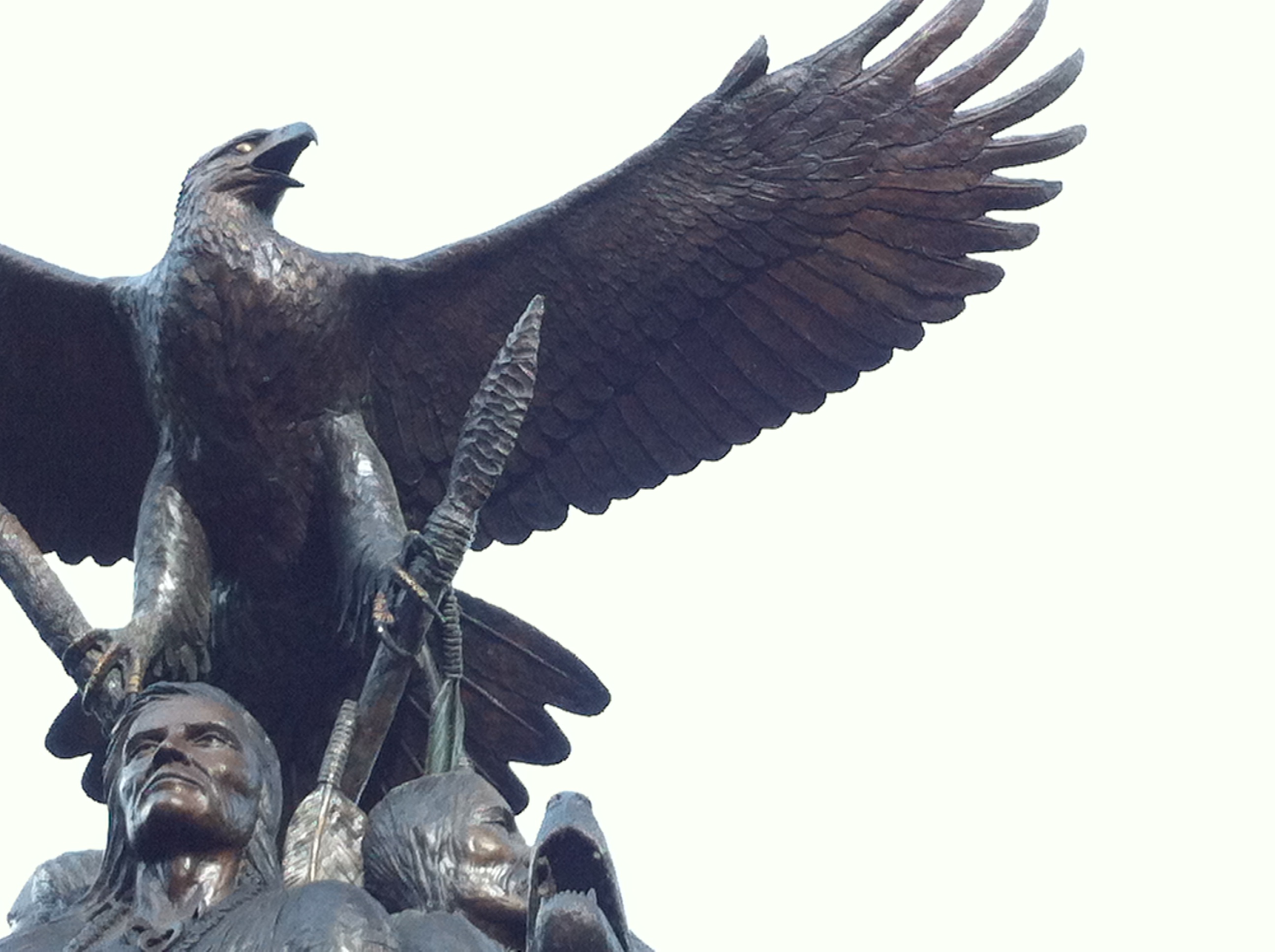
Eagle Ottawa national monument

A friend of mine was recently riding his bicycle when he was pulled over by the police. He was on the sidewalk, which is illegal. But. He was also going through the Atwater underpass, where there is no bike lane, and LOTS of scary traffic. In some spots there are just inches to spare between you and the cars. A driver swerves slightly, and they’ll knock you down. Not to mention the potholes. You may remember that a cyclist died not long ago going through an underpass like Atwater. After that, the mayor of Montreal, among other people, has told cyclists that they should take the sidewalk on those small stretches in underpasses where NOT to do so would be dangerous.

Apparently the Montreal police haven’t been listening to the mayor. When my friend came through the underpass on the sidewalk, the police were waiting. They pulled him over and hit him with a fifty-dollar ticket. As it turned out, however, that was only the first of his problems.

Give us your ID, the police said to him. Now. My friend is a nice guy. In his fifties. Grey hair. Clean-shaven, riding his bicycle home from his job downtown. Maybe even wearing his dress shirt, and a tie. But he knows the law, and so he said to the police: “I’ll give you my name and address so you can send me the ticket. But the law states I don’t have to give you my ID. No Canadian has to surrender their ID on demand to the police unless they’re being placed under arrest.”

He was right.

However, right isn’t always what’s important, apparently. Within seconds the Montreal City Police had my friend handcuffed, his hands behind his back. They marched him into the back of a police van. They started yelling into his face. Telling him he would be thrown in jail for obstructing justice. Telling him he was going to get a police record and never be able to cross the border into the United States again.

They searched his pockets, pulled out a USB stick that he had, and then, right in front of his eyes, broke it in half. All because he wanted his legal rights.

They say religion and politics don’t mix. Whoever said that didn’t know the Bible. My friend is not religious. But I’m saying that faith has something to say to what you and I should think of a situation like that. In fact, religion and politics mix ALL THE TIME.

Then all the elders of Israel gathered together, it says in the Bible, and they came to Samuel at Ramah, and said to him: appoint for us a king.

Samuel tried to tell them.

            You don’t WANT a king, the old prophet said to them. Rulers are a BAD idea. Rulers will do what they do best. They’ll tax you. They’ll form a police who will oppress you. They’ll make you slaves. They’ll take your children and put them in their armies and then your children won’t come home. A government will take your money, your food, your security and eventually, sometimes, your life. And they’ll do all this, just because they’re rulers, and you’re not. Are you sure you want a king?

And the people of ancient Israel said: Yes.

You know what they say: be careful what you wish for. Because now what are WE, and most people in the so-called developed countries asking for? Security. And we’re being asked if we’re willing to pay what that dream might cost.

True faith has never been particularly comfortable with governments. Now – for me to say that is controversial. It’s not an opinion everyone shares. But there’s a reason why the Bible says: “God is a jealous god.” and “You shall have no other gods.” It’s idolatry to mix up our faith with nationalism. The Kings were NOT good for Israel. Similarly, there’s a reason why Jesus died the way he did. Jesus did NOT die helping plague victims. Jesus was killed by a state, and in the name of law and order. Jesus was executed, as a troublemaker (remember my friend) by a legal government. A government, by the way, that was promising peace, prosperity and security.

Hmm.

Just before Jesus died something else happened that was interesting. The Gospels say that Pilate led Jesus out onto the pavement in front of the mob: “Would you have me crucify your King?” Pilate asked. And the crowds, although they didn’t know it, echoed the ancient Israelites. Jesus stood right there, in front of them. And they shouted back: “We have no king but Caesar!”

In other words, one more time people picked a man over their Creator.

The point here isn’t any specific government. The point is about giving up what the Creator first gave us – ourselves. This whole issue is about sovereignty. According to the Bible, we human beings are created in the image of God. We were given sovereignty over ourselves, in order to freely serve our neighbors, including animals and the natural world. And yet, rather than think like saints, rather than act as agents of love just a little lower than the angels, rather than risk uncertainty, most of us quickly give ourselves up voluntarily to corporations or parties or whatever else tends to enslave us. We trade ourselves for convenience.

But the prophet says to us: We do not have to be like the other nations.

This last week the Truth and Reconciliation Commission publicly released its report in Ottawa. Whatever else you might think about this or that provision, the BASIC thing that’s being asked for, the bottom line, is simply one thing: justice.

Governments – of ALL stripes – have been very bad at giving that. Apparently the Conservative minister of Indian affairs refused to stand with others when it came time to applaud the call for changes in legislation. If the prophet Samuel had been in Ottawa, he’d have said to us, ‘well, what do you expect?’ Power doesn’t help the weak. Power tends to serve power. Which is precisely why if we are children of faith, we need to act in a DIFFERENT way from rulers and governments. We need to be COUNTER-cultural. We need to take a stand for others, and with others. We need to identify and then help overcome what every state, of every political persuasion, will do to thwart justice.

Be careful what you wish for says Samuel. It’s good advice. Think about your democratic vote as a theological choice. Do we really want security at any price, including losing our own freedom? Do we really want a slightly better income at the cost of poisoning the environment? Do we really want to save a few dollars at the cost of historic injustices to the First Nations that can and should be overcome?

My friend sat in the police van for about 45 minutes. Other cyclists would come by, get their tickets, and look at him sitting there, handcuffed. “They looked scared,” my friend said. Like they were thinking: ‘what did HE do?’

But harassment didn’t win out over justice. Eventually, my friend said, a policeman came back to see him. It probably didn’t hurt that my friend had no record, and had never been in trouble with the law. The officer took off his handcuffs. When my friend asked what he was supposed to do next, the officer told him to get lost. The irony is that in the end, he didn’t even get the ticket.

Our Creator asks us to look beyond ourselves to a better world. A world that doesn’t depend on peace and security from Ottawa – or anywhere else. For we know that if the earthly tent we live in is destroyed says Paul, we have a building from God, a house not made with hands. So we do not lose heart.

There have been, and will be wrongs. That’s the world’s system. But our faith tells us that we are to stand, as Jesus did, with those who need justice. Religion and politics SHOULD mix. It’s time for us to get over wishing for a king. We can wish for justice and for peace, instead. And then do what we can to help make it happen.