Matthew Anderson

Mapping with our Feet: Session 2

img_7165

In Feb 2017 I was invited by Bishop Michael Pryse to be the keynote speaker at the Bishops’ Retreat for Clergy, held at Niagara Falls. This is the second of my three presentations (the first is at somethinggrand.ca). To enter this PDF powerpoint, click the link below!

session-2-powerpoint

Mapping with our Feet: the 2017 Bishop’s Retreat for Clergy in Film

with thanks to: Kevin J. Baglole, retreat registrar, James Brown, pianist, and Dr Sara Parks, for illustrations


<p><a href=”https://vimeo.com/205084982″>Bishop's Retreat Full Film</a> from <a href=”https://vimeo.com/user32514305″>Matthew Anderson</a> on <a href=”https://vimeo.com”>Vimeo</a&gt;.</p>

Stop, Hey, What’s that Sound?

Gabe and Papa’s latest (January 2017) In light of recent events.


<p><a href=”https://vimeo.com/201590711″>Stop, hey what's that sound. Gabe and Papa</a> from <a href=”https://vimeo.com/user32514305″>Matthew Anderson</a> on <a href=”https://vimeo.com”>Vimeo</a&gt;.</p>

Again the Call

img_9132

‘Wait and see what Trump does.’ How many times have we heard that, lately. Such terrible uncertainty. Everywhere. But hasn’t it always been that way? Jesus called the first disciples during brutal military occupation. Martin Luther became a monk and then a reformer  during societal earthquakes. Martin Luther King was who he was because he lived out his dream during, and precipitating, crises that shook the world. And so again the call.  This Jesus walks by us too. And says: ‘follow me. NOW is the time. Despite: no – because of – the risk. Follow me.’

Everyday annunciations

annunciation-montreal

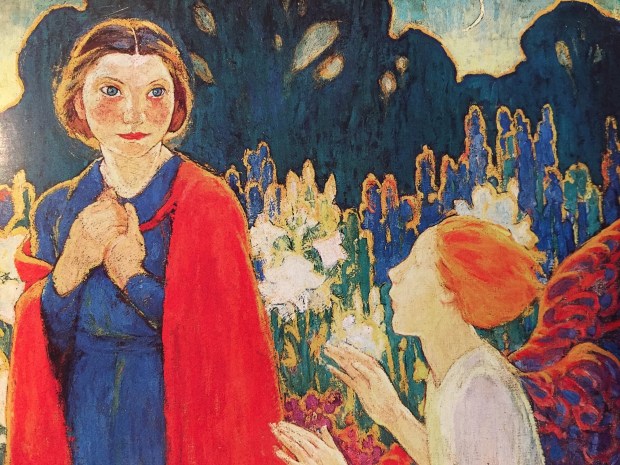
Mary Eastlake – Annunciation – Montreal Museum of Fine Arts

This was the one God chose as theotokos, meaning “God-bearer”. My spirit rejoices, the girl tells the angel. For God has looked with favour on the lowliness of his servant. The message is simple. If God chose someone as weak and lowly as Mary for something so important and powerful, then surely God continues to choose the  outsider. We need have no shame when we feel that way. More importantly: we ignore the modern-day theotokai – the weak, marginalized, strange, poor, God-bearers around us – at our peril. They are the prophets. They tell us what is important.

The Surprise

Chagall Chicago Art Inst of Design

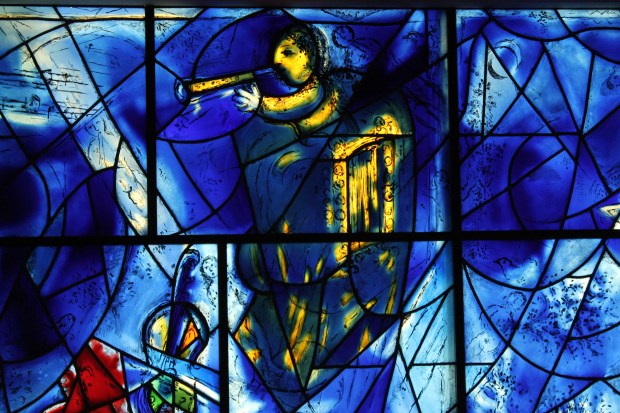
Chagall window, Chicago

God’s mercy is for those who fear him from generation to generation, says Mary. NOT “God’s mercy is for the rich”. She didn’t say that. NOT God’s mercy is for the upper-class. She didn’t say that either. And neither did she congratulate the selfish who are increasingly rewarded in our society and by our politicians (and apparently, by our votes): the influence-peddlers and the professors in their offices and the business-people in their downtown towers. For the mighty one of Israel, Mary said, has brought down the powerful and lifted up the lowly. God has filled the hungry with good things and  sent the rich away empty. Notice that word: empty. You and I –we’ve already had enough. Advent is about who we see and who we ignore, an announcement about place and privilege. It’s about justice. It’s about how much a cup of coffee costs, and who manufactures our shoes, and whether some government committee paid for by our taxes cuts funding for social programs. And it’s about our political and economic and environmental opinions just as much as our religious opinions. Because the surprise we’d better learn now, is that those things cannot be separated.

All Souls

fullsizeoutput_37bc

My father died this August. All Souls, this year, is hitting me hard. ‘All that stuff about saints’, I remember hearing, growing up, ‘that’s just idolatry… worshipping false gods.’ Actually, I think the opposite is true. When we imagine that in this creation we’re somehow alone, that it’s all about ‘my God and me’, we make ourselves into idols. When we forget that ‘ashes to ashes and dust to dust’ applies to all of us we’re pretending to BE gods. When we act – what pride it takes! – as if we’ll live forever, we’re ignoring all those who have gone before. The truth is, we’ll always be in relationship with a world, animate and inanimate, that has experienced forgiveness and mercy and love before us, with us, and long after us. That’s the church. The one without walls, in either time or space. The boat, on the river of time.

Luther’s Long Shadow

My contribution to 500 years…

Luther's Long Shadow from Matthew Anderson on Vimeo.

What comes naturally

2013-10-19-18-29-44-copy

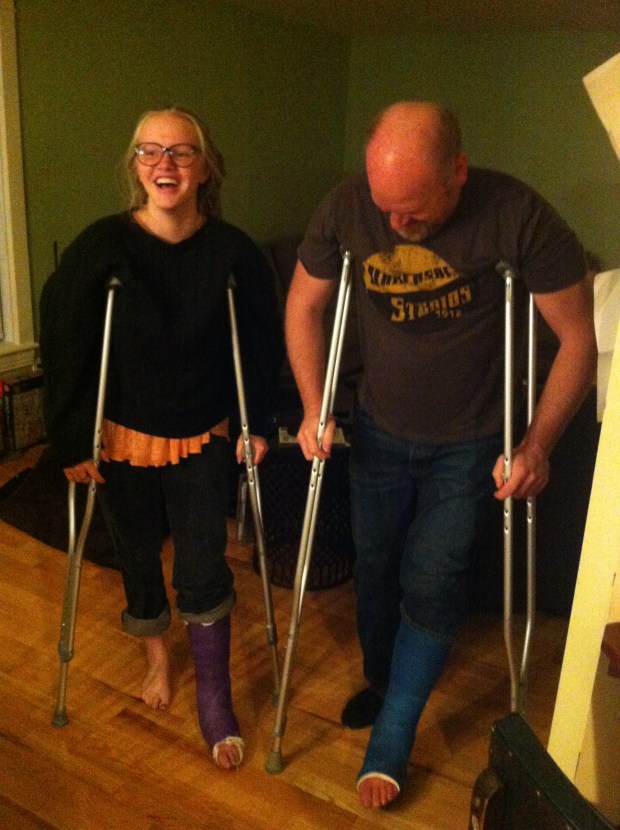
A few years ago my daughter called me from a soccer field, telling me she’d been hurt. I picked up crutches and met her at the field. “Thank-you, Daddy,” she kept saying to me as I helped her up. “Thank-you for coming.” So you also, Jesus says, when you have done all that you were ordered to do, say “We are but slaves. We have only done what we ought to have done!” Let me rephrase. Who among you, who is a parent or a step-parent or a grand-parent or an aunt or an uncle, would expect one of the children in your life in an emergency to thank you for coming to their aid? Would you not rather say to that child: “you’re welcome my daughter, my niece, but really I’m only doing what any adult in this situation ought to do?” I felt a bit ashamed. After all, where else would I WANT to be? Jesus is making the point that there are certain things that are just part of the deal. They’re supposed to be part of our basic identity. One night, years ago when I had a house, I left the water running on my grass by accident and went to sleep. My neighbor, who arrived home late, saw it and came over and turned it off. When he told me the next day and I thanked him, he just shrugged: “I’m your neighbour,” he said. “That’s what neighbours do.” Feed the hungry, says Jesus. Clothe the poor, visit the sick, seek justice for the marginalized and powerless…and do it all while being thankful for what you have, trying to live in love. You and I, said Jesus, should just shrug and say: that’s just what we’re supposed to do. Imagine a world where it could be that natural. Truth is…it can.
 

The Threshold

2013-06-13-14-35-48

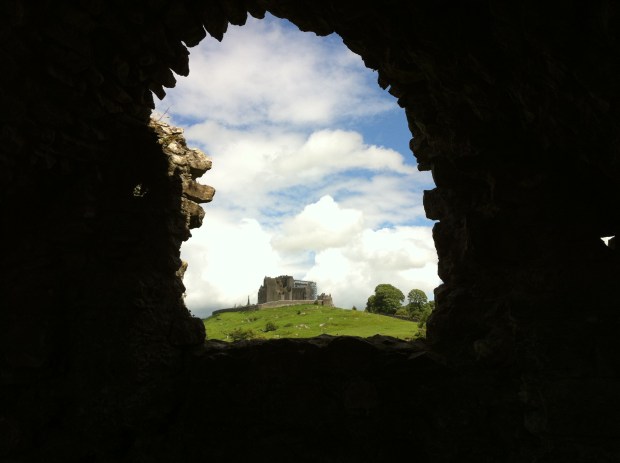
A gate is an entry point. Or, depending on how you look at it, an exit point. Either way, a threshold is a place of potential, of encounter. It can also be a place to decide against encounter. Then Jesus said to his disciples. ‘There was a rich man dressed in purple and fine linen who feasted sumptuously every day. At his gate lay a poor man named Lazarus. The rich man in his house. The poor man at his gate. Miles apart – even only a few feet. Doors – gates, borders – our liminal places – are INCREDIBLY important. Where we are in relation to them says a lot about our theology. Lazarus never, ever, made it into the rich man’s home. And the rich man never chose to go to the border of his own comfort. Later in the story, he PLEADS to go to a gate – from hell back to his home, to warn his brothers. But it’s too late. Father Abraham, the rich man begs, Let me go. If someone crosses the threshold from death to life they will listen. To which Abraham replies: let them listen to the scriptures. At our margins and borders (dangerous places: crucifixions take place at the borders of cities) we risk change. But only there, outside our comfort zone, can we share in the blessing of Abraham.