Uncategorized

Professional Prayer, by David Slater

This is a dangerous profession,
breaking bread and proclaiming it Body,
opening the Word and calling it Life,
sending infants to a watery grave,
and calling it resurrection,
asking those with a 50% chance of regrets
to promise “forever,”
burying the dead in the sure and certain
hope of eternal life.
Trading in words and acts that can, and often do,
transform is unnerving.
You ask yourself: did my eloquence, my sincerity,
my understanding nature produce this?
Of course,
Not.
But the Almighty has few untainted saints on either
side of the pulpit.
And so, for the sake of the other sinners,
chooses to work through the likes of you.

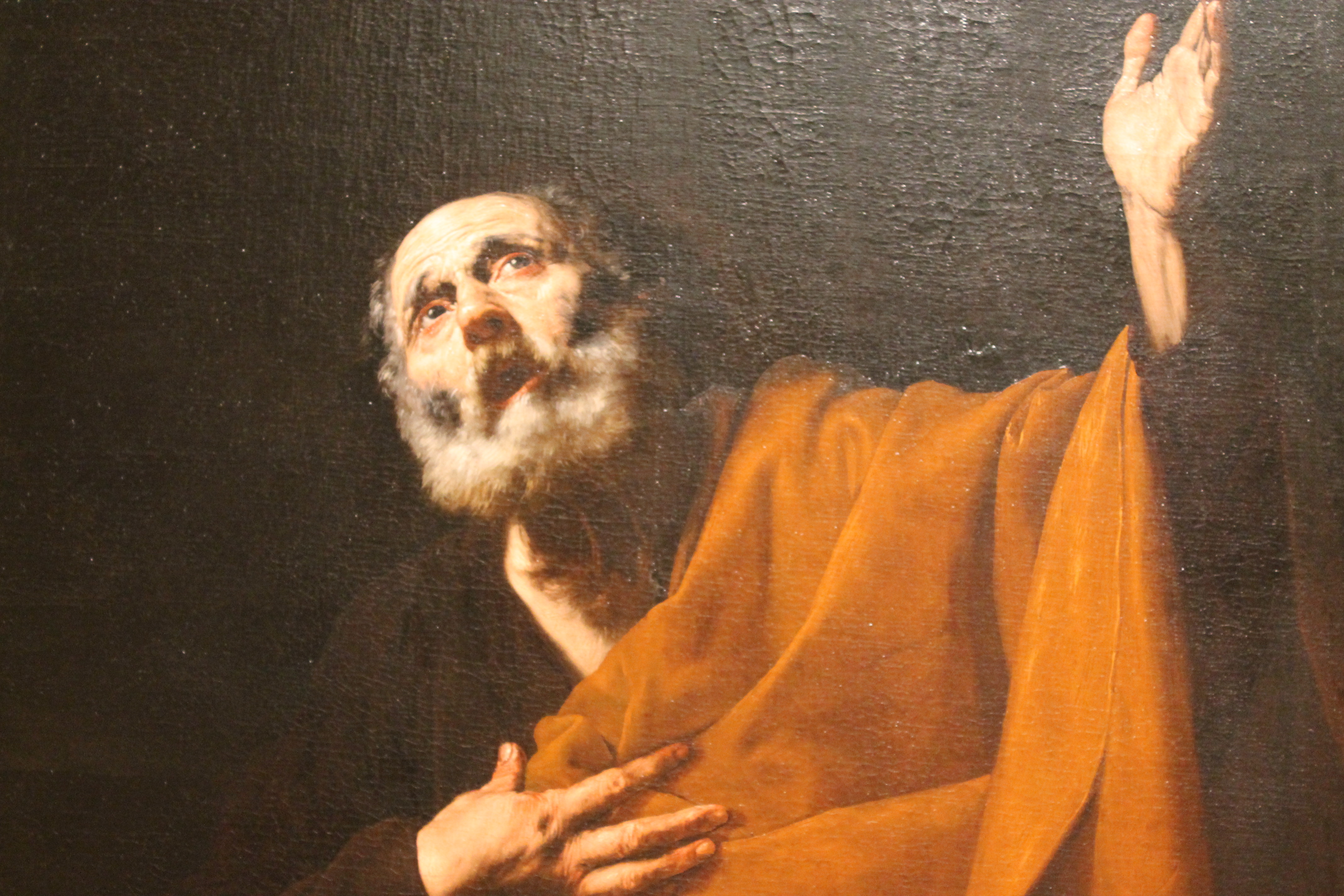
Ribera's St Peter

The Irony of this Jesus

Jesus carrying cross Bosch

everything in Mark’s Gospel is upside down:

What does it mean to be the Messiah of Israel?   We expect a King David who will live forever. Mark’s Gospel shows us Jesus, a preacher from the Galilee who winds up dead

What does it mean to be the messiah of the world?   We cry out for a Caesar, a strong leader to bang the drums of war and protect us from blown-up fears that may not even be real. Mark’s Gospel shows us Jesus, who tells us there’s no way around the cross

What does it mean to be a disciple? We want heroes, people to look up to with pride and self-confidence, a goal and plan that are measurable, achievable and possible. Mark shows us Peter and James and John, who failed Jesus miserably and then ran away

What does it mean to suffer?   We hope to avoid suffering or if we have to, get through it with medicine and drugs and escapes. Mark shows us a Jesus without relief, who cries out in pain “My God, my God, why have you forsaken me?”

You know that friend of yours who says things you have to think about twice? That’s the Gospel of Mark. Mark is an ironic Gospel. Nothing – Jesus, the disciples, us – are what they first seem.

The Gospel of Mark that we hear this Good Friday asks us:

what does it mean to be afraid? Unsure? Cowardly? Ignorant? Lost?

What does it mean to die?

Mark doesn’t give any easy answers. But he says this:

There is more going on than we realize.

Just when we think there is no hope, there will be.

God can make something of nothing,

When we follow Jesus, through the pain, through the suffering, through the death, through the confusion, there WILL come, when we least expect it, a day of resurrection.

It will be a difficult walk. But we walk with Jesus.

Let us begin.

A Letter from College

IMG_0142

This last week one of those life milestone things happened to me. I came home, picked up the mail, and there was an acceptance letter for my daughter to College.

I stood for quite a while in the entry, my coat and boots still on. Looking at that envelope in my hand.

Wait a minute, I thought. Isn’t this the little girl for whom, not so long ago, I made up a white name tag, and decorated it with pretty rainbows, and put her name on it, so she wouldn’t get lost on the playground of the school she’s now going to graduate from? I remember so clearly the look on her face as she marched in behind all those other little bodies, ready to take on kindergarten and the world. That was yesterday, wasn’t it? At most the week before. Isn’t this the same child who sang songs in her car seat when we were stuck in traffic on the way to school, the imaginative child with whom I pretended there was a dragon castle on the island by the bridge? Isn’t this the child whose little fingers I can still feel on the back of my head as I knelt on the asphalt to help her do up her shoes?

Somewhere, somehow, a whole pile of summers and winters and falls and springs have slipped through the hands that now held that letter, and here I still was, and there she was, and there was a letter for her. From a college.

Very truly I tell you, says Jesus, unless a grain of wheat falls into the earth and dies, it remains just a single grain. But if it dies, it bears much fruit.

It’s a shame that this verse generally gets read only at funerals. Because what Jesus says is so clearly true not just of death, but of LIFE. Unless something dies – that is, something changes – nothing new will have any space to come.

It’s a kind of death, every graduation, or every leaving of home, or every new job, or every time someone loses a husband or wife, or sells a house, or whatever it is. Something changes so drastically that we know, we just know, life will never be the same again. And we’re right. Life never WILL be the same again.

There’s so much here from Jesus, we could spend a lifetime just learning from this saying. Renunciation is, oddly enough, the path to growth. It is by changing – by giving up one thing and embracing another – that we become new. In other words, Jesus is saying that despite our airs, we human beings are not so different from the winter that is, oh-so-very-slowly here in Montreal, beginning to turn to spring, or the maple trees that will soon start running sap, or the crocuses that will someday soon, we hope, start to push up. We are part of the same world as them. They die in the fall. And then they come back. But they come back different. We need, sometimes, to have these life-changes, these markers, to be renewed. One door closes, and another opens.

In a movie, if you know something that the main characters in the movie don’t know, and some little hint of what is about to happen takes place, that’s called “dramatic foreshadowing”. It’s like watching the butler come in and pour a cup of innocent tea if you know that later, that same teapot will be used for the murder. That’s usually when the music swells up.

Well, the music should have been swelling for one little part of the reading from John. Because there IS some dramatic foreshadowing in this incident about the Greeks. It says that Jesus was at a religious festival.

At first glance the story seems a bit convoluted: some Greeks come to see Philip, then Philip goes to see Andrew, then Andrew and Philip go to see Jesus. Why so indirect? The Gospel never ever says this, but it does say that Philip was from Bethsaida in Galilee, an area close to the Greek cities. So I think there’s a good chance the reason these people never went to see Jesus directly is this: they couldn’t speak his language. The people who came were not Jews. They were OUR ancestors.

And that’s dramatic foreshadowing. Because the Gospel doesn’t even tell us if they actually ever got to SEE Jesus. It doesn’t matter. What was important for the Bible was that this particular group came and asked. When all around him, his own people, including the disciples, were getting ready to deny Jesus, here’s this group of foreigners who go out of their way to meet him.

And of course, that’s how Christianity became Christianity. The outsiders – our ancestors, the non-Jews – became by far the majority of the new sect that eventually became a religion. So many Gentiles came in that eventually it wasn’t a Jewish sect anymore. Something changed.

Those Greeks who came to meet Jesus meant the death of the old. Peter – a Jew, and John – a Jew, and Andrew and Philip and Bartholemew and all the rest – if they’d known what was about to happen – would have been forgiven if they looked at these Greeks and shed a tear or two. Because those Greeks meant a death of one kind of expectation and the birth of another.

And so it still is. Unless a grain of wheat falls into the earth and dies it remains alone. But if it dies it bears much fruit.

In your life and mine there are almost certainly things that need to end in order for other things to begin. And as churches, far too often we hold on to that might be keeping us from new life. Jesus died partly because he dared to challenge the old ways, and it’s one of the more ironic parts of history that the church named after him is so reactionary. After all, Jesus was killed precisely by institutions trying to protect themselves. Seeds that didn’t want to go into the ground.

At the root of all of these questions is faith. On what is our faith based? If it’s based on ourselves and what we’ve built, then we’ll not willingly let anything die. We can’t. But – if our faith is based on the promise we’re given and the realization that all things – people and institutions – die anyway, then our faith will help us go through those changes – those deaths – to life.

It’s not easy for someone as sentimental as me to see a letter like the one that arrived this week. But the truth is, my daughter can’t go to College unless she graduates and moves away from the school I remember so fondly. You can’t take the memories away, but they are memories, not a future. A child cannot grow up unless they grow up!

Our faith doesn’t deny death. And it doesn’t deny the thousand endings that come in the course of a life either…just the opposite. Faith tells us we have to go through those changes, in trust. It’s like we spend our whole lives practicing what it is to give something up, in trust that we can embrace something new.

There is a miracle in that envelope that came. And thankfulness. And a miracle in our lives, too.

May God grant us the grace to see faith, not in what we hold onto, but what we are willing to let go. And may we be blessed in that letting go – so that ALL things might become new, and hopeful, and truly alive.

AMEN

The Twenty-One Witnesses

Rezk 21 Coptic Martyrs

So now we can’t ignore it anymore. We saw 21 men, twenty of them Egyptian Coptic Christians, and one believer from the beautiful happy, singing church of Ghana, paraded down a beach in Libya in orange jumpsuits. Holding them were black-suited, hooded members of the group ISIS. The hands of the twenty-one were tied behind their backs. They were made to kneel in the sand. Then they were beheaded. For only one reason. Because they were Christian.

I expect that all over the world, Christians are waking up to a new meaning to Jesus’ words. If any want to become my followers, let them deny themselves, take up their crosses, and follow me. It’s a new meaning which is actually just the old meaning, remembered. Martyrdom for faith in Jesus never went away. But here in Canada and in the West, because it tends to happen in far away places (and often to people of another skin colour), to our shame we’ve been ignoring those OTHER Christians fairly successfully. Until now. ISIS is so intent on spreading terror, and so good at social media, that increasingly we can’t escape what bloody Christian martyrdom looks like.

Oddly enough, despite the horror and loss to those twenty-one families, ISIS may be doing the western Church a favour. We’ve forgotten our roots. We’ve spiritualized, abstracted, and made metaphors of Jesus’ words in the Gospels about martyrdom. We’ve reinterpreted them and tried to find their inner meaning, not necessarily for bad reasons, but because these aren’t situations WE face. We’ve hemmed and hawed and turned this way and that and managed to escape the blunt awfulness of the thing: If any want to become my followers, let them take up their crosses….

The twenty-one who were murdered were not rich. They were poor, from poor families and poor villages south of Cairo. Otherwise they wouldn’t have been working in such a dangerous place. Even though some of those men had university degrees, they had left Egypt to do manual labour to try to support their families back home. They did not live saintly lives, but that does not mean they are not saints. Especially now. They join the many, many Christians who have already lost their lives in Iraq and Syria, and elsewhere. Now Libya.

Then Jesus began to teach them that the Son of Man must undergo great suffering, and be rejected, and be killed.

Apparently, after the initial shock of seeing the executions, the feeling in one village where so many of the men came from, gradually turned from grief into a kind of grim joy. “At least if they were going to die,” said one mother, “we wanted them to die for their faith. They have done that, and now they have joined the martyrs.”

Joined the martyrs. Do we have any idea here in the West what that means? I don’t. It seems to me that only by listening to the experience of these other Christians – being forced, in a way, to listen to what they have been living, that we here can re-learn some basic truths. We do not share their experience. Of course that’s a relief. But in our western blessed peace we have forgotten how to notice, to listen, and to pray, in solidarity with those who suffer for the sake of the Son of Man.

In the Psalm it says: for God did not despise or abhor the affliction of the afflicted. God’s face was not hidden…God heard. So must we hear, and not ignore. The God we say we believe in is no stranger to suffering, or compassion, and calls us to be the same. NOT to flee into mindless comfort ignoring the other, harder realities in this world.

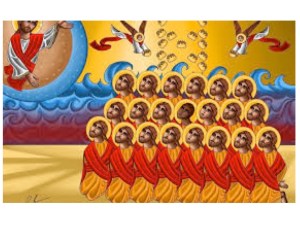
A Coptic Christian artist living in the United States, Tony Rezk, created an icon showing the twenty one. Maybe you’ve seen it. It’s a bit like a classic Orthodox or Coptic icon, but different. The twenty one are kneeling, their hands behind their backs, as they were when beheaded. In front of them is Jesus, lifting his hands to show them the crowns that they’re about to receive.

The high-profile executions on the beach have done what few other events could do: they’ve galvanized some kind of solidarity. They’ve brought together Coptic and Roman and Protestant Christians, black and white and brown, from all over the world. When he was asked about the faith of those twenty-one, the artist said: “historically, the Coptics have give three gifts to the wider church: theology, monasticism, and, again, it seems, martyrdom.”

I don’t know if you’ve noticed, but for some months we’ve been quietly praying for our Christian brothers and sisters in Iraq and in Syria. Syria, in particular, was, after Jerusalem, the first Christian community in the world. In the New Testament, it says that Paul and Peter met and argued in Antioch, and that the first missions west went out from what is now Syria. There are ancient churches and monasteries there – the MOST ancient – that are being destroyed even as we speak. Our elders in the faith.

If we pray for these elder brothers and sisters, we will also remember them. And if we remember them, we will also welcome them, as some of us are trying to organize to do. And if we welcome them, then, God willing, maybe we will also learn from them.

What we cannot do, and must not do, is pretend that we share their experience. We don’t.

Any kind of hysterical reaction to the martyrdoms is not helpful. It is not WE who are being persecuted, it’s our brothers and sisters in those lands in bloody contact with radical Islam or with others who hate what Christians represent. The temptation in the West has always been to make everything about US. “Oh what a frightening world we live in. We should react angrily against the Muslims who are our neighbors here. We should protect ourselves even more. We should become paranoid and give more power to politicians and to businesses.”

The fact is – we’re actually incredibly safe from terrorism. Yes we had the two murders here in Canada last fall. They were tragedies. No doubt. But they were only two. Scott Gilmore, a columnist in Maclean’s magazine, said the same when he wrote, last issue, about getting perspective. Terrorism is not a real danger to Canadians, in Canada. Statistically, we are far more likely to die from hitting a moose. Apparently, when some Italians heard the terrorist threats on social media to over-run Rome, they laughed and offered advice on rush hour traffic.

The point is, it’s not about US. God has not called US to be martyrs. Not now, anyway. Maybe we wouldn’t be capable. I don’t know. But what we CAN do – perhaps what WE will be judged on – is whether we now, knowing about these martyrdoms, live in solidarity with these martyrs. Can we be with them, in prayer and in compassion and in other real concrete ways such as support for CLWR, for refugees and for immigration? Our brothers and sisters are dying. We must remember, and pray, and do what we can.

The church has never been just here, just us. There’s a beautiful evening hymn that has the words: “as to each continent and island, The dawn leads on another day, The voice of prayer is never silent, Nor dies the strain of praise away.” We are not Coptic Christians, or Egyptians, or Syrians, but we are tied together with them forever, in the Body of Christ. And if we forget them, we have forgotten ourselves. For those who want to save their life will lose it, says Jesus, and those who lose their life for my sake, and for the sake of the Gospel, will save it. And then words that could be aimed straight at us: for what will it profit you to gain the whole world, but lose your life?

The blood of the martyrs cries out from under the altar of God, and we must not close our ears to it. It is crying out – not for fear, and not for revenge – but for prayer and love, for solidarity with those who still have to go on in those difficult places. There are twenty one new martyrs. May God help them, and help us to remember them.
Found in Translation

Radio Dei Ulla and Salla

Matthew Univ of Lapland

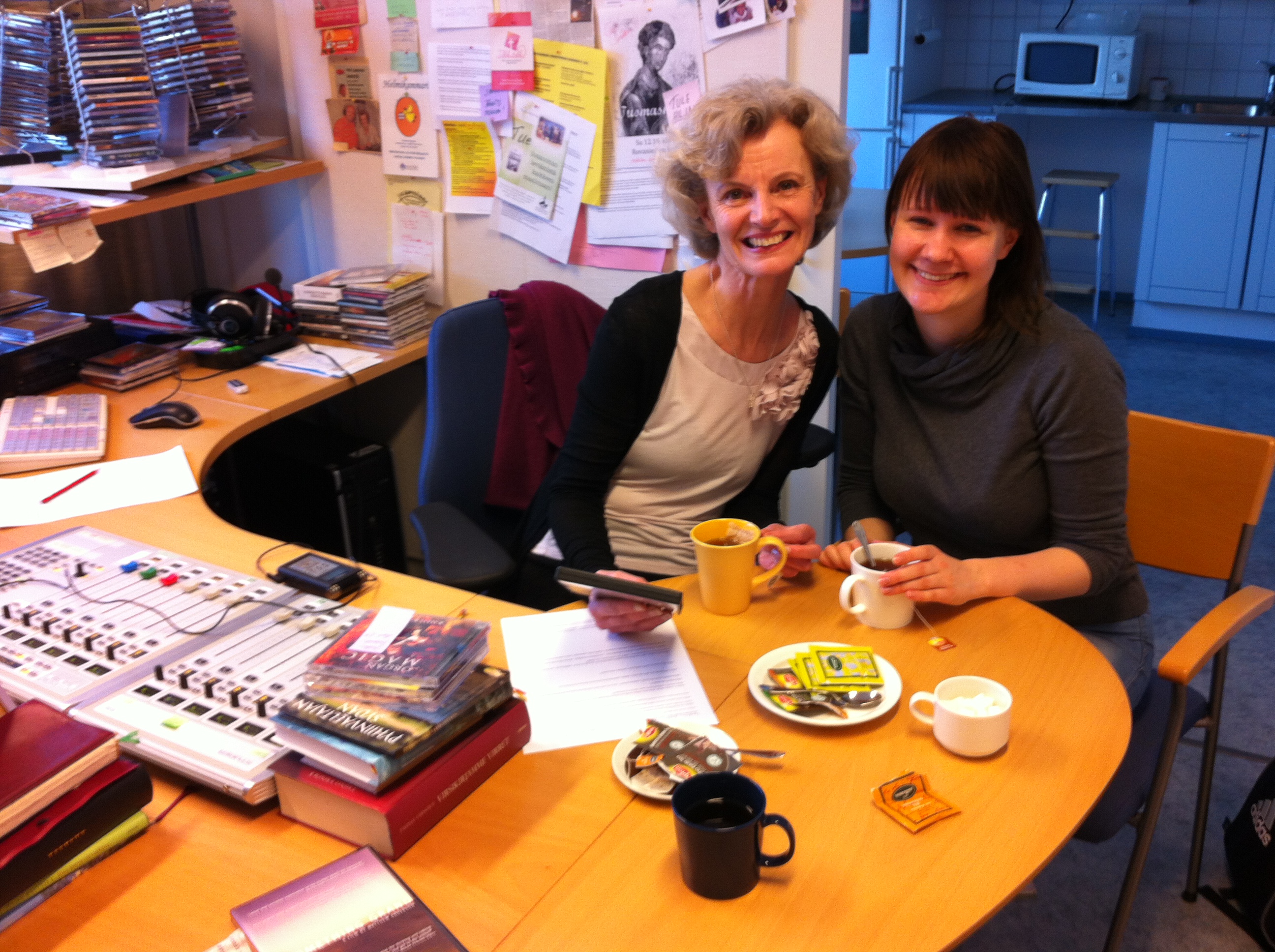
A really good interviewer gets you to forget everything except the conversation. You get so comfortable you just say how you feel. As a documentary maker I’m usually on the asking side of the microphone, so during my radio interview I was surprised to fall into that forgetfulness.

Salla was my translator. She’s a student I will always be grateful introduced herself to me when I was still bumbling through my first evening in northern Finland. She’s personable, intense and intelligent, and speaks English almost like a native. She volunteered (or was coerced?) to do the simultaneous translation for my interview with Ulla M. Despite their difference in age, as soon as I walked into the studio I could feel the warmth between the two women.

Ulla, the driving force and talent behind Radio Dei, has the perfect FM radio voice: a deep alto, unrushed, with always the hint of a smile. She also has a quiet charisma that may come from her performances of poetry and song with her husband, the music director of the parish (for her singing, think Ute Lemper or even Marlene Dietrich, minus the scandalous German lyrics). She sat me down on the other side of the desk, put a microphone in front of me, looked me straight in the eyes and I was quite lost. If I were a criminal I would have confessed.

Fortunately, the questions – at least at first – were rather easier.

Why are you here in Rovaniemi? Partly by accident. I looked at the farthest point north on the map that seemed to have an airport. Where I might have contacts. Sari Kuirinlahti has been a wonderful host. For people who think of themselves as unfriendly, the Finns have been very welcoming.

Why are you interested in Finns? I wasn’t. But every year more I work with them, I find the country, its people, its emigrants – and its music, more fascinating. And I think the sauna is a great invention.

Just when I thought I was safe, the zinger: So, you asked all these people where was home? You seem to travel quite a bit. What’s YOUR answer to that question?

Finally, when the mic was turned off, I was afraid I’d said too much. Then again, I wish I’d said more: about the soppa, or warm blueberry soup, that Ilari made me, his smock over his clerical shirt. About skiing around the pond looking at the devotional signs that Sari and Matti designed and put up, and how I got cocky thinking about Canadians on cross country skis and almost wound up flat on my back. About meeting Milla in Helsinki, the director of the press unit for the Finnish Lutheran church, and sharing an evening of laughter and conversation over some kind of Russian pancakes with caviar I’ll probably never taste again. About the strangeness of an altar fresco that shows wolves tearing apart a reindeer and the familiarity of wood curved so smooth by handwork you feel you are touching the essence of the tree. About Pekka Simojoki’s music and Levi’s snow and reindeer soup as a staple, about Lestarian faith and not ever getting proper wifi. About being Canadian at the Arctic Circle of a land I have never known.

So much more I could have said. How can one ever sum up even a week’s life in a few short minutes? One thing I made sure to say: even when we think our lives are small and unimportant, we should know that they are grand, and every one full of drama and hope and fear and promise.

“I’m afraid the interview won’t be any good,” Salla blurted out when we said our goodbyes. “You’ll be able to hear us smiling all the way through!” What a wonderful experience this Suomi-conference sponsored trip was. My one and only task was to experience Finnish culture. I feel I barely got started.

http://www.rovaniemenseurakunta.fi/viestinta/seurakuntaradio_rovadei/kuuntele_haastatteluita/

Pekka and me suprised

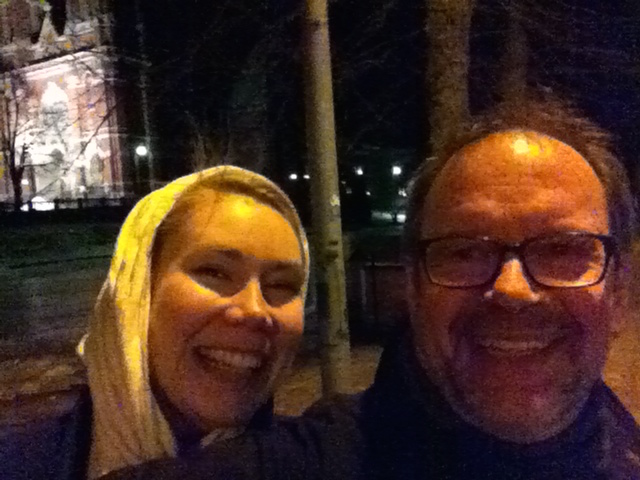
Mari and Matthew selfie Helsinki

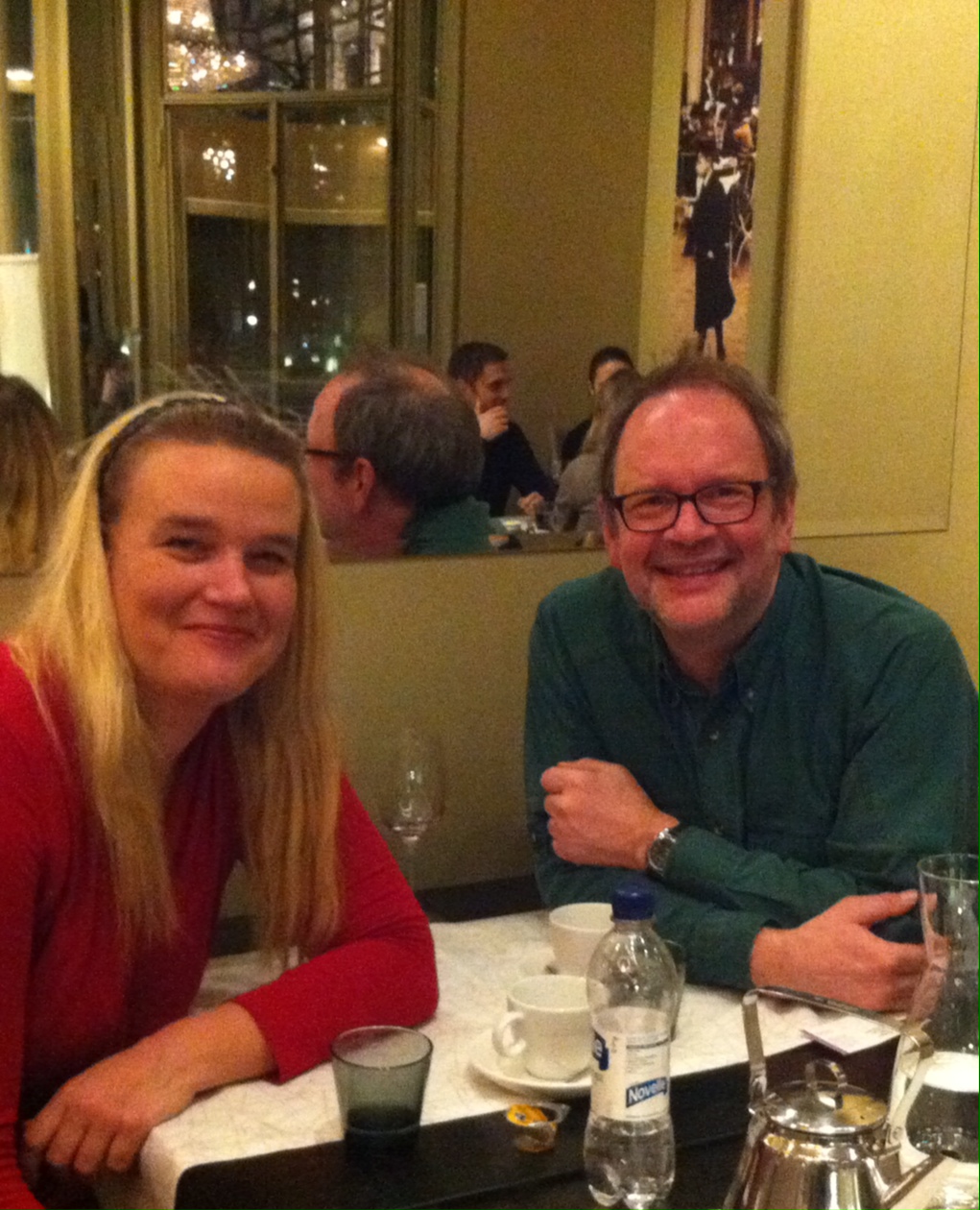
Milla and Matthew

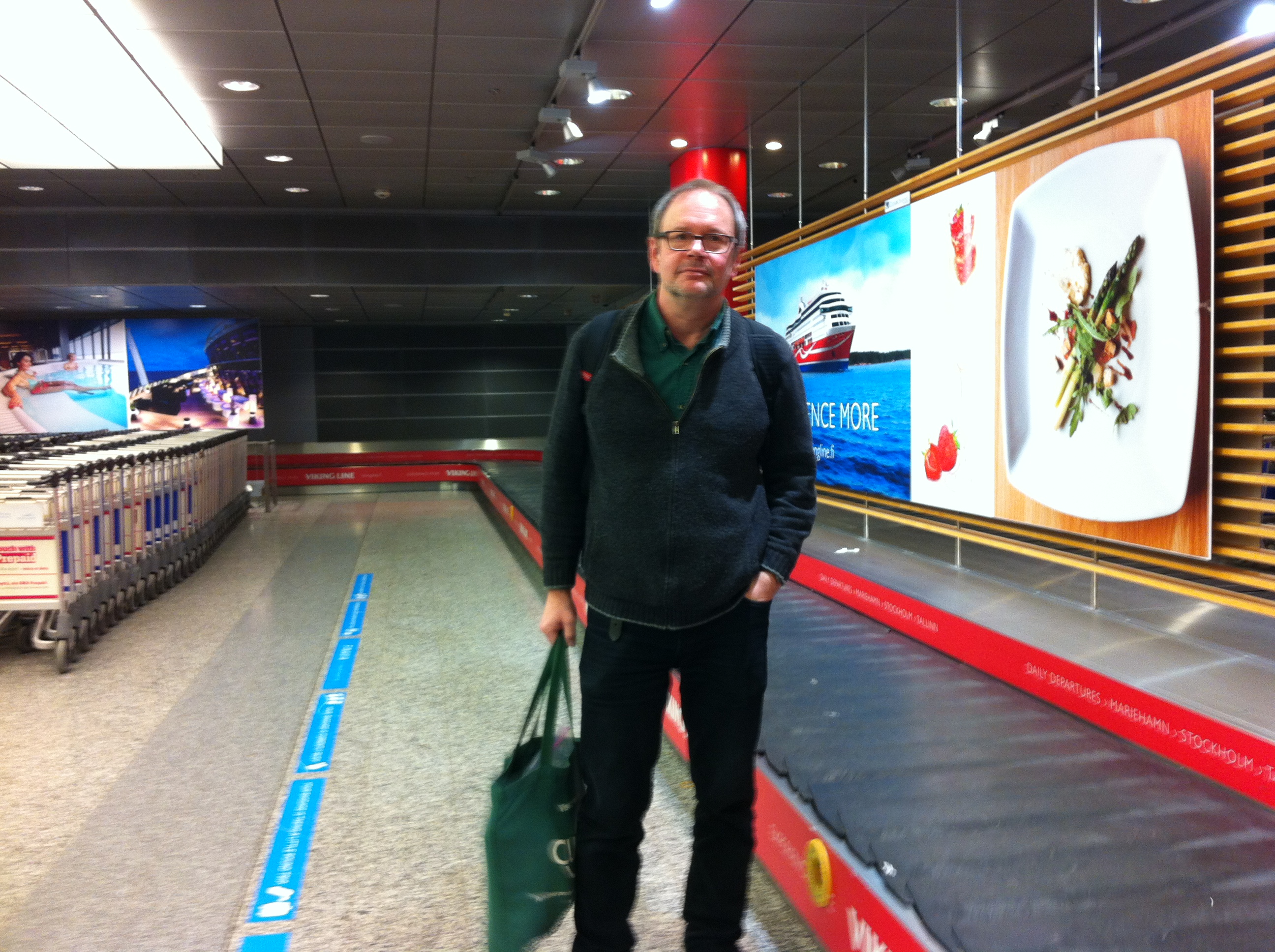
waiting at the baggage Helsinki

English is so Difficult

ski trail Psalm 23 Finnish

Several times now while walking downtown I’ve walked by a children’s park on the river with colourful images of the game “Angry Birds”. Wow. These Finns are really commercialized, I thought. Until Sari told me: did you know that Angry Birds was invented here in Rovaniemi? The creators donated money and play equipment.

I walk past the lonely little fast-food “grilli” where, my first afternoon, I bought a sausage and stood in the snow in the middle of the empty parking lot to eat it. Then up the pedestrian walk, past the display of reindeer antler jewelry, imitation Sami shoes with their upturned toes, and ice sculptures. I wander into one of the local “Safari in the Arctic” waiting areas. There are two friendly young women at the reception who tell me they don’t mind if I use the wi-fi. As I work, a United Nations of tour groups pass through. They are back from snowmobile and snowshoe journeys, and are returning their helmets, gloves, and full-body suits. There is a long wall of packed snow blocks that the city has required the companies to erect to muffle the sound of so many snowmobiles taking off. I hear Chinese, Hebrew, French, Russian and English, and some languages I can’t identify.

My few phrases of Finnish are already growing stale: “Mina olen pappi ja professori montrealista” “kiitoksia” “hyva paiva”. But I’m at least starting to be able to identify a few words better when Finns say or sing them: “makara” (sausage),   “kirkko” (church), “kotti” (home), “karhu” (bear), “lapsi” (child), “laulua” (song) and “rakasta” (love). I guess the words I’m learning reflect my visit. Or maybe Finnish culture, at least here .

The fluidity with which Finns switch genders in their speech is often funny, and sometimes disconcerting. Because there aren’t different words for “he” and “she” in Finnish, when speaking English to me, the Finns here may just choose one at random: “Oh yes, my husband is a tall man and she is strong too.”

I’ve also learned that there are many different words for “bear”. The reason, apparently, is that in the “old religion” you were never supposed to say that word. They came up with synonyms and other ways of describing the powerful creature, which not so many years ago had the status of a god. I think about the Bible, and the way that Yahweh’s name was never to be spoken aloud.

My host for the last day in Rovaniemi is Ilari K. He is a pastor in the church that is hosting my second set of documentary showings. Although he looks to be barely out of his twenties, he tells me that many years ago he and his wife and first two children (they now have five) spent a year in Saskatoon. Immediately we start comparing memories. He takes me to the university where I meet the chaplain, Heini, and tour the building. We three have lunch together. After, when I ask him to drop me at a wi-fi spot, Ilari simply takes me to the family home.

I walk in to meet a very young-looking woman whom I assume to be Ilari’s wife Kaija. I give her the flowers I bought at the supermarket while Ilari picked up groceries. “This is my daughter,” Ilari says as I hold out the flowers. Then, just when, stammering, I start pulling them back, he corrects himself: “I mean wife.”

English is so difficult. Either that, or it’s that Finnish sense of humour again.

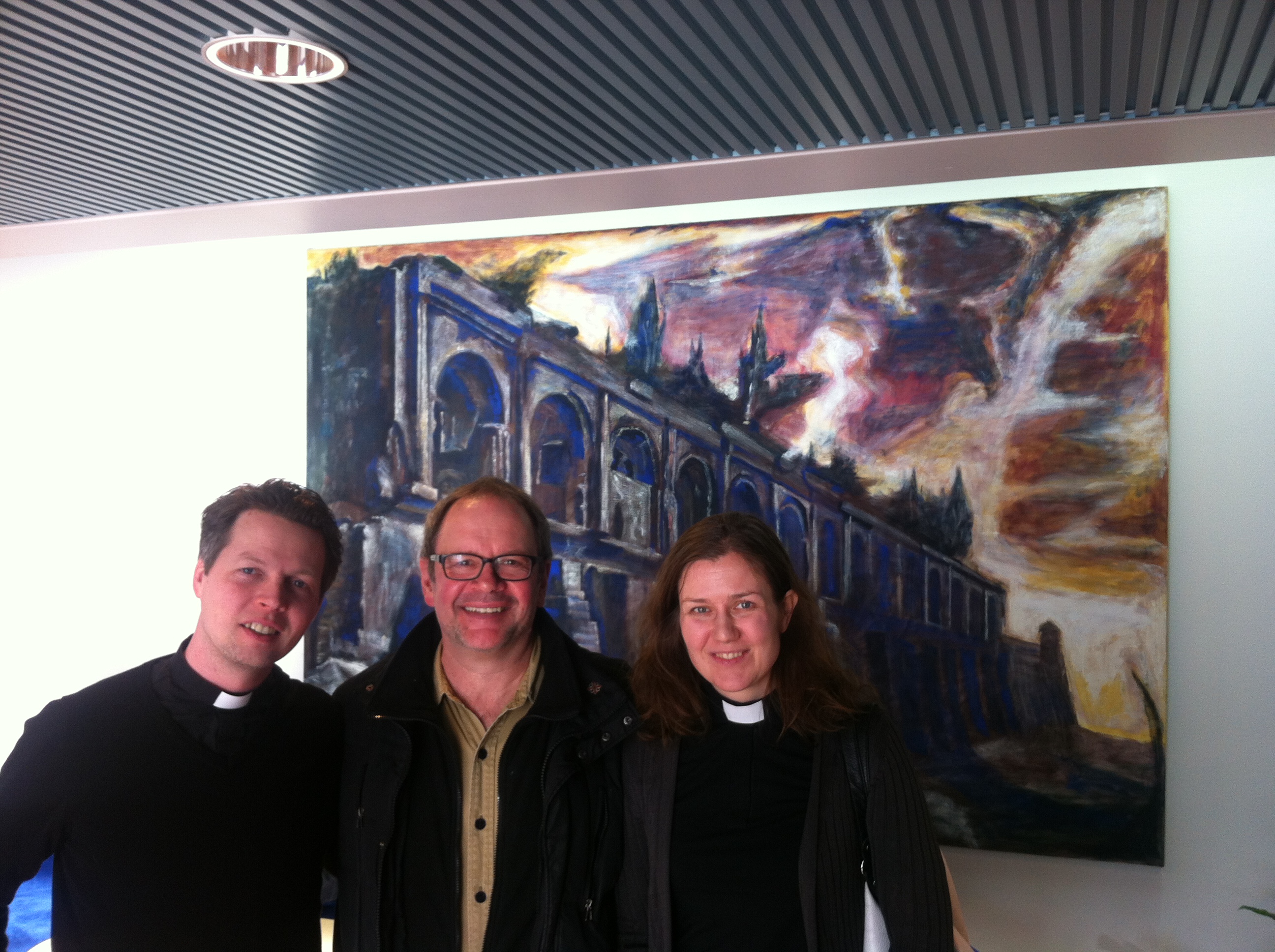
Heini Ilari and Matthew

Ilari Kaija and family

If You Put Mont-Tremblant at the Top of Europe

Levi ski area

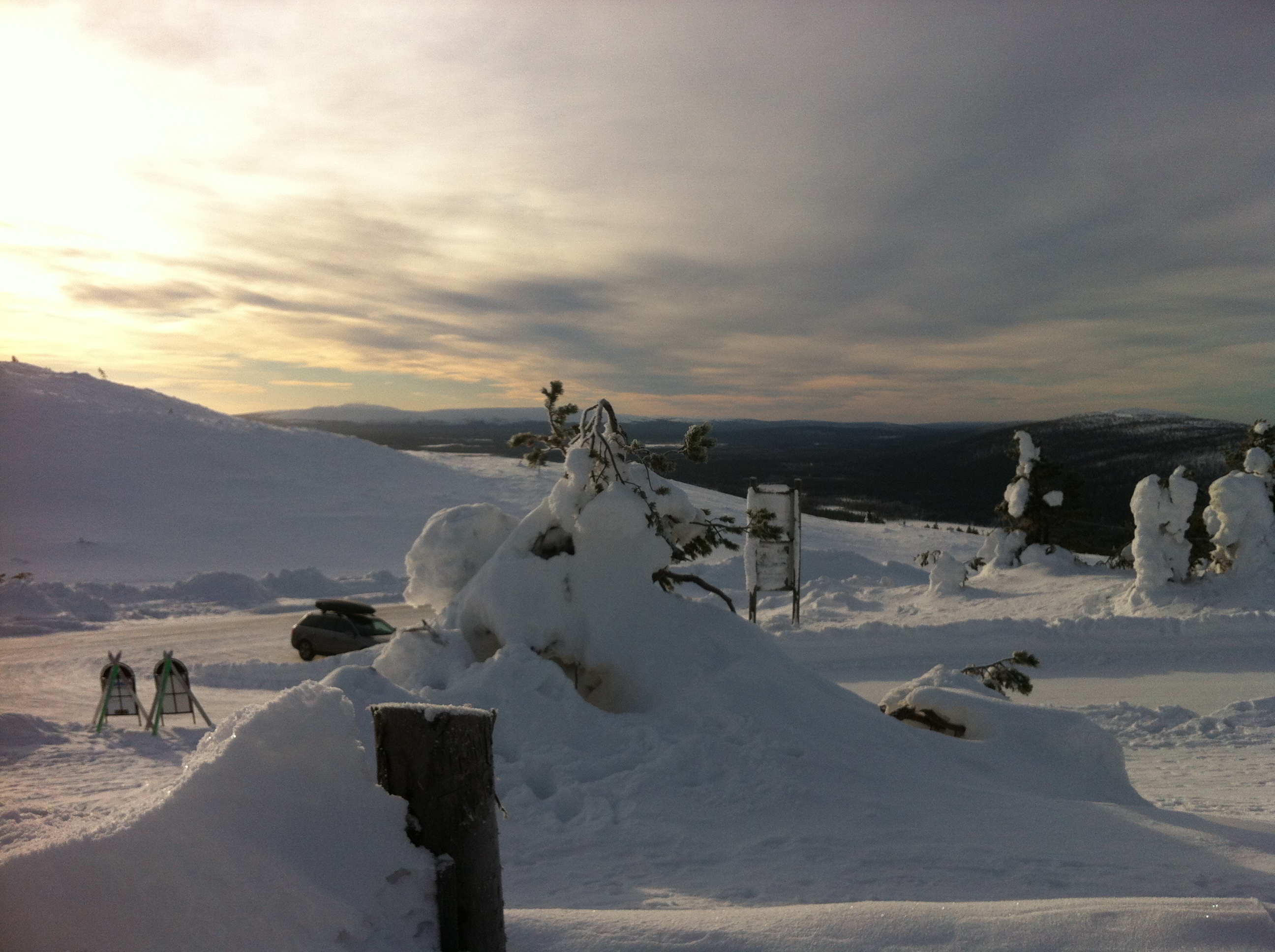
Okay, there are a few differences. At the bottom of the hill at Levi, Lapland (about 120 km north of the Arctic Circle), behind the state-of-the-art chairlift (heated seats, a tinted canopy and a conveyor belt to help you get on), there’s a wooden tee-pee where people crouch in the semi-darkness over a fire and cook their sausages for lunch. There’s one electric-car recharging station in the town, and the rental shop carries the standard glittering equipment you’d get at Lake Louise or Chamonix. But there are also posters advertising reindeer rides and Lapland igloos where you lie on your back and watch the northern lights. (They neglect to mention that there’s been little sunspot activity this year and a corresponding drop in occurrences.) The snack bar has all the usual fries and hot-dogs, but also salmon on rye rusks, reindeer burgers and a kind of potato pancake that they call ‘bread’ here but reminds me of a thicker Norwegian lefse (apologies for using one obscure Scandinavian cultural reference to help try to explain another!) In fact, we’re only a couple of hundred km from that northern reach where Norway and Finland greet each other overtop of Sweden, and sometimes ski accident victims here might be taken to a Norwegian hospital rather than a Finnish.

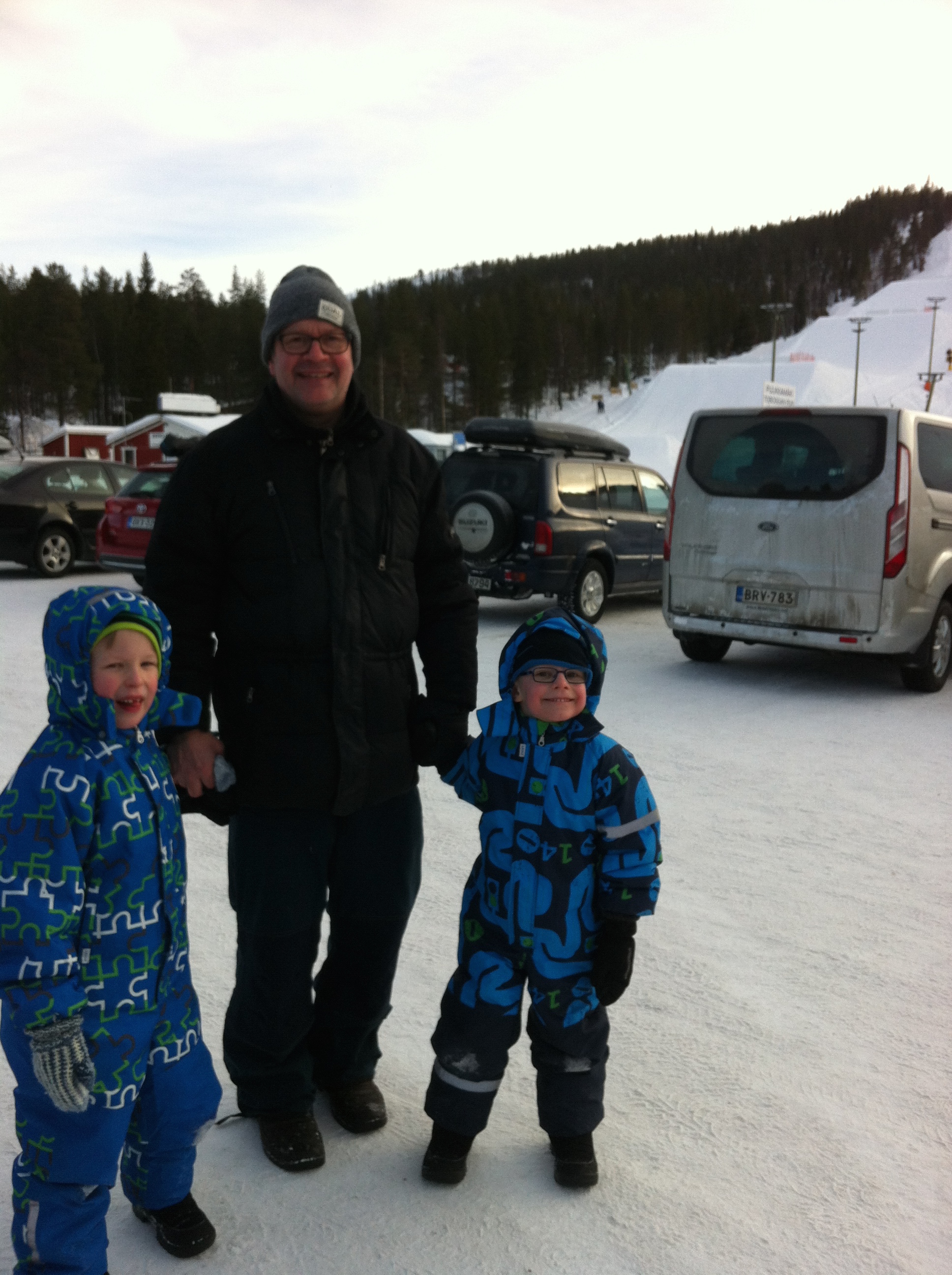
I help Kaapo and Oiva, my host family’s boys, get into their snowsuits. Kaapo is not feeling well. Their father, Matti, has been shovelling snow off of the family’s cottage roof all day, but the big man seems none the worse for wear despite the back-breaking labour. Sari and Matti take me to the restaurant near where they met, and treat me to a local speciality: a warm, flat Lappish cheese with accompanying cloudberry sorbet, and a thick caramel sauce on the side. I may not be in heaven, but I’m close. On the way out, I pick up the local Levi Times paper: “Kittila became an independent parish by Russian imperial edict on 30 January 1854,” it says. “Population 6500. There are 900 inhabitants in the town of Levi and rooms for 24,000 tourists. Unemployment rate 13%, 718 lakes and reindeer approximately 12,000.”

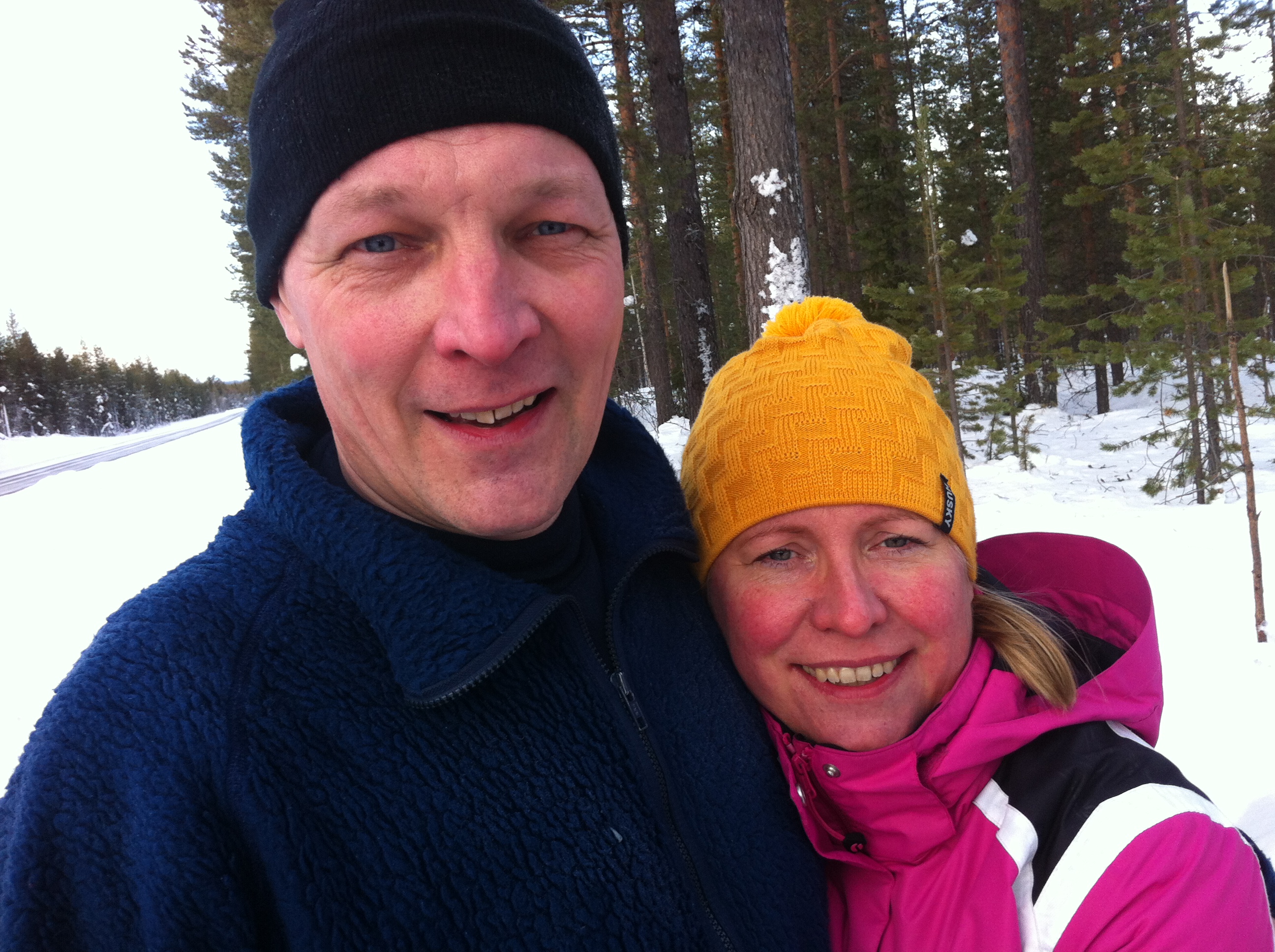
with Oiva and Kaapo Sari and Matti

The Accidental Ambassador

poster at Wiljami theatre Rovaniemi      movie is starting

Even though the Suomi Conference of Canada sent me to Finland to experience Finnish culture, I’m realizing now that I’m here, that I’m representing Canadian Finns to the homeland. Which is ironic. Who needs an ambassador who can’t even speak the language?

But the pleasure – and the privilege – is that I’m meeting relatives of Finns in Canada, who come to see my documentaries just because I’m a living connection to their family. “We are cousins to Heiki and drove 100 km to see you,” says one man, in carefully-practiced English. I hope that he will get something from the (not-Finnish-language) films. There are Finns who spent a winter, or two years, or a few weeks, in Vancouver or Toronto, who have come because I represent that land they left behind. Or Finns who might be coming to Canada for a term or a job, because they want a sense of the place.

First there are local singers who perform. Then my documentaries. After seeing the movie, the people shake their heads: “it’s not easy being an emigrant,” they say, “being caught between here and there.” Then, through translation, some of them talk about being caught between Helsinki and Lapland, or about their grown children traveling to the United States or to South America – and how they’re afraid that they will meet someone and settle down there, away from parents and home. A few in the audience know someone in the film. One woman cries, quietly.

When they hear that the Suomi choir in the film is coming back to Finland, I hear murmurs: “they’re coming here to the north I hope!” I answer “We’d love to!”, even though I then have to add that I know nothing about the choir’s schedule and have zero power to change it.

Then, the lights lift, and people move to their coats and after a few more “kiitos’s” they are gone. I collect my things. Sari – who has been such a wonderful host throughout – will drop me back to my apartment. She knows I haven’t eaten since breakfast. “Are you hungry?” she asks. I still haven’t figured out the eating patterns here, which seem to include lots of food in the late evening after sauna, and sausages outside following every snow activity. But neither of those is the situation today. I think perhaps this will be the occasion for more Lappish cuisine. “Sure,” I answer. “Great,” she says, leading the way out the door: “I was thinking Chinese”.

singers at presentation

Reindeer and Skiing on Sidewalks

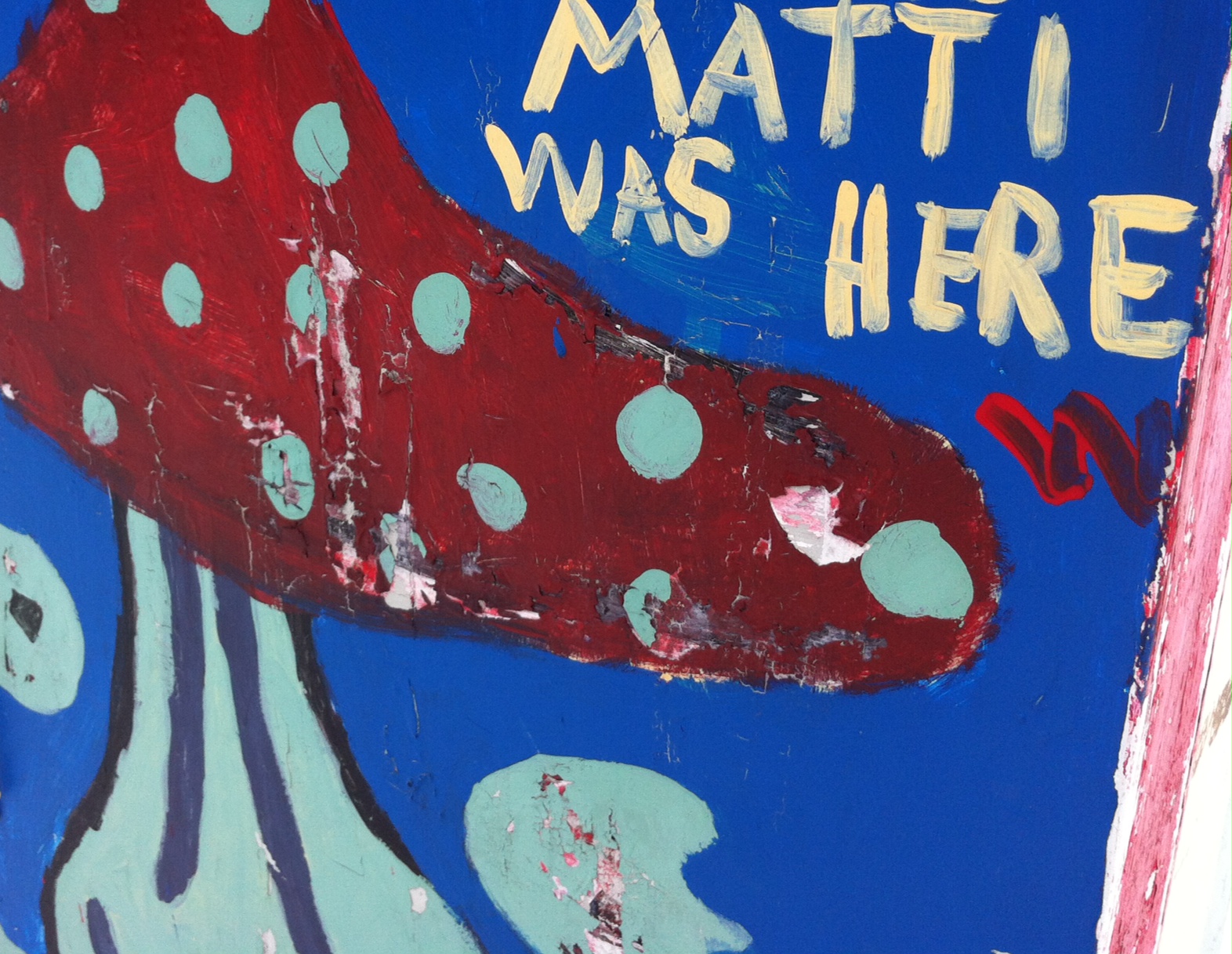
Matti was here graffiti

It was when she started talking about how properly to hang and cure reindeer meat that I knew for sure I was in Lapland. It was also right around then that we realized there were no taxis to take me back to my church apartment.

The day had begun when I set out walking to Arktikum, the official museum of Lapland and of Rovaniemi. It’s a long, elegantly beautiful building on the edge of the Ounasjoki (Ounas river), about two kilometres from where I’m staying. Inside the museum were displays of Sami sleds, Sami traditional dress and the all-important drums. In fact of all of Sami history is represented, including beautiful 7th century jewelry that reminded me of similar Anglo-Saxon and Irish finds.

I walked back through town, just in time to meet the vicar of the parish, Kari Y, who promised to end my internet troubles by handing me a 3-G stick. I asked him about the church that he heads. Some parish: there are 22 or 23 pastors on staff and about 120 employees! I keep bumping into clergy types who tell me they’re pastors in the parish. Apparently, they all are.

Just as I left the office building a smiling woman in a white parka walked into the parking lot. You must be Matthew, Riita K-K said. Do you like ice cream? Sure! Then come taste our newest local product…. From the Arctic Ice Cream Factory. I tried the “spruce tree” flavour – it was delicious. Riita interviewed me for her own paper, the Lappilainen, a weekly, and also showed me an article about my documentaries in another paper, the UusiRovaniemi. I’m glad to know the word is getting out. On my way back from the interview a woman passed me on the sidewalk, on skiis. Most Rovaniemi people, however, if not driving, seem to prefer walking or bicycles, even on the ice and snow.

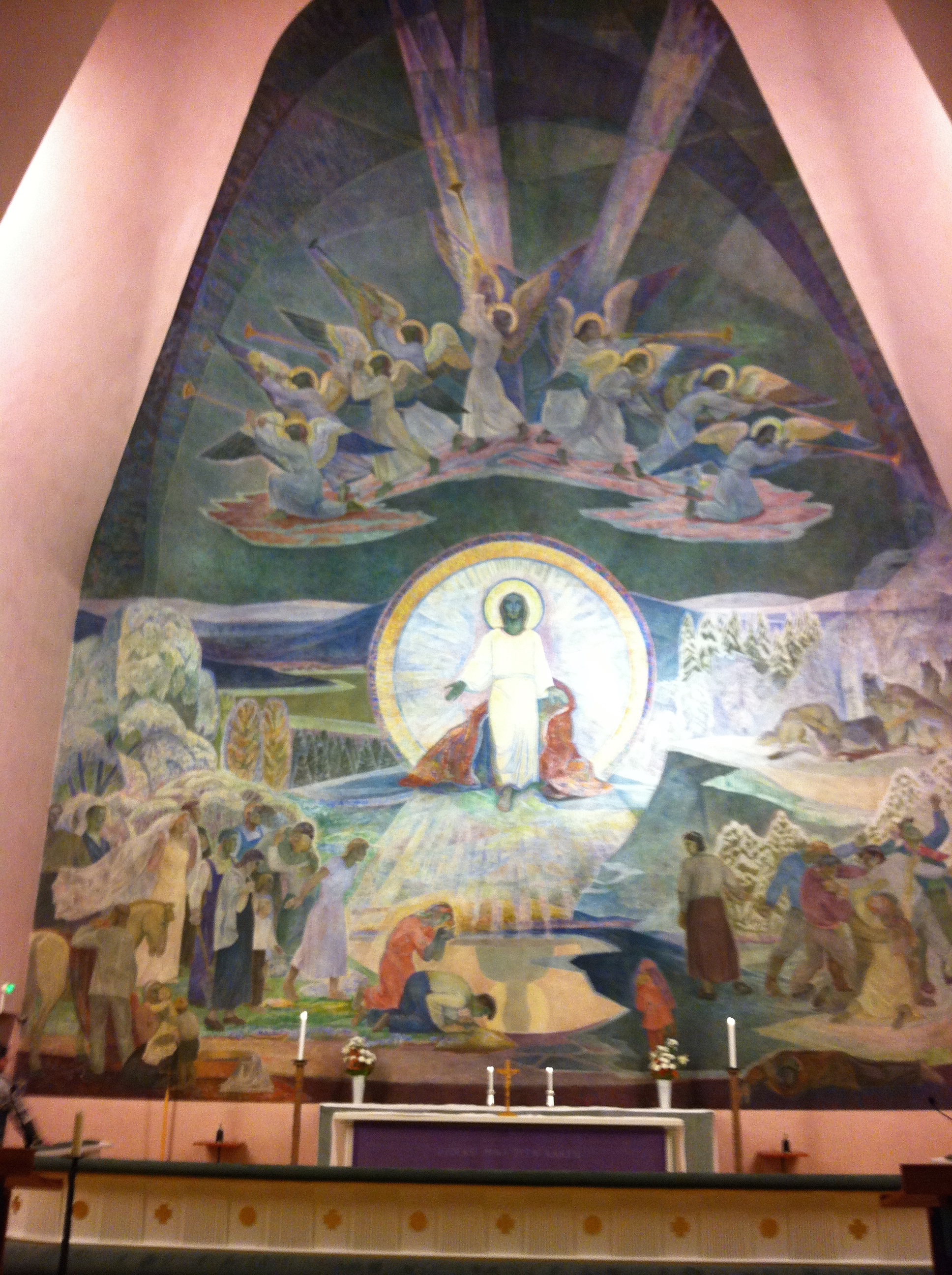
It was soon time to meet Sari again, this time for a concert and my first look inside Rovaniemi kirkko, or church. The fresco behind the altar is magnificent. By Antti Salmenlinna, it dates from the early 1950s, when the church was built. I asked Sari about all the new architecture. Oh, there are almost no old buildings in Rovaniemi, she said. The Germans burnt the city down when they left in 1944. It’s a bit awkward to say that to German tourists these days, but – she looked at me with that typically inscrutable Finnish expression – it’s all right. As we explored I noticed paintings along the side arches, one of them of a man with a reindeer, to illustrate Jesus’ sayings in Matthew.

The organ concert was wonderful, with two international artists spelling each other off like spoken-word performers, getting more and more physical with the classics of popular organ music. Of course there was also Sibelius’ Finlandia. Sari, who is supposed to be on holidays, doesn’t act much like it, speaking with parishioners and handling details constantly, and I worry that part of that is due to my visit. She gave me an updated agenda for my visit. More meetings!

Then she drove me back to Riita’s place for my second sauna of the trip. I hope you don’t mind, Riita said with unnecessary apology, that here in town we have only the electric type. She fed me bread and cheese and sent me in, after which she and her son took turns. Then we talked for a bit after, over fruit, about global Russian muscle-flexing. Sweden and Finland just signed a pact to share armed forces, she informed me. The Russians have just reactivated a military base that had been abandoned, on the other side of the border. She talked about the old days, about communist youth, and about trips to Murmansk, and Leningrad, and Moscow. Then she told me about her work in helping build community right in Rovaniemi, and the “pop-up restaurant” concept, where Finns get a chance to open a restaurant in their own home or with a neighbour, two or three times a year.

Soon it was late, and I was ready to go. No taxis were to be found. Oh, you’ll be all right, said my host. Just look for the spire of the Kirkko, it’s the tallest building you’ll see. And follow the cross all the way home.

So I did.

through the photographer lens

Rovaniemi church fresco

fresco of reindeer herder

A Warm – too hot! – a welcome to Rovaniemi


Sauna One

My Ash Wednesday in Finland began with a flight north. I left behind the beautiful old 19th and early 20th century buildings, the gritty sidewalks and the cold sea wind of Helsinki and landed in the sunny, white and still world that marks the beginning of Finnish Lapland. It was so strange to be surrounded by banks of snow, yet feel warmer than I had in Helsinki. “It’s a dry cold,” someone said. Rovaniemi feels like Saskatoon or Edmonton on a nice winter day. Even looks a bit like it.

Right now the Arctic Circle, ironically, is warmer than Montreal. Pastor Sari Kuirinlahti met me at the airport. “I have hugs for you,” I said, “from Riita and Olavi Hepomaki and from Jari and Liisa Lahtinen. Is that okay?” “Oh!” she answered, “I miss those people!” And she let me give her the hugs, even though she blushed. Then she handed me a chart with all the things I’m doing in the next few days, based on what I had emailed her. Two documentary showings in a theatre and a chapel, a couple of interviews, a trip, meetings, some concerts…..

But first, she said, sauna! Have you had sauna yet? I admitted I had been two days in Finland already without sauna. You will be picked up this evening, she informed me. Get ready (I wasn’t sure exactly what that meant). The afternoon gave me time to settle in to the “Piispankameri” or the so-called Bishop’s room, which when a Bishop isn’t visiting is used for other guests like visiting musicians, or in this case, me. Cross-country skiers were passing by in front of my window. Having no skis, I walked to a local store and bought some food for the apartment, with the very kind clerk taking me around by the arm and helping me find what I needed, then warmed up some Karjalan Pirakkat with tea. Sari returned and took me to meet church volunteers. They asked, with Sari interpreting, what I thought the challenges facing my congregation (and the church overall) in Canada are. It turns out there are many similarities, despite the differences. Then another pastor (they seem to be everywhere here), Tuomo K, whisked me away to the church camp at Norvajärvi.

There were men there in the woods by the frozen lake. Many men, of different ages, in the saunas, towelling off, out standing in the snow, or cooking Finnish sausages over a fireplace in a hall. I sat in the sauna listening to the quiet hiss of steam. My host made it hotter and hotter until unable to bear the steam any more we had to run, naked, out to the snow. “A warm – sorry, a hot! – welcome to Rovaniemi” he laughed. We had arrived late so most of the men were already dressed and setting up for their discussion. I waited until the others were gone and then did what I had promised myself I would do. I fell back into the snow and looked, oh so briefly, at the stars, ten kilometres north of the Arctic Circle.

The men sang a hymn, said a prayer, and I introduced myself to them in my very few words of Finnish. Then they fell into their planned discussion: how to be a Christian and involved in political life. It was all in Suomi, so I could only pick up a few words – socialism, communism, capitalism, faith, God. In this area the communist party was very strong for many years, and tensions sometimes ran high. Still, after the heat and steam and flight, it was hard not to nod off. The man beside me did, but then revived every now and then to add a few words to the discussion.

Then it was back down the highway, past the “watch for elk” and “Arctic Circle” signs, and boots crunching in the hard-packed snow, back to my room. “Kiitoksia!” I called out. “Good sleep!” my host answered. After that sauna, it won’t be hard to have a good sleep. Welcome to Rovaniemi.